Category: LEADERSHIP

Leadership Articles prior to 2016

  • Strategy Kickstart: Mission Down The Hall


    A Strategy Kickstart is a short 3-5 minute video clip which can be used to ‘kickstart’ a strategic discussion in your church or ministry. Simply show the video clip to your team and use the ideas and question posed in the video to stimulate a valuable and hopefully relevant discussion on how you can better fulfill your ministry mission.

    In today’s Strategy Kickstart I challenge your team to consider just how effective you have been in connecting your mission to your ministry. This discussion is relevant to have at any stage in your ministry’s development.

    For more information about developing and rolling out your ministry mission, check out Mission, Mission, On The Wall and Developing Your Mission!

  • Tactical Tip: Return Emails Within 24 Hours

    Recently, I sent an email to a leader in my life asking a question and making a suggestion I thought he might appreciate. I didn’t hear back from him for more than two weeks. After the first couple of days I started to wonder if perhaps I didn’t actually send it, so I double-checked. A few days later I started to wonder if I had somehow offended him. Every day thereafter I discovered a pattern whereby I would battle with imagined stories in my head regarding why my friend never responded. I didn’t really want to email or bring it up again simply because I didn’t want to be a pest. Finally, I got the anticipated response. He answered my question and expressed gratitude for my suggestion, which he had already acted on. Needless to say, I put myself through a lot of emotional trauma for no reason at all. This could very easily have been prevented by my friend. 

    I’m sure we’re all guilty of this at some point or another. Our Inbox gets inundated with every sort of email imaginable. You know some emails can be deleted, many can be dealt with in just a few seconds, a handful will only take a minute or two of your time, and then there’s the rest. Those emails will require some sort of follow up, action, research, or a lengthy response. That last category of email are the ones that will sometimes sit in the Inbox for days – even weeks.

    Today’s Tactical Tip is simply to get into the habit of returning every email within 24 hours.

    This is so simple to do, it’s actually embarrassing. Obviously, we can’t control what others might think about us on the other end, but we certainly can minimize the chance that they tell the kinds of ‘stories’ I was guilty of telling myself! Here are three simple steps that will help you build this new habit into your email ridden life.

    1. Read or scan the email and determine what you need to do (and when) in order to properly respond.
    2. Place a task in your Task List or Calendar which includes a deadline on when you believe you can reasonably respond.
    3. Reply to the email author and let them know you have received their question/request and how long it will take for you to get back to them.
    Perhaps this scripted response might help:

    Jim,

    Thanks for sending me this email. I just looked it over and realize that I won’t be able to respond to you the way I really want to right away. I’d like to take some time to process and think it through. I’m also right in the middle of a couple other projects that take precedence right now. I’ll do my best to get back to you on this in about five days.

    Thanks for your patience! 

    Wayne 

    OK. You’ve officially been armed with an easy to do challenge. Get back to everyone who emails you within 24 hours. I’m confident people will be glad you do!

    Image compliments of Salvatore Vuono on freedigitalphotos.net.

  • Running Great Meetings Summary

    I love the title of Patrick Lencioni’s book, “Death by Meeting“. It can be so true . . . sometimes it feels like a slow death that somehow turns minutes into hours. In the mid 2000’s I was asked by my boss to begin leading our weekly staff meetings. Although I was honored, I was also quite intimidated. Up until that point I just had to show up and participate. Now I was in charge. I have vivid memories of the insecurity I felt after each session as I tried evaluating how it went.

    Fast forward to today, hundreds of meetings later. I am still mildly intimidated, but not nearly as insecure. I don’t always hit the home run, and I suspect some of the meetings I lead can seem boring to the participants, especially Tactical meetings. That said, I think I’ve learned a lot as well.

    In an effort to help all the pastors and church leaders out there that still struggle in this area, I have put together a series of posts that may prove beneficial. Enjoy!

    On Leading Meetings:

    • The Meeting Professional
      A link to a great article by Seth Godin asking the question, “What would our meetings be like if we hired a meeting fairie?”

    On Trust & Teamwork:
    • Creating A Trust Culture
      An exhortation from Matthew 5 and a link to Andy Stanley’s podcast entitled ‘Trust vs Suspicion’.
    • The Tunnel of Chaos
      A discussion about a very important principle that is the key to developing and maintaining trust among team members.
    • Teamwork and Trust
      I just had to find a way to fit this video clip into my blog. It overwhelmed me. These young men express a visual illustration of what unity and teamwork can look like (obviously, not literally).

    On Kinds of People and Kinds of Meetings:
    • Strategy Kickstart: Team Meetings
      This is a short video clip encouraging your team to discuss the idea of splitting strategic discussions from tactical discussions.
    • The Seats of the Bus
      In this article I break down the three different ‘kinds’ of teams you should have. 
    • The Four C’s
      A detailed explanation of the ‘Four C’s’ every leader should consider when hiring or looking for new leaders to join a team.
    • The Strategic Personality
      This article explains the most ideal temperament/personality of a big picture, back seat of the bus leader.

    Exploring Team Dilemma’s
    • The Sacred Cow
      What is a sacred cow and what does it look like in the context of the local church?
    • The Smelly Cow
      A dangerous idea on how you might discover where your sacred cows are hiding.
    Check out my Resources Page to see more summaries of past series! 


    Disclosure of Material Connection: Some of the links in the post above are “affiliate links.” This means if you click on the link and purchase the item, I will receive an affiliate commission. Regardless, I only recommend products or services I use personally and believe will add value to my readers. I am disclosing this in accordance with the Federal Trade Commission’s 16 CFR, Part 255: “Guides Concerning the Use of Endorsements and Testimonials in Advertising.” 
  • My Notes from Preach Better Sermons Online Conference

    For anyone who missed the workshop on how to ‘Preach Better Sermons’. I watched it and decided to take notes for you (with help from my friends at Elim Gospel Church). This seminar was sponsored by preachingrocket.com. Check out their website to see how this new service can help you be effective as a communicator and preacher.

    Here are the main ideas/concepts shared during the conference. Enjoy.

    PERRY NOBLE.
    Perry Noble is an author, speaker and Senior Pastor of NewSpring Church in South Carolina.

    • Why create a preaching calendar?
      I need to give my people time to prepare for creative elements. My job is to serve my team by planning in advance.
    • When did you discover you had a gift of preaching?
      One of the best sermon you could ever share . . . how you discovered Christ?
    • What do you do to get better as a preacher?
      Read Andy Stanley’s book, ‘Communicating for a Change‘. Trying to preach shorter messages. I’m going to be here a long time. I don’t need to try to say everything in one week. How can I say the ‘one’ thing.
    • How many times do you preach in the year?35-40 Times
    • How do I figure out what to preach on? 
      Nearly every idea I’ve preached came out of my quiet time. A preacher preaches best when he does so out of the overflow of his heart. I use Evernote to keep track of all my thoughts, ideas, concepts that I can preach on at any time. That’s what he uses as a resource for a preaching calendar.
    • What have you learned working with your team?
      We have a Creative Pastor who takes all our creative ideas and makes them happen. He invites various people to creative team meetings. Single people, men, women, married, etc. Different people give him unique ideas that he couldn’t figure out himself. I learned how to ask the right questions to the right people and have learned to listen to other people.
    • I don’t have a big staff? I’m the ‘Lonely People’ Pastor.
      You can do this without a staff. Invite {the right} people to lunch and tell them you want them to help you put your sermon together. They will come.
    • How do you deal with criticism & praise?
      Pastors have foes, fans, and very few friends. Foes tell you how bad you are (makes you think you’re worse than you are), fans tell you how awesome you are (makes you think you’re better than you are), friends tell you the truth. Your friends love Jesus first, the church second, and you third. So you know they will always give you the feedback you need because their priorities are straight.
    • Closing Thoughts:
      Let the Bible speak for itself and be your platform. Listen to other preachers as much as you can. I’ll say what other preachers have said all the time. Podcasts are the common day commentaries. Surround yourself with people who can help you communicate better. Get a great team to support you as the preacher. Don’t ‘give them hell’ on Sunday. ‘Give them hope’ on Sunday.

    JUD WILHITE
    Jud Wilhite is an author, speaker and senior pastor of Central Christian Church in Las Vegas. Jud talked about how we can find common ground with other people. We have to communicate in language that people relate to. Here are a few insights to do that.
     
    • Communicate from your life.
      I often start my messages by sharing something personal in my life that relates to my topic. The most powerful illustrations are when those illustrations overlap with the person’s personal experience/life. My favorite definition of preaching: expressing truth through personality.
    • Communicate honestly.
      Be honest about what you’re thinking, feeling, experiencing, etc.
    • Communicate to the broken.
      I imagine broken people around my desk as I prepare what I’m going to say. The 17 year old who doesn’t want to be there. A single person struggling at work. A couple struggling in their marriage. Someone struggling with an addiction. I write my message to each of them. I want people to feel like I’m talking directly to them. “If you speak to the broken, you will always have an audience.”
    • Communicate the Word.
      Just preach Jesus. We don’t have to apologize for the Bible. People are there to hear what it has to say. 2 Timothy 4:2. Be careful about religious language. Don’t water things down, just remember to use language that everyone understands and explain/define things when you don’t. I try to stay in ONE Bible passage when I preach. I shifted to the NLT version because it’s at a younger grade reading level so people could track with the task.
    • Communicate for Next Steps.
      Let them know whether the Bible has something to say AND it has a connection with their life. I ask what the text says to me as a person, to the imaginary individuals around my desk, and to my church and my community as well. I define a crystal clear ‘next step’ opportunity. 

    ANDY STANLEY

    Andy Stanley is an author, speaker, and Lead Pastor of North Point Community Church in Georgia. Get his book on preaching, Communicating for a Change.
     
    • How did you know speaking was a gift for you?
      Taught a Bible Study in a home and a woman spoke a word of encouragement about that gift.
    • Discuss how you prepare your messages?
      Most importantly is that the process needs to be relational. The pattern I mostly use is Me. We. God. You. We. This approach can help you connect with the audience. It may allow you to be able to preach without using notes so much. It breaks your message up into chunks, instead of points.
    • How do you craft a Sermon based on application instead of information?
      I tend towards (wired) application because my strengths/gifts are exhortation oriented. I’m not satisfied if people don’t know what’s at stake and don’t know what to do. Make sure they know what to do at the end. It’s not just about what they need to know. It’s also about why it’s important to know it and what to do about it. It’s critical that you have a burden to preach.
    • How do you create these memorable phrases when you preach?
      It is very difficult to do, but the phrase is the best way to make an idea stick. You owe it to yourself to create a ‘bottom line’ phrase, question, application statement. It will equip you to be more successful as a communicator. I also prepare my sermons way in advance which also gives me a lot of time to mull over the concepts and get these nuggets. The ‘crock-pot’ approach. This approach also protects me from bad ideas. I have time to come up with something else.
    • What have you learned about ‘tension’ in communicating?
      It’s critical that you create tension in the first few minutes if you want people to track with you during the sermon. Tension makes things interesting. You are never bored where there’s tension. If it’s boring, then you haven’t interested people by creating a tension they can get into. I’m OK with developing an entire series to focus on one tension, as opposed to taking care of it in one sermon.
    • How do you preach to the unchurched & everyone else at the same time?Some of it comes back to tension. It’s not about content, it’s about the approach we use. Get his new book coming out in the fall to read about it more.
    • What are you doing lately to improve yourself?
      I watch myself preach. I listen to other people. I watch other communicators, including comedians, newscasters, etc.
    • Closing Comments
      When you speak, do it with a burden to reach broken, hurting people. Make it personal. Think of the person you know who needs to hear it or that you think needs to hear it. Pick a target audience and preach to them, not about you.

    JEFF FOXWORTHY

    Jeff Foxworthy is one of the most respected and successful comedians in the country. There are many similarities between what comedians and preachers do. One of them is using humor.
     
    • How can preachers lean into humor when preaching?
      It’s important for us to not take ourselves too seriously. I figured out that what I think, experience, and see probably isn’t unique to me. I trust that truth and am willing to take risks by sharing them with others.
    • What have you learned about timing with humor?
      Usually people who are good ‘joke-tellers’ have learned how to cut the fat (details). Trim humor down to the bare essentials. This includes telling funny stories. 
    • How do you prepare jokes/humor?
      I use note-cards. I put a thought that occurred to me on a note-card that I keep nearby. I try ideas/thoughts on people, either randomly or formally. The yellow notepad is where I develop thoughts and jokes to a context. When do you develop content . . . always. 
    • How can we reach the heart of men?
      Make sure we don’t portray Christianity or Christ as a ‘sissy’ faith.
    • Closing Comments:
      Be vulnerable from the pulpit. Let people see you living life to the full.

    Thanks to Eric Scott, Care Pastor at Elim Gospel Church for the below notes. Unfortunately, I had to step away from the conference at this point.


    VANABLE MOODY II
    Vanable (Van) Moody is an author, speaker and Senior Pastor of The Worship Center in Birmingham, Alabama.

    • Start with the end in mind.
      All navigational systems start with the end in mind.  A message is the same.
    • The most effective form of preaching is behavioral.
      Behavioral preaching goes after the impact the message has on the hearer. Jesus gives many examples in this way (John 4 or Pool of Bethesda, “Do you want to get better?” this was about behavior.
    • Impression or Impact?
      Settle this issue – Do you want to make an impression or do you want to make an impact?  It’s great to hear, “Good message!”  Yet it’s better when a person’s life is impacted with the gospel and it brings about lasting life-change.
    • The Behavioral Purpose.
      Come to an understanding of what the behavioral purpose is.  What is God wanting to change and do?  Craft your message around that purpose. When you are clear with this then you should be able to reduce your message down to one crystal clear statement – your objective statement.  The message should then consistently support this message.  What do you want people to do as a result of this message.
    • Message vs Messenger
      While behavioral messages are important, it is imperative that you not separate the message from the messenger.  
    • Keep it Clear and Simple
      Make sure as you communicate the purpose, make sure it is clear and simple. Use words phrases and sentences your people can grasp onto. Give points for their head and pictures for their heart. Provide a vehicle for them to do what you have been preaching about.  Muscles grow because they are exercised.

    DAN CATHY

    Dan Cathy is the President and COO at Chick-fil-A.

    • Strive to be a communicator who communicates to real felt needs.
    • When putting a message together work with a smaller audience first.
    • Rehearse the message.
    • Illustrations on stage are powerful!

    CHARLES STANLEY

    Dr. Charles Stanley is an author, speaker and Senior Pastor at the First Baptist Church of Atlanta.

    • The most important part of sermon prep is my personal walk with God.  A man can preach no better than he prays.
    • Discipline is key to the pastor’s life.
    • It boils down to this: I must have a balanced schedule, a healthy body, healthy relationships, the courage to be obedient to God no matter what he requires and most of all a pure heart before God.
    • You must have the weight of the message on your shoulders concerning what you believe God wants you to communicate through this message.  This way you’re preaching for impact.  

    Preparation Process:

    • Ask: “What’s the need of the people listening?”
    • Ask: “What is the text that best speaks to this need?”
    • Ask: “Now, what does it say personally to me?”  
    • Number your statements as you gather materials and then ask yourself, “How do I put this together into a  format that will work?”  With that in mind, ask, “What is the one thing they can walk away with?”
    • Once this comes together the outline comes next with the theme in mind – that one thing.
    • Look for clarity, movement and always with the idea that this must have impact.
    • You cannot be thinking about yourself and also have an impact on others.  You’ve got to have the people in mind.
    • I does not give an outline to the congregation.  I want it bottled up inside me until it is just right in my mind, even up to the evening before.  I do not want anything between myself and those hearing the message prior to giving it. I do not manuscript, but use an outline and memory.
    • In the midst all of this I pray and ask for help with points in the outline that are troubling me.
    • It should be a rare exception to step into the pulpit without proper preparation.
    • “Obey God and leave all consequences to Him.”
    • “Your personal intimate relationship with God is above all else.”
    • I feel a tremendous responsibility when I think about who I am speaking to and who is listening and that deeply moves me.  I am not nervous, but feel very responsible to communicate for impact.
    • My goal during personal devotions is to ask, “What are You speaking to me, Lord?”  If my life is not right, it will not communicate what it needs to a waiting world.  Every test and heartache I have had has been seen later as something God worked about for good.
    • Changing Bibles periodically helps me quite a bit in reinvigorating my personal devotional life with God.
    • Closing thought:  “See everything that comes at you as coming from Me (God).” If you’ll come to this then you’ll begin to see the purpose behind the circumstance that came.  He’ll turn it for good if you’ll turn it over to Him, listen to Him and obey Him.

    LOUIE GIGLIO

    Louie Giglio is an author, speaker and Lead Pastor at the Passion City Church in Roswell, Georgia.

    • Recognition of the gift came early and encouraged came in phrases like, “You have no idea what God has in mind for your life…”
    • Calling and self-discovery plus affirmation tells you that you are in the right spot.
    • There was an inner-witness inside of him that said, “I’m going to speak here someday.”  However, you need to park that in the recesses of your spirit and speak where you can, where you are invited and grow from there to the place where that word actualizes. 
    • The God Factor – At the end of the day it is the Spirit of God moving through God’s Word that impacts people.  Even Paul said he was not perfect in speech.  It’s more about the power of God happening there.
    • Ask: “God, what do you want to say and what do You want Your people impacted by?”  And then get to work.  Craft it into a message that impacts people.
    • Preparation and presentation are much like a funnel.  The wide end is all your life, experience, study, etc., but you need to bring it down to that one thing that comes from all that wide area of the funnel and work it down to that one thing. 
    • Let the text work its way through you until what comes out leads to that place of impact.
  • Thursday Quote: Simply Strategic Growth

    Tim Stevens and Tony Morgan published the book, ‘Simply Strategic Growth: Attracting a Crowd to Your Church‘. It’s a great book with a ton of simple ideas/principles you can use to stimulate strategic discussions about becoming a Guest Friendly and attractive church in your community. Each chapter is very short and to the point, which makes it a great bathroom book too (you know what that is, but I talk about it more right here).

    This quote is from the chapter entitled: Thou Shalt Stop Using Christianese

    “Several years ago when we moved into a new house, I met one of our neighbors. This guy didn’t know I was a pastor. He only knew that I was moving into the neighborhood. And yet his conversation dripped with Christianese. “Glory to God.” “Hallelujah.” “Praise the Lord.” It made me sick, and I’m a Christian! My heart sank because I thought, “This guy is going to be an obstacle for me in building relationships with my neighbors.” I’m sure he had no idea how he was coming across.

    “Consider these examples of what we say, and how a ‘normal’ person in our culture would say the same thing:

    • Christianese: “Share some blessings with us.” Normal: “Tell us what God is doing in your life.”
    • Christianese: “Can someone share a testimony?” Normal: “Let’s hear some stories.”
    • Christianese: “How long have you been saved?” Normal: “When did you begin following Christ?”
    • Christianese: “Here I raise my Ebenezer.” Normal: “Say what?”

    Add Simply Strategic Growth: Attracting a Crowd to Your Church to your library today!

    Disclosure of Material Connection: Some of the links in the post above are “affiliate links.” This means if you click on the link and purchase the item, I will receive an affiliate commission. Regardless, I only recommend products or services I use personally and believe will add value to my readers. I am disclosing this in accordance with the Federal Trade Commission’s 16 CFR, Part 255: “Guides Concerning the Use of Endorsements and Testimonials in Advertising.” 

  • Time Management 101: Get Meeting Happy


    I have a recommendation for you. FILL UP YOUR CALENDAR WITH MEETINGS! That’s right. I believe this can be a very powerful tool to help you stay focused, use your time wisely and get things done. Since I’m sure you don’t want to be stuck in any more meetings than I do, I guess I better explain myself. The point of this basic time management principle isn’t to get more busy, but LESS busy, by ensuring you schedule out your week and days in advance.

    Here are the different kinds of meetings you should fill your calendar with:

    • Team Meetings.
      A team meeting is any meeting that includes more than two people. It’s important you connect with the team(s) you work with. That doesn’t mean you should be in team meetings all day, every day. Limit team meetings as much as possible so that you have the time/energy in your week to process and get done what you’ve been dreaming and talking about in team meetings. I also recommend you clarify the type of team meetings you participate in. I lay out the three basic kinds of meetings in the post: The Seats of the Bus.
    • One on One Meetings.
      One on One meetings include any meeting between just you and one other person. If you manage people (staff or volunteers) you should be holding 1on1 meetings with various people in order to encourage, evaluate, and equip them for ongoing ministry. If you have a boss (or direct report), hopefully you are invited to similar meetings with him or her (if not, I encourage you to setup a 1on1 with them to talk about it). Finally, 1on1 meetings will include counselling sessions, lunch appointments, time with key staff to connect or troubleshoot problems, etc. Check out Tactical Tip: Moving to Eye Level.
    • Self-Appointments.
      The rest of your calendar should be filled in with self-appointments. These are blocks of time that you have dedicated to getting things done. Most people don’t fill their calendar in with self-appointment time. As a result, the tyranny of the urgent rules the day. Long term projects, study time, prayer time, and admin time get squeezed in wherever it will fit in – and often it doesn’t fit in. I recommend you protect self-appointments like you would 1on1 and team meetings. That doesn’t mean you become legalistic about it, just protective. For example, you might create a weekly self appointment on Mondays for 1-2 hour slot that is specifically set aside for reading or study; or perhaps a 5 hour chunk for sermon prep on Tuesdays. You could slot off a 2 hour chunk on a Thursday to work on a long term project or something that is coming up later this month. I often create self-appointments prior to 1on1 and team meetings so I can prepare for them properly.
    Additional Suggestions:
    Here are a few more random suggestions in regards to filling your calendar with meetings.
    • Schedule ‘Off Time’ Too.
      It’s just an idea, consider scheduling what your off hours (that means hours you don’t work – for those of you who keep hours like that) look like too? This is where you would include the obvious, like Doctor appointments and kids games. But it could also include specific time with the whole family or individual family members, down time, TV time, exercise, and more.
    • Block Flexible Hours.
      If you are a pastor, you know that any given week you need to be available to meet with people, even if those meetings aren’t setup today. Block the hours and days you will be available for 1on1 meetings. If you don’t have meetings during that block of time, work on other things. The key is to keep most of your meetings within those blocked times and protect the rest of your week’s self-appointments.
  • Thursday Quote Archive

    I have some absolutely amazing mentors. What’s odd is that I’ve never actually met most of them. That’s right. They don’t even know I exist. I suspect many of these individuals have played a ‘mentor’ role in your life as well. We are so blessed to have the benefit of audio, video, books, blogs, podcasts and more. We can learn from the most learned people in the world as long as we take the initiative to do so.

    Now, every week I’m reading books and blogs by authors like Bill Hybels, Steven Furtick, Craig Groeschel, Will Mancini, Tony Morgan, Michael Hyatt, Patrick Lencioni, John Maxwell, and many, many more.

    This Thursday Quote series is my attempt to let these mentors rub off on you just a little bit. Each article features a meaningful quote from my reading. I will also recommend books and provide links to Amazon. Should you choose to purchase a book through that link I will also receive a small commission which helps to support what I am doing with Transforming Leader. Enjoy!

    Thursday Quote Archive (in descending order by date posted):

     
    Check out my Resources Page to see other past series.
     
  • Thursday Quote: Crucial Confrontations

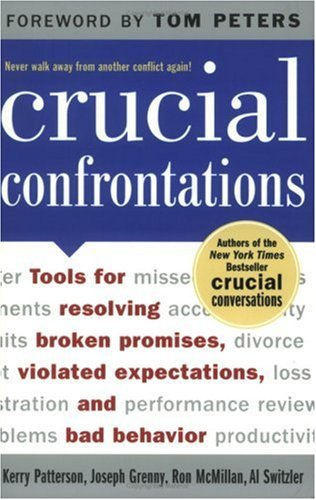
    Today, I’m quoting from the book, Crucial Confrontations: Tools for Resolving broken promises, violated expectations, and bad behavior, by Patterson, Grenny, McMillan, & Switzler. If you ever or even occasionally find yourself in the scenario of having to confront someone – I highly recommend this book.

     Think CPR

    “The first time a problem comes up, talk about the Content, what just happened: ‘You drank too much at the luncheon, became inebriated, started talking too loud, made fun of our clients, and embarrassed the company.’ The content of a problem typically deals with a single event – the here and now.

    The next time the problem occurs, talk Pattern, what has been happening over time: ‘This is the second time this has occurred. You agreed it wouldn’t happen again, and I’m concerned that I can’t count on you to keep a promise.’ Pattern issues acknowledge that problems have histories and that histories make a difference. Frequent and continued violations affect the other person’s predictability and eventually harm respect and trust….

     As the problem continues, talk about Relationship, what’s happening to us. Relationship concerns are far bigger than either the content or the pattern. The issue is not that other people have disappointed you repeatedly; it’s that the string of disappointments has caused you to lose trust in them: You doubt their competency, you don’t respect or trust their promises, and this is affecting the way you treat one another: ‘This is starting to put a strain on how we work together. I feel like I have to nag you to keep you in line, and I don’t like doing that. I guess my fear is that I can’t trust you to keep the agreements you make.’”

    To learn more about this book or order it through my Amazon Affiliate’s bookstore, click this link.

  • Top Posts of February 2012

    Here are the most viewed posts on Transforming Leader in February.

    1. The Four C’s
      An exploration in four criteria necessary when hiring or recruiting leaders into positions of influence.

    2. Sunday Morning Announcements
      Includes some great ideas to make morning announcements more effective as well as som great video announcement examples from EGC.

    3. Ten Church Systems: The Assimilation System
      Part of ‘The Ten Church Systems‘ series focusing on building a ‘guest friendly’ environment that will draw guests back to your church.

    4. Build Momentum & Create Unity With A Blog
      Encouraging church leaders to build a blog for the congregation, volunteers and/or leaders.

    5. Andy Stanley’s Podcast (for the non-tech Christian leader)
      How to get access to some of the best leadership teaching available for free.

    6. Leaders are Readers
      Tips on getting a lot of reading done, even if you aren’t an avid reader.

    7. Bad Website Design
      A simple infographic describing 8 reasons people might leave your website.

    8. This is Church! (video)
      An amazing (and free) video clip that describes what ‘the church’ really is all about.

    9. Where Should Church Volunteers Park?
      Is your parking lot guest friendly? One way to tell is to see where your leaders and volunteers park.

    10. Guest Friendly Greeting
      Four key principles for greeting guests every week as they arrive at your Weekend service.

    I am also very proud to announce the release of my first eBook this month. It’s entitled “Thinking For A Change: a fresh look at critical thinking“. I am selling it for $3.99. Please consider getting yourself a copy. So far, I’ve received great reviews from my readers.

    Image from seruvenci at istockphoto.com.

  • Thinking for a Change: a fresh look at critical thinking e-book

    I’m pretty sure our ‘default’ style of thinking errs somewhere between “not too simple that I look stupid” and “just enough to get me average results.”

    I’ve heard it said that progress is only one idea away. With some fresh ‘thinking’ tools and a renewed motivation to press through the status-quo I am sure that, in Christ, our lives and ministries can reach their fullest potential!

    That’s what my brand new e-book, ‘Thinking for a Change’ is about: Critical Thinking. I’m convinced that most of us can be critical thinkers, but first we need to learn how. I hope ‘Thinking for a Change’ will equip you and your team with tools to be successful wherever you are. Cost is $3.99.


    Here are a few suggestions on how you might utilize ‘Thinking for a Change: a fresh look at critical thinking’.

    • Discuss With Your Team
      Critical thinking and strategic thinking have a lot in common. What better way to ensure everyone is ‘thinking’ together than to talk about ‘thinking’ before you really start ‘thinking’.
    • Give To Your Key Leaders
      This book can be a great tool in the hands of your key leaders. Armed with a fresh perspective about how to approach problems, you may discover they spend more time working up solutions than in coming to you with their problems.
    • Give To Your Staff & Volunteers
      I didn’t market this book as a leadership book for a reason. It isn’t. It’s a book about solving everyday challenges. It’s use ranges from cleaning the carpets to dealing with the photocopier to facing scheduling, financial, relational challenges and more. 
    • Promote To Your Congregation
      Obviously, ‘thinking’ applies to everyone, everywhere. Although most of the examples in ‘Thinking for a Change’ are ministry oriented, the principles will apply in every aspect of life. You may want to consider letting your congregation know about the book and point them here for purchase.
    If you do choose to purchase this e-book, I invite you to also consider giving me your feedback. What did you like? What didn’t you like? How could I improve on the content? Was there anything missing? I’d love to hear from you. Thanks!
    Purchase your copy today! Cost is $3.99.
    Also, checkout my other products at the Transforming Leader store.

    Photo compliments of joecicak at istockphoto.