Category: LEADERSHIP

Leadership Articles prior to 2016

  • How To Maintain Unity in the Local Church

    How To Maintain Unity in the Local Church

    A while back I was asked to create a devotional video for christian leaders focusing on the topic of character. I decided to discuss character as it relates to unity in the local church. The passage I shared from is found in 1 Peter 3:8:

    “Finally, all of you, have unity of mind, sympathy, brotherly love, a tender heart, and a humble mind.”

    This may be a great video for your leadership team, eldership or board of directors to watch and discuss together, just to keep the conversation about unity in the church alive and in the open. Enjoy.

    Questions:

    At the end of this teaching, I ask a few group questions. Here they are for your reference as well.

    • What relationship are you dealing with right now that’s causing strife, division, or discord?
    • What part, if any, are you playing, to fan the flames of that discord?
    • Which of the following words do you feel need to be applied, based on the passage I just read?
    • What is the Holy Spirit speaking to you right now?
  • Why Churches Struggle Finding A New Pastor

    Why Churches Struggle Finding A New Pastor

    My son loves to fish. A couple summers ago he caught a great fish (see picture) in a pretty small pond. He and his friends even landed a huge snapping turtle! The thing is, Ben has a somewhat unique fishing method. His primary fishing hole is at a pond near our home that has a bridge spanning the middle. He and his friends simply “pick their fish” while looking down over the bridge, and then focus on that catch. They’ve been pretty successful too!

    I was talking with a leader the other day about succession planning for the local church. I told him there’s a big difference between Succession Planning and Replacement Planning. It’s a crude illustration, but I found myself sharing about my son’s fishing strategy.

    I likened Succession Planning to what my son does at that bridge on the pond. Pick your fish, then focus on that fish until you’ve successfully hooked and brought it in.

    Replacement Planning is going to be a lot more like the traditional fishing methods most of us use. Bait, cast, catch a bunch of green stuff. Try again, set the hook, pull in something small and ineffective, try again and again and again, until we catch something close to what we’re looking or hoping for. 

    Every pastor wants to find the right person to replace him when it’s time to pass the baton. The problem is, most don’t think to look for that person until it’s too late. Sometimes I’ll receive a call from a pastor who is ready to resign or move on. They ask me, “Can you help me develop a succession plan?” After a few questions I have occasionally answered with, “No. But I’ll help you work on a replacement plan.” 

    Succession is about finding one or more candidates for pastoral leadership and then mentoring them until one has shown him or herself ready for leadership. By then, it’s usually obvious to the senior leadership of the church, if not the congregation as well, that the new pastor is in the house. The transition usually goes a lot smoother for everyone.

    Replacement is about finding one or more candidates who hopefully fit the bill, and putting them in the saddle, with a prayer that they were the right one. Too often, it turns out they aren’t. By the time you find that out, it’s too late and the church is often sidetracked for months or even years dealing with the repercussions.

    Here are a few more differences between succession and replacement planning.

    Succession

    Replacement

    • Is a process.
    • Is an event.
    • Begins 2-3 years before the transition.
    • Begins 3-6 months before the transition.
    • Is proactive.
    • Is reactive.
    • Prepares the congregation for change.
    • Surprises the congregation with change.
    • Yields expected results.
    • Yields mixed results.
    • Values are embedded into the new leader before succession happens.
    • Values are discovered in the new leader after replacement happens.
    • The new leader holds a high degree of trust by the congregation.
    • The new leader holds a mixed degree of trust by the congregation.

    You get the idea. It’s wise to begin developing a succession plan for your church sooner than later. You can begin this process at any time and build it into your overall leadership strategy. It doesn’t matter if the Lead Pastor is 35 years old or 65 years old, it’s worth starting now.

    Which plan will your church implement when it’s time to find a new leader?

  • Why Most People Resist Change

    Why Most People Resist Change

    People usually contact me because they want to change something.

    They either want to change personally as a leader or to change the way things are done in their ministry. A driving motivation behind change is transformation. We want to be different, better and more effective; and we want to see people’s lives changed around us.

    I find it very interesting how much we resist change.

    When I ask clients (who are paying me to help them change) to do something different which they have been doing a certain way for a long time, they almost always fight me about it, sometimes even to the point of getting angry at my suggestion. In other words, they resist change.

    I remember talking to a pastor who wanted to make some sweeping changes in how the church reached out to the community. I made three initial recommendations to him. The first had to do with the delivery of his Sunday morning messages (always a very sensitive topic for pastors.) The second was regarding the structure of the staff. And the third was related to how the church kept track of guest information. In each case, he told me, in no uncertain terms, that he “wasn’t ready to do that yet.” After a while I realized that he wanted to see changes happen, but he wasn’t willing to change himself. It took a while to help him shift his thinking.

    Even when we know WHAT we should do different, we tend to keep doing it the old way.

    This is intriguing for me. I struggle changing certain personal behaviors in my life (like how I eat,) and even how I view myself (personal insecurities.) In the same way, leaders and organizations struggle making the necessary changes to grow and make a bigger difference in their communities – even when they know what they should be doing.

    This morning, I ran across this 8 minute video. I almost didn’t watch it. I’m so glad I did. Check it out.

    Change is hard, especially when it means changing behaviors and mindsets that are deeply rooted in our psyche.

    Whether it’s about our self-worth, how we see God or how we think He sees us, how we eat, talk or lead – if it’s something we’ve been doing the same way for a long time, it’s going to take work and effort to begin doing it differently.


    Food for Thought – this would be a great video to share on a Sunday morning while addressing life change from the pulpit. Just an idea!


    An invitation to get some help.


    Proverbs 19:20 says, “Listen to advice and accept instruction, and in the end you will be wise.”

    I’d like to invite you to consider starting a conversation with me about helping you or your organization change. Driving change has been a part of what I do as a leader my entire adult life. Every situation is different and will require a different strategy – but I am confident you can change. Let me help you grow and make a greater impact with those around you!

    To learn more about the coaching I provide, click here!

  • How To Offer Amazing Ministry With Not So Amazing People

    How To Offer Amazing Ministry With Not So Amazing People

    I recently visited a local gym who was offering a week membership for free. I was truly impressed. They had a wide range of workout rooms and exercise equipment and a beautiful facility. When I arrived for the first time, they gave me a tour of the facility and made themselves available to help me get acclimated to any of the equipment I didn’t understand. The offer to help wasn’t really necessary since there were instructional signs and videos available explaining how to use each machine.

    They converted an inexperienced and mildly overwhelmed guy (that’d be me) into a confident individual who had the right tools he needed to get great results. At the very minimum, it would be hard to NOT have at least an average workout, though I’d definitely rate my experience above average, if not exceptional. 

    Great systems turned the wrong person into the right person and quickly converted average results into maximized results.

    The Systems/People Matrix

    Let me introduce a revolutionary matrix that, if properly applied, just might change your perspective on how to offer amazing ministry with not so amazing people.

    [fusion_lightbox] [/fusion_lightbox] 

    I call this diagram the Systems/People Matrix. It has been adapted from a similar graph I found in Nelson Searcy’s e-book, “Healthy Systems, Healthy Church“). 

    The point of this matrix is simple. When you have great systems, you can often recruit people who aren’t necessarily the ‘right ones’ and eventually develop them into the right people over time. Amazing ministry happens not just because we have the best people in place, but because we have great systems that give people time to become the best people.

    Let’s look at each quadrant a little closer:

    Down and to the Right

    When you have poor systems, but great people, your end result is frustration. That is, the people serving are frustrated, and the longer they serve in that role the more frustrated they become. This often eventually leads to volunteer or staff turnover. They love doing what they are doing and are passionate about it, but they don’t feel valued or cared for and don’t feel like they are equipped or empowered to do the job right.

    RESULT: Not so amazing ministry.

    EXAMPLE 1: A Sunday School teacher shows up to teach the class and discovers that the toys are dirty and put away in the wrong boxes from last week. She spends the first ten minutes putting them in order and getting all the toy pieces back where they belong. Those ten minutes were supposed to be spent preparing the craft and quieting herself before everyone arrives. The next time she arrives to teach, she discovers all the crayons are broken and the cereal box was left open so the cereal is stale.

    EXAMPLE 2: The drummer shows up for worship team rehearsal 10 minutes early to prepare and make sure the drums are setup the way he likes and so he can warm up. When the worship rehearsal time arrives he discovers only two people have arrived. He waits 15 minutes before everyone else gets there and takes the stage. It then takes another 15 minutes to do the sound check and get the monitors mixed properly. He wonders if he should just show up 30 minutes late from now on and forget about warming up.

    Down and to the Left

    If you don’t have good people in the designated role, and you don’t have any systems to serve them, you’ll end up with failure. There’s really no way meaningful ministry can happen consistently in that environment.

    RESULT: No Ministry.

    EXAMPLE 1: A Sunday School teacher doesn’t really care about doing anything other than making sure the kids don’t hurt themselves. She doesn’t particularly enjoy kids either, but she serves because she knows it’s important. Since there are no systems in place to provide great toys, craft supplies and a lesson plan to the teachers, she literally just comes every week and spends her time trying to keep the kids occupied and prevent them from hurting themselves. Afterwards, kids leave the room crying or bored and the teacher leaves exhausted and ready to quit. As a result, the parents are frustrated that their kids aren’t getting any valuable teaching and don’t want to attend class and it becomes increasingly difficult to find reliable volunteers to run the class.

    EXAMPLE 2: A volunteer is recruited to build a website for the church because he has some web experience. Since nobody gave him any instruction, images or content, he just creates a basic and simple site that ends up missing a lot of crucial data. And since all he was recruited to do was build the site, and not manage it, three months after it’s completed most of the information on the site is dated and some of the pages are broken. Guests who visit the site often choose to visit somewhere else simply because the website is so outdated and unprofessional looking.

    Up and to the Left

    The top left quadrant is the one that fascinates me the most. In this quadrant you have great systems in place, but not the greatest people serving in those roles. Perhaps the people are new, immature, unskilled, or simply not passionate about what they are doing. Despite this, the results will very often be average and sometimes above average. A great example of this in the business world would be your local fast food joint, like McDonalds, Arby’s, or Taco Bell. I’m fairly certain most of those employees don’t dream about making fast food service a career path or have a lot of previous training flipping burgers and taking orders. And yet, it’s highly likely you will receive similar service and products no matter where you make your order in the entire world. Why? Amazing Systems. 

    RESULT: Nearly Amazing Ministry.

    EXAMPLE 1: A hesitant single adult has agreed to do a ‘3 month test drive’ as a Sunday School teacher. At first, she is nervous she made a bad decision because she has never worked with kids much. But after attending two sessions as an apprentice, receiving great follow-up training and walking into the classroom each week with everything in it’s place and simple, easy to follow, instructions on the inside door, she has decided it’s not that hard and a lot of fun. At the end of the 3 months, she’s committed to serve another year and has already proven to be the ‘right person for the job.’

    EXAMPLE 2: A volunteer that normally comes in on Saturdays to fold and stuff the bulletins calls in sick the last minute. The secretary has a substitute list of potential backups, but they have never actually done the job. She makes the call and as the backup arrives she spends 5 minutes walking her through a checklist and showing her the machinery, which is also well labelled with instructions. As a result, the job gets done as expected and the volunteer felt like she was able to help the church ‘on the fly’.

    Up and to the Right

    This quadrant represents not average ministry or even above average, but maximized ministry. Staff and volunteers are serving where they believe they are called to serve and they have the training and gifts needed to do it. Since there are great systems in place, they spend a lot of their time and energy actually ministering to people and improving the overall ministry of the church. Often, they move on to become the influencers within that sphere of responsibility. 

    Result: Amazing Ministry.

    EXAMPLE 1: The sound tech loves to do sound ministry, and over time he has learned how to do it well and is good at it. On top of that, the expectations, systems, and tasks necessary to do the job are well defined. As a result, he helps recruit and train new sound techs and is currently working on learning some advanced tech that will eventually help the church know how to best place the speakers in the room to maximize their capacity and actually minimize loud hot-spots in the room.

    EXAMPLE 2: A Sunday School teacher serves twice a month in the four year old class and absolutely loves it. He actually looks forward to those Sundays. Since he knows exactly what to expect each Sunday morning there is little stress associated in the job. In fact, the children’s director has created room in the timeline of ministry to kids to allow him to personally pray over each child every week. He recently started a blog for parents of preschoolers at the church and is personally ensuring that each preschool teacher writes on it once a month. His love for the ministry is so contagious that the adults in his small group are thinking about volunteering too. 

    I have a challenge for you . . . write out each area of ministry or responsibility you have delegated to other staff or volunteers. Now ask yourself which quadrant that ministry falls in, and what you need to do to improve the systems to better serve those serving within them.

  • Why Young Adults Don’t Attend Your Church

    Why Young Adults Don’t Attend Your Church

    I used to visit a restaurant that had two separate dining areas, one slightly larger than the other. The larger dining area was always where I sat to eat, even though I had to walk right by the smaller dining area to get there. To be honest, it never occurred to me that I could sit in there if I wanted to. The reason was quite simple. It was where all the ‘regulars’ sat, who were also all much older than me. There was sort of an ‘exclusive club’ feel to the place. Everything about that space screamed, “Private Party” even though it wasn’t.

    Sadly, our churches often send this same message to the younger generations, without even realizing it.

    Let’s split up the ‘younger generation’ demographic into two categories, those (1) not interested in God and those (2) interested in or pursuing God, and focus on the latter group. It’s not hard to miss these people in our churches today, especially in the small to mid-sized churches. 

    Why aren’t they attending more of our churches? 

    I suspect the following 5 reasons might answer that question.

    1. It feels like an insiders club.

    Young people aren’t interested in learning the secret handshake so they can be part of the church. If they visit the church a few times and feel like an ‘outsider’ for very long, they’re not going to stick around. It is super important church leaders ask the question, “What (formal & informal) hoops have we created that people have to go through before they are accepted and integrated into the life of our church?”

    In other words, how long will it take & what needs to happen before they are treated like family? More than any other age group, we need to be intentional about making this process simple, both practically and emotionally. 

    2. It reminds them of their ‘mom & dads’ church.

    I’ve heard young adults echo this phrase many times over the years. They leave the church they grew up in and find themselves at college or on their own. Eventually, they check out some churches in the area. From the moment they walk through the doors until they leave, their experience reminds them of church growing up. Only, for many of them, the Sunday morning experience growing up wasn’t for them, it was for the adults, for mom and dad. 

    Although technically “adults,” many young people aren’t interested in acting like the ‘older’ adults they’ve been around their whole life. They want to express themselves as the younger generation. Churches who are actively reaching this group of people are also finding ways to enhance the Sunday morning environment to better appeal to them.

    3. There is nothing interesting for them to do.

    Despite the fact that young adults have a history of sitting in front of their devices, TV’s and xbox’s growing up, they don’t want to just sit around at church. They’ve grown up having a lot more freedom and control over what they get to see and do than those before them. And they are going to get bored real quick if they are forced to just do and go where everyone tells them to. They want to have a say in what’s going on and they want to do something important and interesting.

    Churches who are thinking of this generation will quickly get them involved in ministry. They will encourage them to reach out to felt needs in the community. And they will provide lots of fun activities that are designed to keep young adults engaged with one another and the church family.

    4. There is no one interesting to hang out with.

    Many young adults who visit your church are looking for new connections. Surprisingly, not just with peers, but with people who can act as mentors and leaders in their life. That said, peers are important. Many a young person will walk in a church, scan the crowd, and determine to never return simply because there is no one else around their age. Churches that can reach a small ‘quorum’ of young adults have the beginnings of a foundation to build on, relationally.

    It shouldn’t stop there. One of the best ways to truly connect to this auspicious group of people, is by inviting them into the homes and lives of your church families. I’ve never heard of a young person who turned down an invitation to dinner and who doesn’t secretly enjoy experiencing ‘family’ away from their own family.

    5. Their questions are not getting answered.

    Young adults hate watered down and pat answers. They have questions and they are genuinely interested in the answers. They want to know the Truth. But they have little patience for flowery speeches, big words, and long explanations. They want it simple. They want to get it. They want it fast.

    Communicators need to brush up on their skills and not assume what worked ten years ago will work today. They need to know how to tell great stories and they need to be consistently asking themselves how they can connect with young adults. More than ever before, church leaders must, “be prepared in season and out of season.”


    What other reasons are young people staying away from our churches?

  • What to Read

    What to Read

    There’s so much great content available on the internet and through both books and ebooks. Sometimes it can be hard to sift through it all for the good stuff. So I thought I’d share some of the ‘good stuff’ with you, at least by my reckoning. Enjoy.

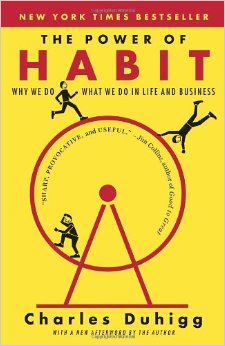
    power-of-habitBook: The Power of Habit by Charles Duhigg

    I love this book. It’s a bestseller for a good reason. It’s well written and well thought out. The Power of Habit discusses what a habit is, why it’s so difficult for us to break out of a habit and provides practical input as to how to do so. The book introduces a few very important concepts for churches and non-profits too, the most interesting and powerful being what he calls, “Keystone Habits”. I strongly urge any leader who is trying to run an organization or pastor/counselor who is trying to help people get out of old habits and into new habits to give this book a try. Warning: it is not written from a christian perspective – but most definitely hits the mark.

    Some Great Articles Online

    6 Ways to Derail Your Church Announcements by Rich Birch

    Announcements are a great tool for moving people to action. However, it can be difficult to keep them fresh and creative every weekend. Even worse, the people who do them can get lazy and some bad habits sneak in that undermine their effectiveness. Here are some of the habits I’ve seen over the years. Read More.


    Five Things A Church Leader Can Do To Avoid Burnout by Perry Noble

    #1 – Talk to your spouse. I can promise you that your spouse may not completely understand what you are going through (I wrote about that here in an article entitled, “The Pastors Pain”), but your honesty is what they are craving the most. One of the things I am most ashamed of in regards to my battle with depression and anxiety is I did not tell Lucretia for quite a while. If I would have told her earlier she could have understood me better and prayed for me as I battled through the issue. Read More.


    Three Lessons Learned From My PK’s by John McGee

    Have you ever wondered what it would be like to step into your children’s shoes – in other words, to have you as a parent? How would you feel if you were the PK in your family? Recently, a friend was sharing some thoughts he had gleaned from Barnabas Piper’s book about growing up as a Pastor’s Kid. This made we wonder what my kids might say if they ever wrote a book about being a PK. Rather than waiting 20 years for the book, I asked them what it’s like to be a PK at our church. Read More.


    Five Things Pastors Need to Say to Their Children by Thom Rainer

    Over a year ago, I wrote a post at this blog on pastors’ children. According to the comments and the views, I obviously hit a nerve. Some of the comments came from pastors themselves. But a number of comments came from the children of pastors. Since that article, I have continued to receive comments from children who grew up in pastors’ homes. There is a consistent theme going through many of their perspectives and emotions. Many of them had very positive experiences; but many did not. Through hundreds of comments and conversations, I have been able to distill five things every child of a pastor would like to hear from their pastor/parent. Indeed, those who heard these five things consistently are those who have the healthiest attitudes toward the church today. Read More.


    26 Lessons from 15 Church Annual Reports by Rich Birch

    Churches use their annual report as a tool to communicate with leaders, volunteers, donors and the general community about what happened over the past year. Done well, annual reports engage people in the mission … done poorly, they aren’t worth the paper they are printed on (or the hard drive space they are stored on)! I asked the unSeminary community to share their annual reports, to see what I could learn from them. I received a lot of reports! Here’s what I discovered from studying them. Read More.


    Top 10 Small Group Curriculum Reviews of 2014 by Mark Howell

    Looking for great studies to add to your approved list? Here are my top 10 small group curriculum reviews from 2014. Read More.


    Five Reasons Why Millennials Do Not Want to Be Pastors or Staff in Established Churches by Thom Rainer

    Not all Millennials are averse to serving in leadership roles in established churches. But many of them are. And our churches are approaching a tipping point where many are unable to attract Millennial members or leaders. It will likely soon be a crisis. What is it about established churches that push away Millennials? Let’s examine that question first, and then let’s look at some possible solutions. Read More.

  • Seats on the Bus

    Seats on the Bus

    In his book, Good to Great, Jim Collins says, “We expected that good-to-great leaders would begin by setting a new vision and strategy. We found instead that they first got the right people on the bus, the wrong people off the bus, and the right people in the right seats – and then they figured out where to drive it. The old adage, ‘People are your most important asset’ turns out to be wrong. People are not your most important asset. The right people are.”

    He hit the nail on the head. Ministry is not just all about having people around doing things; it’s also about paying attention to what they are doing as well. Unfortunately, I think this ideas sort of locks many of us up. We think, “How am I supposed to find the exact right seat for everyone?” Ugh. Some of us can hardly figure out where WE fit in, much less trying to figure out which seats on the bus everyone else is supposed to fit.

    MY RECOMMENDATION: START WITH SECTIONS.

    What if we just started by getting people in the right section of the bus instead? Generally, we have three kinds of people in our church: Creatives, Doers & Leaders. Yes, I know. Sometimes people can be a mixture of one or more of those. But generally speaking, if we know what kind of people we’re dealing with, we can seat them where they fit best and worry about finding their exact seat as time goes on.

    The back of the bus – Creatives

    Everyone knows that the troublemakers like to sit in the back. If you’re sitting back there, you probably want to be far away from what’s really going on. You aren’t interested in where the bus is going right now. You just want to utilize your creativity to dream, talk, and get into just enough trouble that the bus driver doesn’t notice. 

    This is where strategic thinkers and creatives sit. They are big-picture people. They like to try new things. They are sometimes critical thinkers (I didn’t say critical people!) They are the ones you want in the room when you’re dreaming about the future, evaluating how things are going and discussing creative, new things to do or ways to do them. 

    These people don’t need a lot of authority to make choices, they just need a platform for their thoughts and ideas to be heard. Great leaders will gather them together to hear them out and learn from them. They also tend to be early adopters, ready to jump in with both feet when it’s time for change.

    The front of the bus – Leaders

    If you’re sitting at the front of the bus it’s likely because you want to be close to the action. You want to see who’s coming in and out the door. You want to talk to the bus driver. You want to see where the bus is going next and you want to play a part in how you will get there.

    This is where the the leaders sit; the ones who make decisions. These are the people in your organization who will actually decide the future and direction of the church. Sometimes the Creatives & the Leaders are the same people. However, often it’s wise to have them sit in a separate section of the bus. Of course, if you’re driving a small bus (a small church/ministry) you don’t always have that luxury. 

    In a perfect world, the Creatives come up with some great ideas, feedback and insights and the Leaders can then determine which one’s will work best for the bus based on it’s mission and where it’s going.

    The middle of the bus – Doers

    If you’re sitting in the middle of the bus you are likely in your own world. You’ve got your iPod in or your just hanging with everyone else in that section. Sometimes you like to listen in on the talk in the back of the bus and sometimes you like to sit near the front to get a feel for the action, without having to be involved. You aren’t cut out for the intensity of the back of the bus and you aren’t really super interested in where the bus is going. You just like being IN the bus.

    This is where the doers sit. These are the people who will do whatever is necessary to keep the bus moving and support the vision of the leaders. They are the ones who will dig their heels in and grind out the plans you have made. Your doers don’t make a lot of decisions, and they don’t want to. They do the work based on the decisions that have already been made, and they do it well.

    About Your Bus

    Here are a few closing observations about how these sections work (or don’t work) in different ‘buses’ or ministries.

    • In my experience, the middle of the bus (Doers) is where the vast majority of people sit, like 90%. There are usually only a few seats in the front and a few seats in the back dedicated to Creatives and Leaders.
    • If a bus has too FEW Doers, it end up coming up with a lot of ideas/plans that never get done. Innovative ideas & new paths don’t get built. The bus doesn’t stop when it should to take on new passengers. It sometimes doesn’t get cleaned properly and needs a fresh coat of paint. You get the idea.
    • If a bus has too FEW Leaders, the bus tends to take loopy circles and gets distracted going places it doesn’t need to go. It also runs inefficiently and needs to spend a lot of time in the shop with repairs. Often, the bus looks great but is going nowhere important.
    • If a bus has too FEW Creatives it takes the path it’s always known, even when there are better paths to take. The bus stays old and eventually becomes uninteresting to prospective new passengers. 
    • The smaller the church, the more Creatives and Leaders have to double up and also be Doers. There is less of a clear demarcation between the different seats.
  • Four Terrible Assumptions Church Leaders Make

    Four Terrible Assumptions Church Leaders Make

    I was standing in the lobby of a local church talking to an unchurched first time guest. It was one of the first times he had ever visited a church and he knew nothing about God or christianity. The service had just completed and people were filtering out of the sanctuary and collecting in small groups, visiting with one another. It was a warm, friendly atmosphere. I was so glad when the pastor noticed me and came over to talk to us.

    Alas, my joy was short-lived. The pastor introduced himself to my new friend and then proceeded to talk about his sermon and how important it was for “us Christians.” It was sort of an “insiders” conversation. I wanted to step on his toe or something. I wished he could read the urgency in my eyes. In desperation, I finally interrupted him and blurted out, “Pastor, I didn’t know if I mentioned this or not, but this is our friend’s first time here this morning. Did you get to meet his wife and kids yet?” I’m still unsure if the pastor got the message, but I was at least able to distract him from the unhelpful conversation and redirect it to a more safe topic. Ugh.

    I happen to know this pastor has a heart of gold. He’s a great guy, a seasoned minister, and truly loves both his congregation and the people in the community. I know he has a heart for the lost.

    But he has fallen into a trap. One that, unfortunately, is very easy for pastors and church leaders to stumble into. He’s forgotten that the people who sit in his congregation are not like him. He’s making several bad assumptions about the people in his church, and I’m afraid it’s potentially turning them away.

    Four Terrible Assumptions Church Leaders Make:

    Since I visit a lot of churches as a ‘Mystery Guest,’ I have the chance to experience their church from a very unique perspective. Following are four terrible assumptions I have seen church leaders make way too often. 

    Assumption #1: Guests Know What To Do

    It saddens me greatly when church leaders assume guests have experience attending churches and know what’s going on, what they are supposed to do, where they are supposed to go, etc. They forget that the church environment, one they are intimately familiar with, is a brand new environment for many guests. Even those who have, perhaps, attended church before may still be in the dark, especially if their ‘church experience’ was from a different denomination or style of church.

    Imagine visiting a place that you have never visited before, where everyone but you feels at home and nobody thinks to help you get acclimated. Even better, go find that place and check it out. Perhaps your local health club or golf club, I don’t know, try the New York Stock Exchange. Visit that place and be reminded that your guests are experiencing something similar.

    They don’t know what to do with their kids. They don’t know the words to the songs, and probably feel a little uncomfortable singing them. They don’t know if they are supposed to give money or take communion. And they don’t know when to stand, when to sit or what to say. At one church I visited, everybody quotes, from memory, the Lord’s Prayer and sings the Doxology every week. Your guests know neither of those things.

    Assumption #2: Guests Know the Bible.

    Walk up to just about any adult in America and you will discover that they know how to drive a car. It’s a given – and it’s pretty much assumed. After all, everyone we know eventually ends up behind the wheel. Sometimes we ride with them while they drive. That sense of familiarity has seeped into many churches regarding the Bible. Church leaders spend a ton of time with other people who read the Bible, understand what it’s about, and know all the stories. So it’s not that great a leap for them to assume that anyone who is in the church has Bible knowledge.

    Imagine walking into an advanced physics class at your local university. Even better, go visit it sometime. Don’t tell anyone who you are or why you are there. Just let the instructor & students talk to you as if you’ve already been through the other physics courses, like everyone else. You get the picture.

    You’re guests probably don’t know where to turn in the Bible, if they even own one. And it’s likely they don’t know the story of Jonah, David & Goliath, the parting of the Red Sea, the Last Supper, Pentecost and quite possibly even the story of Jesus’ death & resurrection. You learned all that as a kid in Sunday School; they didn’t. For many of your guests, the most they know about the Bible and it’s stories is from what they’ve seen at the movies. Do you really want to briefly mention Noah after they just watched Hollywood’s rendition of the story? 

    Assumption #3: Guests are Christians

    Perhaps one of the worst assumptions church leaders can make is that guests are already Christians. The tragedy behind this assumption is that, by making it, there is little to no room to actually open up the most important conversation that individual may ever have. When we assume someone has already discovered Christ’s love and forgiveness, we no longer think to share the Good News with them. Even worse, when we talk to unbelievers like they are already believers and part of the family, we may even give them the false impression that they are, in fact, Christ followers. They may end up attending and serving in the church for months or even years, and have never truly grasped the simple, yet profound message of the Gospel.

    Imagine being invited to a football party with a bunch of people you don’t really know. What if, without being asked, everyone assumes you’re rooting for the same team as everyone else in the room? When a touchdown is made, everyone cheers and slaps five and nobody even stops to think that you aren’t rooting for that team, and maybe don’t even like football! Is it possible that our Sunday morning environment and the way we talk to and treat guests aren’t too far off from that hypothetical situation?

    There is no guarantee your guests know God, or understand God. Jesus Christ may simply be a religious and historical name. Salvation? Forgiveness? A loving God? Atonement? All may be totally foreign words or concepts. The next time you shake the hand of that guest, assume nothing about their faith in God. Realize that they could be completely unchurched, or an atheist or agnostic; or to complicate matters, even possibly a Mormon, Buddhist, Muslim . . . you get the idea.

    Assumption #4: Guests have it all together.

    I’m convinced most Christian leaders would make terrible police officers. We have no idea how to truly profile another person. I’m pretty sure if we were sitting in the police car with an officer, watching the same people, we’d point out the nicest people as being potential criminals and totally miss those truly guilty. Sad to say, but I think a lot of church leaders look at our guests and falsely assume that, if they’re smiling, dressed well and friendly, then they are happy, well off and emotionally healthy; and if they’re scowling, dressed poorly and want to make a quick exit, then they are grumpy, in loads of debt and emotionally unstable.

    Think about what you’ve gone through, personally, this year. I know you’ve faced a few challenges of your own – we all pretty much do. If this has been a good year, then go back a couple years until you hit that particularly difficult situation. Now, how many of the employees knew about your challenge at the local supermarket when you were buying milk? No. They thought you were fine. 

    Philo of Alexandria once said, “Be kind, for everyone you meet is fighting a great battle.” That includes your guests. We don’t know if the battle is a recent loss, an addiction, a broken relationship, a serious illness, major debt or a lost job. Whatever it is, you aren’t going to see it when you introduce yourself and welcome them to the church. Don’t be fooled. They need the hope, love, healing, peace and forgiveness of Jesus Christ.

    How about you. Which assumption are you most guilty of making?

  • Toby Cavanaugh on Persistent Prayer

    Toby Cavanaugh on Persistent Prayer

    My friend, Toby Cavanaugh, shared an outstanding message to our staff, pastors, and leaders at Elim Fellowship on Persistent Prayer a while back. I was so impressed I decided to share the wealth. I know this message will inspire and challenge you in the area of prayer. It might also be a great video to consider sharing with your leaders at some point! Enjoy.

    [su_vimeo url=”https://vimeo.com/40672117″][vimeo 42830604][/su_vimeo]

    If you can’t see this video, click here.

  • Communicating For A Change

    Communicating For A Change

    I’ve listened to a lot of public speakers. Unfortunately, many tend to operate under the assumption that they are ‘good’ speakers when, really, well, they aren’t. Don’t worry. I won’t name names (that way I can ensure my name stays off the list too). I think we can often come to the conclusion that we know how to preach, or teach, because people listen to us – and maybe even nod their heads at times.

    Of course, the real issue isn’t whether people listen to us so much as what happens after they are done. Is there any change or transformation taking place in their hearts? Do they have something they can and will do? Are they motivated to become more of what God desires of them?

    Every preacher or teacher wants to see people’s lives impacted for eternity through their message. This is why I am recommending the book, Communicating For A Change, by Andy Stanley and Lane Jones. This book has played a HUGE role in my own career as a speaker. That’s not to say I’ve ‘arrived’, but I know I have grown. If you don’t already own it, I urge you to purchase and devour this book this week! If you do own it, I recommend you crack it open and give it another read. I know you won’t be sorry.

    Here’s a great & simple excerpt from the book:

    Create A Map: ME, WE, GOD, YOU, WE.
    With this approach the communicator introduces a dilemma he or she has faced or is currently facing (ME). From there you find common ground with your audience around the same or a similar dilemma (WE). Then you transition to the text to discover what God says about the tension or question you have introduced (GOD). Then you challenge your audience to act on what they have just heard (YOU). And finally, you close with several statements about what could happen in your community, your church, or the world, if everybody embraced that particular truth (WE). page 120

    Disclosure of Material Connection: Some of the links in the post above are “affiliate links.” This means if you click on the link and purchase the item, I will receive an affiliate commission. Regardless, I only recommend products or services I use personally and believe will add value to my readers. I am disclosing this in accordance with the Federal Trade Commission’s 16 CFR, Part 255: “Guides Concerning the Use of Endorsements and Testimonials in Advertising.”