Category: LEADERSHIP

Leadership Articles prior to 2016

  • Thursday Quote: 7 Practices – Replace Yourself


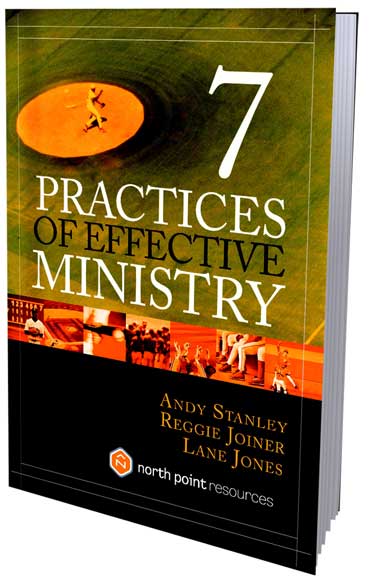
    My Thursday Quote this week is by Andy Stanley from his book, Seven Practices of Effective Ministry. At Elim Gospel Church this book is required reading for all of our leaders and new pastoral staff. The ‘seven practices’ have become benchmarks for how we think about ministry. The following quote is taken from the leadership practice, “Replace Yourself”.

    “Several years ago John Maxwell introduced our staff to the concept of ‘leadership lids.’ A lid is anything that keeps a leader from growing. Maxwell explained that there are certain aspects of your personality that can prevent you from achieving your full potential; therefore, it is important for leaders to identify their lids and do whatever they can to lift them. An organization will have a difficult time rising higher than the lid of its leader.

    We’ve discovered that organizations also have ‘leadership walls’ that prevent others from achieving their potential. Whereas a leadership lid can stunt your personal growth as a leader and may indirectly affect the rest of your organization, a leadership wall can directly stunt the growth of those on your team and, ultimately, create a leadership gap in your organization. Lids may stop leaders from growing up, but walls keep leaders out. They form a barrier that blocks the development of future leaders in your organization.”

    If you haven’t yet read this book, I urge you to do so and also to
    consider purchasing it through my Amazon Affiliate Store right here.

    To learn about other books I am reading or recommend, check out my Transforming Leader Store.

    Disclosure of Material Connection: Some of the links in the post above are “affiliate links.” This means if you click on the link and purchase the item, I will receive an affiliate commission. Regardless, I only recommend products or services I use personally and believe will add value to my readers. I am disclosing this in accordance with the Federal Trade Commission’s 16 CFR, Part 255: “Guides Concerning the Use of Endorsements and Testimonials in Advertising.”
     
  • Thursday Quote: Next Generation Leader

    Today’s Thursday Quote is from the book, Next Generation Leader by Andy Stanley. I highly recommend this book to you and your leadership team. Andy Stanley does a superb job in laying down some real basic leadership principles which are critical to sustainable and effective ministry. Here’s a teaser from the book:

    “To ensure that we are leading with our feet firmly planted on the soil of what is, we must live by the seven commandments of current reality:

    1. Thou shalt not pretend.
    2. Though shalt not turn a blind eye.
    3. Thou shalt not exaggerate.
    4. Thou shalt not shoot the bearer of bad news.
    5. Thou shalt not hide behind the numbers.
    6. Thou shalt not ignore constructive criticism.
    7. Thou shalt not isolate thyself.
    Attempting to lead while turning a blind eye to reality is like treading water: It can only go on for so long, eventually you will sink. As a next generation leader, be willing to face the truth regardless of how painful it might be. And if you don’t like what you see, change it.”
     
    Disclosure of Material Connection: Some of the links in the post above are “affiliate links.” This means if you click on the link and purchase the item, I will receive an affiliate commission. Regardless, I only recommend products or services I use personally and believe will add value to my readers. I am disclosing this in accordance with the Federal Trade Commission’s 16 CFR, Part 255: “Guides Concerning the Use of Endorsements and Testimonials in Advertising.”
  • Reading in February/March, 2012

    “Not every reader is a leader, but every leader is a reader.” Harry Truman

    For many of us, reading can be hard to do consistently. I know. It’s hard for me. Life is busy. I have a family, a ministry, people to meet, places to go, friends to care for and so much more to deal with. Who has time to read?
    The answer. Anyone who leads has time to read. It’s part of leadership. It’s a mark of a good leader. 
    Here’s What I’m Reading This Month


    What are you reading?

    Disclosure of Material Connection: Some of the links in the post above are “affiliate links.” This means if you click on the link and purchase the item, I will receive an affiliate commission. Regardless, I only recommend products or services I use personally and believe will add value to my readers. I am disclosing this in accordance with the Federal Trade Commission’s 16 CFR, Part 255: “Guides Concerning the Use of Endorsements and Testimonials in Advertising.”

  • Build Momentum & Create Unity With A Blog


    I am a proud father of four fantastic children. Every day I get to hang out with my preteen daughter, gradeschooler, preschooler, and toddler. As you might expect my daughter and her three younger brothers attend the youth and children’s programs at my church. My wife and I want to stay informed about what’s going on with our kids at church. Elim Gospel Church’s Children’s Pastor, Rob Hagstrom, is doing a great job.

    In the last week I’ve received three communications in my personal inbox because I am subscribed to his blog. On Monday I received a summary of what my gradeschooler has been learning all month. On Tuesday I received a post entitled ‘Understanding Your Toddler‘ and this morning I received one more informing me that there will be no kids program this Sunday night as well as information on upcoming kids ministry events, Sunday morning message topics, and Scripture memory verses. I am well informed.

    I am pretty certain EGC’s communication to parents has never been better! Here’s the important part . . . IT’S REAL EASY TO DO AND IT’S FREE!

    How You Can Enhance Communication With A Blog
    I’d like to suggest several ways a simple blog can revolutionize how you communicate with your congregation, volunteers, and influencers. In a future post I will share some tactical tips on getting started with a free blog platform like WordPress or Blogger.

    FOR THE CONGREGATION:
    This section highlights some ideas on how the pastor can maximize communication to his congregation. Note: Some churches have a ‘church blog’ that includes several authors, not just the Lead Pastor.


    • Recap the Sunday Morning Message
      I have a surprise for you pastors. People don’t actually talk about your sermon all week long. In fact, you’re lucky if they remember the theme of your message by Sunday night. Sorry. The good news is that you can refresh their memory with your blog. Probably the best time to do this is on Sunday night or Monday morning (within 24 hours of your message).
    • Communicate Big Events
      Although I wouldn’t recommend you blog about every single event in the church, it can be very effective to blog about upcoming events that you want everyone in the church to get excited about with you.
    • Share a Devotional 
      Let your congregation get extra input from you during the week, besides the weekend sermon. Share a brief word of encouragement during the week.
    • Setup Your Message
      You may want to occasionally encourage your congregation to ‘get ready’ for your upcoming message with a short story, Scripture, or quote.
    • Get Personal
      Your blog could be a great way for your congregation to stay current on various and interesting things going on in your life. For instance, if you just had a baby – post a pic!
    • Highlight A Story, Person, or Current Event
      People love stories – and they want to hear from the leaders in their lives. Use your blog to tell transformation stories from people in your blog. Or invite an elder to post a devotional thought or story as a guest blogger. Finally, link your readers to another blog, article, or news piece that you feel is relevant to them.
    • Enhance a Sermon Series
      At Elim Gospel Church we have occasionally utilized Pastor Josh Finley’s blog to emphasize a sermon series. For instance, in our “New Thru 30” series (we read the New Testament together in 30 days) we organized various church leaders to write an article and arranged them into the blog so that church members received an article every day for the 30 day series.
    FOR VOLUNTEERS
    This section highlights ideas on how a ministry director could utilize a blog to effectively inspire, instruct and inform volunteers in each one’s unique area of ministry. For example, your Greeter Ministry might create a blog for your greeters, cafe hosts, and ushers; or your Children’s Ministry might create a blog for the preschool and/or gradeschool volunteers.
    • Inspire
      Your volunteers will be most effective when they are inspired. Use your blog to motivate them towards fulfilling your church mission and vision by sharing stories, links, articles, etc. For example, this would be a great place to share a short devotion with the Worship Team about the ‘audience of One’ during worship.
    • Inform
      Everyone knows that confusion breeds anxiety; and lack of communication breeds confusion. There’s probably no better way to frustrate volunteers than to keep them in the dark about what they should know to be a success. Things like volunteer meetings, volunteer schedules and information about what they are supposed to do, when, and how are all extremely important. Additionally, your volunteers want to know about your new strategies and ideas before you implement them. A ministry blog is a perfect place to roll out any or all of those things. 
    • Instruct
      Another way to create a frustrating environment for volunteers is by holding back on the pertinent training, resources, and procedures needed to be successful. Your ministry blog can help to facilitate this by providing links, articles, and information on how to do their job. For example, your could write a simple article for your Greeters one week entitled, “How To Greet Parents”. You could share three simple steps. Again, as an example: (1)”Offer assistance with doors and coats.” (2)”Greet the child(ren) first.” (3)”Greet the parent next.”
    FOR MINISTRY INFLUENCERS
    This final section highlights ideas on how you might utilize a blog to encourage unity among your members and leaders. For example, you might encourage all of your members to subscribe to this blog so that your leadership can effectively keep them informed about strategic plans designed to fulfill your church’s mission.
    • Missional Momentum
      Your blog is a great place to systematically reinforce your church’s mission. This can be done with key stories, exhortations, and short teachings that reinforce and remind your influencers of ‘Why We Do What We Do.”
    • Values Reinforcement
      Similarly, a leadership blog can be very effective in strengthening your church’s core values. For instance, if you have a core value of ‘integrity’ or ‘caring’ or ‘family-focused’ you can highlight that value on occasion with an example of what fulfilling that value might ‘look like’ or ‘sound like’ in the context of ministry in the church body.
    • Culture Shifts
      Most church leaders understand that culture shifts can be a long and tedious process. Your leadership blog can help to build or maintain momentum with culture oriented strategies. For example, let’s say you have been intentionally focusing on building a ‘guest friendly culture’ or a ‘prayer culture’ in your congregation. That won’t happen overnight; but it CAN happen over time and with consistent reminders from your influencers blog.
    • Vision Casting & Strategic Roll-outs
      You want your influencers to be informed and have time to process change and new initiatives. A well thought out blog series can play a big role in setting your leaders up for success as they have time to give their own input and feel part of the beginning stages of your vision. For example, you may be getting ready to start a new small group initiative. You could write several articles over the course of a few weeks to your influencers first letting them know the development of this vision and asking for input and feedback. The result will be greater buy-in and trust from your leaders.
    • Feedback
      Since this particular kind of blog is dedicated to your ministry leaders and influencers, it can be a great platform to get honest feedback without worry that guests or the community is privy to conversations that could perhaps be misunderstood. Posing a question in your blog and inviting comments or inserting a survey into your blog can be very effective and easy.
    • Communication
      Similar to Volunteer oriented blogs, your leadership blog can be a great tool to request or remind your influencers to do something or be somewhere. For instance, you might write a short blog the week before Easter requesting all influencers to remember three things on Sunday morning: (1)Greet 3 People You Don’t Know. (2)Show Up 10 Minutes Early. (3)Let Us Know Of Any Problems Right Away.
  • Top 10 Posts of January

    Here are the top 10 posts on Transforming Leader in January, 2012.

    1. Sunday Morning Announcements
      Includes some great ideas to make morning announcements more effective as well as som great video announcement examples from EGC.

    2. The Four C’s
      An exploration in four criteria necessary when hiring or recruiting leaders into positions of influence.

    3. Demystifying Our Plans
      A short devotional about planning based on James, chapter 4.

    4. Thursday Quote – Steven Furtick & Perry Noble
      Two great quotes from some great pastors & leaders.

    5. Reading in December, 2011
      What I was reading in December and January. I’ve completed those books, except for ‘The Disney Way‘.

    6. The Ten Systems of the Local Church
      An introduction to what I believe are the ten key areas every church should be strategically developing each year.

    7. Leaders are Readers
      Tips on getting a lot of reading done, even if you aren’t an avid reader.

    8. Get with YouVersion Today!
      An introduction to the best Bible website and set of free tools ever!

    9. Thursday Quote: Discovering God Things (Exponential)
      Three questions from the book, Exponential, that we should ask when we are looking for ‘God Things’.

    10. Ten Church Systems: The Strategic System
      Discussion on what it takes to think and act strategically consistently.
    The month of January marked what looks to be a landmark for me. If you’ve been reading for a while then you’ve heard me talk about ‘The Dip’. Evidently, I’ve pressed through a ‘dip’ and am beginning to see a marked increase in readers. In the month of January I have more than doubled the number of hits on my website compared to previous months.
    Image from seruvenci on istockphoto.com

    Disclosure of Material Connection: Some of the links in the post above are “affiliate links.” This means if you click on the link and purchase the item, I will receive an affiliate commission. Regardless, I only recommend products or services I use personally and believe will add value to my readers. I am disclosing this in accordance with the Federal Trade Commission’s 16 CFR, Part 255: “Guides Concerning the Use of Endorsements and Testimonials in Advertising.”

  • Thursday Quote – Discovering God Things (Exponential)

    Today’s Thursday Quote is from the book, Exponential by Dave & Jon Ferguson. This book is all about ministry reproduction. You have never read a book like this one. It will challenge your thinking and force you to think about ministry in a totally new way. You will be stretched and your vision for the future expanded.

    This quote is near the end of the book. It answers the question, “How do I know when an idea, opportunity, or situation is a “God Thing”? Check it out:

    THREE QUESTIONS FOR DISCOVERING GOD THINGS.

    When we’re looking for God things, we find ourselves asking three key questions over and over:

    QUESTION 1: Where is God at work?Henry Blackaby, in his book Experiencing God, encourages us to always be asking the question, “Where is God at work?” We have found that question to be particularly helpful in considering new sites or campuses. So we’re constantly looking at the world around us, trying to discover where God may be at work, so that we can join him.

    QUESTION 2: Where is God dreaming?In his book An Unstoppable Force, Erwin McManus says there is a second question we also need to be asking: “Where is God dreaming?” This question keeps us from being passive and waiting for God to reveal his work to us. Instead it challenges us to anticipate where God might be about to do something that only he can do.

    QUESTION 3: How is God confirming that He is at work?The last question is a follow-up to the previous two questions. We also ask, “How is God confirming that he is at work?” Thi is a crucial question that holds us accountable to continuing to seek God through his Word, the Holy Spirit, prayer, and the community of Christ followers so that we are certain that we are joining God in his work and not simply asking him to join us in our work.”

    To learn more about this book or order it through my Amazon Affiliate’s bookstore, click this link.

    Disclosure of Material Connection: Some of the links in the post above are “affiliate links.” This means if you click on the link and purchase the item, I will receive an affiliate commission. Regardless, I only recommend products or services I use personally and believe will add value to my readers. I am disclosing this in accordance with the Federal Trade Commission’s 16 CFR, Part 255: “Guides Concerning the Use of Endorsements and Testimonials in Advertising.”
  • A Healthy Tolerance for Failure

    Let’s face it, nobody wants to fail. It is contrary to the very point of doing anything. We don’t start a project, ministry, or new initiative with a full expectation of failing. There is always at least a small hope that our efforts will result in success.

    Despite our intense desire to NOT fail, leaders also understand that failure is inevitable. Well, that’s not entirely true . Failure is only going to happen when people try something new. This is where our problem kicks in as church leaders. WE FEAR FAILURE. We tell ourselves that we don’t have the time, money, or emotional reserve to put up with failure. Or we are afraid that failure will show everyone around us that we aren’t qualified to lead. We might even ‘hear’ the words of our critics echoing in our minds when we think of trying something new and daring.

    I ran across this quote a while back while reading The E-Myth Revisited by Michael Gerber.

    “Tolerance for failure is a very specific part of the excellent company culture – and that lesson comes directly from the top. Champions have to make lots of tries and consequently suffer some failures or the organization won’t learn.” Thomas J. Peters and Robert H. Waterman Jr., In Search of Excellence.

    Don’t misunderstand. I’m not recommending you bet the farm (or church) on a risky idea. I’m suggesting that you may be stuck in fear and have therefore chosen to set risk aside altogether.

    So how about it? Do you encourage calculated risks and graciously allow for failure with your team?

    Perhaps better questions to ask are, When was the last time someone in your ministry tried something and failed? and, What was the last ‘risky idea’ that you or a team member implemented?
     
    Image from gunnar3000 on istockphoto.com

     
    Disclosure of Material Connection: Some of the links in the post above are “affiliate links.” This means if you click on the link and purchase the item, I will receive an affiliate commission. Regardless, I only recommend products or services I use personally and believe will add value to my readers. I am disclosing this in accordance with the Federal Trade Commission’s 16 CFR, Part 255: “Guides Concerning the Use of Endorsements and Testimonials in Advertising.”
  • Thursday Quote: Sticky Church & Legos

     
    One of the best books we have read as a team at Elim Gospel Church on developing and maintaining healthy small groups and closing the ‘back door’ is the book, “Sticky Church“, by Larry Osborne. I guarantee you that this book will not only give you fresh ideas for group ministry, but it will also help you communicate some of the principles on group life in the local church. It’s not necessary that you adopt every idea/philosophy represented as it is necessary for you to get/stay sharpened in helping people find authentic and lasting community in your church body.

    I highly recommend this book!

    Excerpt from Pages 79-80 of ‘Sticky Church

    “I think of people as being like Legos. We all have a limited number of connectors. Introverts have a few. Some extroverts have dozens. But either way, once they’re full, they’re full. And when that happens, we tend to be friendly but to not connect. It’s what happens when you move to a new town and are excited by everyone’s friendliness, only to be discouraged three months later that you haven’t connected with anyone.”

    “This can be very confusing and frustrating for people who are new to a community or church. The acts of friendship send one message, but the lack of connections send another. It’s why so many people complain about churches being cliquesh. The realit is, it’s not so much a church full of cliques as it is a church full of people whose connectors are already full. Obviously, this can be a huge problem when it comes to assimilating new people into a small group or even a congregation. But it can also be put to use by employing a bit of spiritual jujitsu.”


    Recommended products or services I use personally and believe will add value to my readers. I am disclosing this in accordance with the Federal Trade Commission’s 16 CFR, Part 255: “Guides Concerning the Use of Endorsements and Testimonials in Advertising.”

  • Guest Post: The Law of Navigation


    This is a guest post by Joe Jansen. He is a former pastor of 18 years and the Director of U.S. Ministries at Elim Fellowship. Joe provides guidance to pastors on church growth strategies, maintaining healthy congregations, and personal transformation. 


    It has been all over the news: the cruise liner that was sailing off the coast of Italy and struck rocks, leaving a tilted ship, at least 6 passengers losing their lives, and thousands onboard terrified and needing to be rescued. The ship ran into unexpected trouble, and from reports, it seems that numerous people had made some mistakes. The ship was tilting in the face of obvious peril, and the crew was ill prepared to be a help to the frightened passengers. It is also reported that the captain abandoned ship in the midst of this deadly mishap.

    This news reminded me of one of John Maxwell’s book, 21 Irrefutable Laws of Leadership. Maxwell explains the law of navigation: anyone can steer the ship, but it takes a leader to chart the course. Leaders see the trip ahead and plan for it. 

    “First rate navigators always have in mind that other people are depending on them and their ability to chart a good course.”

    The tragedy at sea last week might have been avoided if they had had a leader who understood the law of navigation, charted a safe course, thought ahead, and knew that many people were depending on him.

    As you pastor your church, at the beginning of 2012, how is God leading YOU to chart the course this year?

    I challenge you to take some time to establish the course and vision for yourself, your family, and your church.


    Disclosure of Material Connection: Some of the links in the post above are “affiliate links.” This means if you click on the link and purchase the item, I will receive an affiliate commission. Regardless, I only recommend products or services I use personally and believe will add value to my readers. I am disclosing this in accordance with the Federal Trade Commission’s 16 CFR, Part 255: “Guides Concerning the Use of Endorsements and Testimonials in Advertising.”

  • be weak


    My pastor shared an awesome message last Sunday that I felt would be relevant and an encouragement to you this month. We started a series called the ‘be series‘ and the first week of the year was an exhortation to ‘be weak’.

    I urge you to take some time this month and watch/listen to this clip. I believe you will personally be strengthened. Blessings!


    If you can’t see this video in your email or rss, try clicking this link instead.