Category: HEALTHY CHURCH

  • Turn the Volume UP!


    Have you ever had anyone threaten to leave the church because the volume was too LOW during worship? Believe it or not, I have. It only happened a couple of times and certainly did not compare with how many complained it was too loud. To this day, I can tell you who in our church wishes we would turn the volume up . . . and no, they aren’t deaf!

    Last week I wrote the article ‘Turn the Volume DOWN!‘ Today I would like to similarly share some reasons why people may want the volume turned UP in your Sunday services. You might experience slight deja vu.

    • It’s too quiet. (there is no energy in the room)
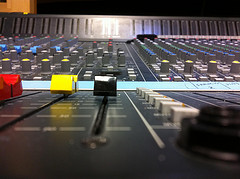
      Stating the obvious is always a great way to begin. The Master Volume needs to be turned up and the instruments should be remixed to the new level. When worship is too quiet it can make for a boring worship experience. I’ve been to many churches who mix their worship too quiet. I suppose it appeases a few key leaders (or the pastor), but it also puts a major damper on worship – especially for the younger generations.

    As a general rule of thumb, if I can hold a conversation with the person next to me during worship without leaning in and raising my voice to be heard, the sound is probably too soft.

    • Bad mix. (low energy in the room or we can’t hear the worship leader)
      Many times the problem isn’t volume. It’s a bad mix. The instruments are too loud and are drowning out the worship leader; or the keyboard and worship leader is mixed well but everything else is just a low hum in the background; or the drums are drowning everything so all people hear is just enough worship leader and primary instrument to be able to sing. Probably most common is when the kick bass (the deep booming sound from the drums) is turned way down. This can really squash energy in the room and may even make the difference between whether or not people ‘clap’ or not during high energy songs.
    • Hearing loss.
      Another reason why people might want the sound turned up is because they are simply half-deaf and don’t know it. I’m not joking. Unfortunately, it’s quite common for people to have hearing impairment AND to not know it. According to these statistics, people with hearing loss wait on the average of 7 years before seeking help. I better go get my ears checked.
    • Differing opinions.
      Read this same paragraph in my post ‘Turn the Volume Down!‘ That about sums it up! Everyone has different opinions on how loud they like to hear music as well as what the overall mix sounds like. The key is to determine who will be the primary driver for volume/mix (that is, who will represent the values/goals of your church best) and let that individual call the shots. Just a side note – assuming you have a passion to reach the younger generations, I recommend you err on the side of a more aggressive/loud mix than not. I’m not suggesting you drive everyone else out – but that you actively seek to find that balance.
    • Bad equipment or acoustics.
      Your equipment, speaker placement and room acoustics will make a big difference. Often, churches struggle with hot and quiet spots in the room. It’ll be loud in one area and too quiet in others. My church has this issue. I’ve used this fact to my advantage by encouraging those who tend to like it louder or quieter to sit in certain areas. It’s one reason why the young people like to sit near the front. They get both the speakers in the room as well as the stage noise coming off of people’s stage monitors. It’s also usually where the sub-woofers (where all the bass and lows come out making your body vibrate) are located.
    I will continue this short series of posts about volume in an upcoming article giving some general advice on how your church might better ensure your worship service has the best possible mix/volume to encourage maximum participation from your worshipers. Stay tuned!


    photo credit: ckaiserca via photo pin cc

  • Turn the Volume DOWN!

    Have you ever had someone threaten to leave the church if you didn’t turn the volume down during worship? I have. During my tenure serving at EGC we had quite a few “ups and downs” in relation to volume levels. At one point, the issue got so hot the elders were called on to deal with it (for a church of nearly 1,000, that’s a big deal). To make matters more complicated, I was the one ultimately in charge of maintaining appropriate volume levels (though I’m not a sound tech). I’ve had lengthy conversations with leaders, members, sound techs, worship team members and irritated attendees about this.

    In the next few posts, I am going to download some of the things I’ve learned about this issue. I hope you find them useful.

    Turn the Volume Down!
    Here are a few of the primary reasons why people want the volume turned down.

    • It’s too loud. (or the sound tech is deaf)
      OK. The fact is, sometimes it’s just too loud. The Master Volume needs to be turned down and the instruments should be remixed to a lower level. Excessively loud worship can be very distracting. There’s a point where the focus isn’t on the Lord, but on the clock – when worship will get over.
    • Bad mix. (or the sound tech is tone deaf)
      Unfortunately, this is often the primary reason people want to turn the sound down, at least in my opinion. Managing the audio for the worship team get’s more and more complex as you add people to the team. Complexity requires increased skill and experience. Many times, churches just don’t have someone of that caliber available. I know firsthand that what sounds like a ‘loud’ mix can sometimes be fixed with an experienced hand at the sound board. In these cases, turning the Master Volume down will take care of the ‘loudness’ in the room, and replace it with the problems I’ve noted in my next post entitled ‘Turn the Volume Up!’
    • Sensitive ears.
      One of my children has very sensitive hearing. What I’ve discovered is when there is going to be loud noises it greatly increases anxiety. It becomes distracting and on certain occasions, overwhelming. It seems to me that as people grow older they are either losing their hearing or becoming more sensitive in their hearing. That doesn’t mean loud worship only affects the older crowd, but an older crowd is certainly more likely to be impacted.
    • Physical challenges.
      When people have physical challenges that include migraines, anxiety, depression and the like, loud music can just be too much to handle. Often, these people won’t even go to church if they know there’s a chance their condition may get worse due to loud noises. I rarely have migraines, but sometimes struggle with bad headaches. When I do, things like the kick bass (the deep booming sound from the drums) seem to sound ten times louder than they really do.
    • Differing opinions.
      Years ago I remember taking my primary sound tech on a drive in my car. I turned on some worship music and asked him to adjust the bass the way he likes it (it was a bass button giving three bass options). He turned the bass to a 3 which blasted the bass as loud as it would go. After a moment of listening, I turned it to 2, which is where I preferred the bass to be while driving. Sometimes, the same is true in worship. Everybody has their own opinion on what worship should sound like – and many times the person running the sound has a different opinion than the pastor.
    • Bad equipment or acoustics.
      There is at least one more primary reason why people want the sound turned down – and it’s not because the sound is mixed wrong or the volume is too high. It’s because of substandard equipment or bad acoustics in the room. Unfortunately, quality sound equipment (speakers, microphones, stage monitors, cables, sound boards, amplifiers, etc.) costs a lot of money – and usually churches cut corners in this area either because they have to or due to wrong priorities. Additionally, there are a myriad of sound problems that may result from bad speaker placement, stage noise (the noise coming off of the monitors/amplifiers on stage rather than from the speakers), and bad acoustics. In these cases, ‘turning it down’ just doesn’t work. It will mean someone onstage can’t hear themselves or someone in the congregation can’t hear the worship leader. (see my next post entitled ‘Turn the Volume UP!’)
  • Letting Young Eagles Fly

    Hypothetical Question. If you HAD to pick between the following two candidates to serve as the primary leader for all adult ministries in your church (Sunday services, small groups, care, special events, etc.) who would you be most likely to choose: The Young Inexperienced Eagle or The Old Seasoned Eagle?

    Your answer to that question may one day (or presently) dictate whether your church survives this decade! Last week I posted a Thursday Quote entitled, “Sticky Teams & Guarding the Gates“. Larry Osborne reminds us that finding and releasing young eagles into meaningful positions of authority and responsibility is critical to our church’s ongoing growth and success.

    Unfortunately, most of us who’ve been around for a while would prefer the safety of the known, the experienced, the tried and true. Earlier this month I was talking to a church leader who told me he wanted young people to serve in his church, but that he didn’t think they should be in charge. I reminded him that HE WAS YOUNG when he was given positions of authority. I’ve seen and heard of this happening over and over.

    So for today’s post I would like to direct my readers to another blog. I have recently become a fan of the leader of the Catalyst Conferences, Brad Lomenick. Among other things, he firmly believes that young people can and do make a difference.

    Following is a link to his massive list of what he calls, Young Influencers. These men and women are doing great things. They are young eagles that are soaring to new and greater heights. They are attempting things that us older folk never considered when we were their age . . . and they are succeeding. For me, I’m going for the Young Eagles. How about you?

    Image compliments of Tina Phillips on freedigitalphotos.net

  • Pixar and Creative Thinking


    I love to hear stories of people who know how to engage in creative thinking. Creative thinking is a very important ingredient in a thriving, growing and culturally relevant organization. One of the important questions creative thinkers will eventually ask is, “Why?”. (Note: check out my eBook, ‘Thinking for a Change‘ to learn more about the critical thinking process.)

    This 2 minute clip by Pixar Studio’s vividly captures what the creative process can look like, and how it can lead to simple solutions and great ideas (even if the finding the solutions weren’t that simple).


    If you can’t see this video, try clicking this link.
  • Thursday Quote: Sticking Teams and Young Eagles

    “Ironically, most churches are started by young eagles. But soon after getting their nest built, nicely appointed, and fully furnished, they start to marginalize the next batch of young eagles, asking them to sit at the kids’ table and wait for their turn at middle-aged leadership.”

    I don’t think Larry Osborne could have presented a major problem in the local church better . . . and it’s becoming a major roadblock in the ongoing growth and development of the church at large. Leaders just have a real hard time releasing young leaders into meaningful and influential leadership. In his book, Sticky Teams, Larry Osborne talks about this difficulty in the chapter entitled, “Making Room at the Top”. Here’s a little more from that chapter.

    When a church grows old, gray, and culturally out of touch – far more interested in protecting the past than in creating the future – it starts to wonder, ‘What happened to all the young people that used to hang around here?’ That’s a sure sign that the young eagles have been shut out for a long time.

    I’d be a liar if I said that protecting and promoting young eagles is a pain-free venture. It’s far easier in theory than in practice. I don’t like giving up my personal power, prestige, or preferences any more than the next guy does. It’s kind of a drag.

    But young eagles are born to fly. It’s their nature. It’s how God made them. If they can’t fly high in our church, they’ll bolt and fly elsewhere. And sadly, if and when they do, they’ll take most of the life, vitality, and the future of the church with them.

    So, honestly now, how are you and your church responding to young eagles? Are they written off, tolerated, or celebrated? Are they encourage to fly or asked to clip their wings?

    I guarantee you, your answer will determine your church’s future.

    When working with leadership teams to determine their ability and openness to fully utilize and keep young eagles, I ask three questions.

    1. Are young eagles empowered and platformed?
    2. Are young eagles in the loop or in the meeting?
    3. Who gets to ride shotgun? 
     
    Disclosure of Material Connection: Some of the links in the post above are “affiliate links.” This means if you click on the link and purchase the item, I will receive an affiliate commission. Regardless, I only recommend products or services I use personally and believe will add value to my readers. I am disclosing this in accordance with the Federal Trade Commission’s 16 CFR, Part 255: “Guides Concerning the Use of Endorsements and Testimonials in Advertising.”
  • I Love What I Get To Do . . .

    This short video clip (3:30) by the people over at Youth Specialties does a fabulous job of telling a story that is engaging and moving. The story happens all the time in ministry (or it should). Little touch points here and there that eventually lead to a powerful and transforming God moment.

    So often we don’t even realize how often we are touching another’s life. We reach out, speak kind words, say a prayer, and then move on. It can be easy to forget how much God uses each and every one of those moments. What a great privilege and responsibility we have!

    The closing line in this video sums it up great – “I Love What I Get To Do!” I hope you do!


    If you can’t see this video, try clicking this link.


  • Strategy Kickstart: Hire A Mystery Guest

    A Strategy Kickstart is a short 3-5 minute video clip which can be used to ‘kickstart’ a strategic discussion in your church or ministry. Simply show the video clip to your team and use the ideas and question posed in the video to stimulate a valuable and hopefully relevant discussion on how you can better fulfill your ministry mission.

    In today’s Strategy Kickstart I challenge your team to consider hiring a mystery guest to provide more realistic feedback on the Sunday morning experience from the perspective of a guest.

     
  • Thursday Quote: Unleashing The Power of Rubber Bands

     
    One of the qualities I believe a true leader must possess is courage. I’ll be honest, sometimes I think I’m quite the wimp, but I know I’m growing and I’ve faced enough difficult choices over the years to understand that doing the right thing can be really, really hard. In particular, it takes courage to confront someone who doesn’t fit. 
     
    In this week’s Thursday Quote I thought I’d share a little excerpt from Nancy Ortberg’s book, Unleashing the Power of Rubber Bands: Lessons in Non-Linear Leadership. This very easy to read book is a great addition to the leaders library and offers many great reminders and lessons on leadership; but what makes the book real outstanding is some of the great stories and examples in nearly every chapter. I recommend it. Check this out:

    There is a big difference between a bad fit and a bad person. Leadership is about having the courage to make that distinction. Too often, we hide behind the belief that someone is a bad person, when the reality is, he or she is simply a bad fit. Many organizations and certainly many churches have allowed people to remain in positions (paid or volunteer) for which they are poorly suited. Everyone suffers when that happens.

    The organization suffers. When someone is in the wrong position; vision, strategy, and results usually suffer. The church or the ministry department or the business fails to live up to it’s God-given potential. The organization is crippled in its efforts to be all that it could be. That is not God’s design for a church or an organization.

    Individuals suffer. When a person is not well suited to his or her role, the people who work with and for that person inevitably languish in some regard. They either fail to get the support, recognition, or resources they need to do their jobs, or they are neglected in areas of discipleship and growth.

    It is one of the fundamental jobs of a leader to make sure that the right people are in the right positions in an organization. Leaders who take action and initiative to make sure this is the case engender trust. Those who don’t, cultivate cynicism and mistrust.

    Disclosure of Material Connection: Some of the links in the post above are “affiliate links.” This means if you click on the link and purchase the item, I will receive an affiliate commission. Regardless, I only recommend products or services I use personally and believe will add value to my readers. I am disclosing this in accordance with the Federal Trade Commission’s 16 CFR, Part 255: “Guides Concerning the Use of Endorsements and Testimonials in Advertising.”
  • Should Your Church Have A Blog?

    A few weeks ago I posted several articles about the benefits of creating a blog for your church or specific ministries within your church. As an avid blogger I’ve determined that this tool has a TON of potential to increase communication, build momentum, and align ministries with vision.

    That said, it may not be for everyone. I ran across a post by Eric Dye over on www.churchm.ag the other day that I think makes a great addition to what I’ve already written. So I’ve included links to my posts below, as well as a link to Eric’s post on his blog. Enjoy!

    • Tumblr vs Blogger
      My friend, Josh Cummings, challenges my belief in Blogger by recommending Tumblr instead.

    In 2011, 300 million websites were added to the Internet. The volume of digital data floating in the sea of the Internet is creating a tsunami of information that is completely overwhelming. The World Wide Web has seeped its way into our lives and taken root like no other piece of technology ever has before. We find it at home, work and play. It’s on our computers, tablets and smartphones.

    It. Is. Everywhere. So, should a church even bother adding to all of this noise with a blog of their own? Heck, yeah! Read More Here!

  • Get Permission To Post Guest Speakers Online

    A few months ago we hosted a guest speaker at Elim Gospel Church. Before the message he approached me and requested that a certain portion of his message be excluded from the live broadcast and media posts on the web. Since we knew about this in advance, we had time to create a special image which we posted on the live stream during that portion of the message. At least once a year I have received requests like this. Often, the content of the message is such that public access could compromise a ministry or relationship.

    This is why we have made it standard practice to ask before posting, recording, or selling anything from a guest speaker. About 90% of the time it’s simply a formality, but the remaining 10% of the time your guests will feel honored and know that they are cared for.

    It’s very simple to do. My friend, Stephanie Zeller, has created a great form on her website which you may  download and utilize just for this purpose. Simply ask all guest speakers to complete the form in advance of their messages and honor any special requests made when they hand it in to you.

    Don’t wait – download and begin using it this week!