Category: HEALTHY CHURCH

  • ‘Preach Better Sermons’ Cliff Notes

    Looking to get some advice on how to improve your sermons? Chris Zeigler from BASIC College Ministries has graciously agreed to share his notes from the recent Preach Better Sermons” online conference. Thanks Chris! For more information on Chris, BASIC, or college ministry check out the links & information at the end of this post.

    You might also want to check out my cliff notes from last year’s ‘Preach Better Sermons’ online conference right here!

    STEVEN FURTICK

    • Plan your sermon series about 4 months out.
    • Build a team around you who will brief you on each series you do. Let them ask tough questions! And allow them to meet on their own to brainstorm ideas on how to integrate popular culture, what scriptures are being used, memorable illustrations, etc.
    • Remember – “The game is won or lost in transition” (Urban Meyer). Don’t focus so much on the message that you ignore other important elements in the service.
    • Develop a routine before each service that helps you focus your mind and center your heart on God.
    • Don’t worry about how people will react to your message or what they will Tweet about it – focus on the fact that God has anointed you to speak His Word.


    LOUIE GIGLIO – 6 Rules of Preaching

    1. Have something to say – be honest about what God is putting on your heart
    2. Above all things – be faithful to the text
    3. Lead people to Jesus
    4. Don’t be boring!
    5. Prepare
    6. Be led by the Holy Spirit
    • Find and refine ‘you’ – your own voice and style. Don’t waste your God-given talent trying to be a Steven Furtick or Andy Stanley.
    • Remember the menu is just a suggestion – be flexible and let the Holy Spirit lead you.
    • Stay humble – don’t fall into the trap of using your messages to trumpet yourself.


    DONALD MILLER

    • Don’t rely solely on inspiration – build on a foundation of discipline in sermon preparation.
    • If you want people to receive what God gave you, walk them through the same process God took you through.
    • Remember that Paul said not to use impressive words – doing this can be manipulative.


    DAVE RAMSEY

    • Don’t forget about humor – if people don’t laugh every 7 minutes, you’ve lost them.
    • Public speakers say that for every hour presenting you should prepare for three. The preparation should take even longer for preaching.
    • Keep culture in mind. If their attention spans have dropped, make your messages and series more focused and shorter.


    MARK BATTERSON

    • Write out your sermons as you would a manuscript. Many of his sermons become book chapters. *Key – have your manuscript done in time to pray over it.* 
    • Remember to use metaphors. They are important and biblical metaphors are the most powerful.
    • Keep your dependence on God in perspective (example – fast on the day you are supposed to preach).
    • Great Preacher vs. Great Prayer – you can’t be a great preacher unless you are first a great prayer.


    JOHN ACUFF

    • The best speeches and sermons are when you and the audience go where you are leading them together.
    • Don’t over-practice – it will come off sounding more rehearsed and less genuine.
    • A well used prop can be both simple and powerful.
    • Remember – the greatest way to ruin a sermon is to be the star of your own success story – people want you to be real.


    CRAWFORD LORITTS

    • Your preaching flows out of your relationship with God.
    • Remember, in the Bible God is far more concerned about leadership development that He is about leadership technique.


    PETE WILSON

    • Draw from other pastor’s series and books that impact you.
    • Don’t let the success or failure of your sermons attach themselves to your identity.


    NANCY DUARTE

    • Keep it relevant – take a walk in the audience’s shoes and spend time in their minds.
    • You rarely see a film win any awards without it first having had great editing. It is the same for preaching.
    • You only have one hour with your people – make the most of it.


    ANDY STANLEY

    • The key to keeping an audience’s attention is your approach – approach is what makes content interesting.
    • Let new people know you are happy they are there – don’t call them visitors.
    • Preach with new Christians or unbelievers in mind – acknowledge the odd things in scripture. Then give the unbelievers permission to not believe or obey what they heard. Even Jesus’ disciples didn’t believe until after the resurrection.
    • Stay plugged into a community of unbelievers.
    • Bring energy to your text – not just to your stories.


    ED STETZER

    • Maximize your studying by minimizing your searching.
    • The Bible is always relevant – people just don’t always realize it. Our job is to show them how it applies to them personally.
    • Keep in mind that pastors are prone to exaggeration because they are prone to motivation.


    MARK DRISCOLL

    • Remember that our mission is to make more people God’s people and that it is God’s truth coming out of your mouth.
    • Give yourself some grace to discover who you are – who has God wired you to be?


    Chris Zeigler
    Chris Zeigler
    Assistant Director
     
    serving the church // to reach the colleges // to change the world
  • zombies, athletes and superheros

    This article was originally posted on Transforming Leader the winter of 2010. Enjoy!


    In a past post I attempted to convince you that you shouldn’t be strategizing, planning, and goal-setting alone. God never intended or planned for you to be the ‘Jack of all Trades’ pastor. Not convinced? Read 1 Corinthians 12 again – you probably preached on that passage or referred to it sometime this year. It applies to you too! I don’t know which part of the body you represent in your local church – but I do know that you need the other parts for the work of God to be a success through you.

    One of my favorite people is my spiritual and ministry mentor, Pastor Mike Cavanaugh. He serves as President of Elim Bible Institute and Vice President of the ministerial association I serve with, Elim Fellowship. He has been a great example of someone who is not afraid to find his niche and then let others serve with and around him in theirs. I’ll never forget one instance many years ago when he was serving as the Lead Pastor of Elim Gospel Church.  He asked me to lead all of our church strategic meetings, with him sitting as one of the team members! He wasn’t afraid to relinquish control in order to see the church grow. He didn’t feel the need to do everything himself. He was open to allowing others to try, fail, and eventually grow to become all or more than he could become himself in various areas.

    There are three kinds of leadership teams:

    • Solo leaders drive a bus-load of zombies. Everyone just goes where they say and nobody thinks to get much involved.
    • Good leaders drive a bus-load of athletes. They carry committed people who will go out of their way to serve, help, and grow under their leaders tutelage and coaching.
    • Great leaders drive a bus-load of superhero’s. These leaders have the self confidence to allow other leaders to serve alongside them; they love to release the team around them to excel beyond them.


    One Question Survey

    Where do you stand when it comes to gathering, equipping, and releasing others to serve with you in the calling God has for the ministry you lead?

    On a scale of 1 – 5…

    1 = “I don’t have a team of people around me. I pretty much do everything myself. I either don’t trust others to get involved or I don’t believe there are others around me capable of doing what needs done in this church/ministry.”

    2 = somewhere between 1 and 3.

    3 = “I have a team of people around me. They are committed to the ministry and to me. They are expanding what I am capable of doing because my time, effort, energy, and ideas are amplified with their presence. However, none of them are offering something to the team that I couldn’t offer myself. Some have leadership gifts, but most don’t have much of an opportunity to be totally released in them.

    4 = somewhere between 3 and 5.

    5 = “I have a team of committed leaders surrounding me. They are my dream team. Many if not all of them provide leadership and strengths to this ministry that I could not provide myself if I were in their shoes. They have surpassed me in many areas or are well on their way to surpassing me.”


  • Plan Your Visit

    How would you like it if your first time guests actually made an appointment to attend your Sunday service? What if you could collect information on your guest BEFORE they actually attend?

    Great idea . . . and easy to do. The Church on the Move in Tulsa, Oklahoma, created a special page on their website entitled, “Plan Your Visit“. The page simply invited guests to complete a short form with a couple of questions like: name, email, service time & # of children. Their promise: “We will e-mail you everything you’ll need to make your first visit to Church on the Move a great one.”

    I love this. 

    I think you should give it a try. All you need is someone who knows how to make a web form, some time to determine how you will respond to guests when they submit their information, and a system in place to ensure it happens promptly – preferably within a couple of hours of when the form is submitted.

    How will you build this idea into your Guest Friendly strategy this week?

  • Push that Bus!

    This article was originally posted on Transforming Leader the winter of 2010. Enjoy!


    Have you ever tried to push a stalled car down a road by yourself? I have. Many years ago (when I was young and stupid) my car ran out of gas right in the middle of the road. I was also only a block away from the gas station. I jumped out and attempted to push the car to the gas station. My nemesis turned out to be a red light. After excruciating effort (and several cars waiting for me) I finally got enough momentum to get across the road and to the gas station. Ugh. Besides being embarrassing, it was very hard; but I made it.

    Rewind about 4 years prior to that when I was in college. I was part of the Roberts Wesleyan College Chorale and we were in downtown New York City on a Greyhound bus. The women were dressed in black dresses and the men were wearing tuxedo’s. We were late for our next concert. The BUS died in the middle of the road, at a red light! (Did you catch we were in a bus?) All the men (and a few of the ladies) got out of the bus and pushed it down the road. Eventually, the bus driver was able to pop the clutch and get it started again. I wish I had a picture!  It was awesome, fun, and memorable . . . but most importantly, it wasn’t that hard.

    That’s the difference a team makes.

    My point. Strategic planning is NOT a solo activity. As the leader of your ministry you were not meant to plan and strategize about the future alone. It is critical that other leaders and trusted members in your church or ministry be part of the process.

    Here are a few very good reasons why you need a team of people while you plan for the future ministry and life of your church:

    • Your team will sharpen the results of strategic plans.
      You can spend hours in prayer, in the Word and in planning alone and still miss out on all of God’s purposes for your ministry’s future. God is into teams. Jesus recruited a team of disciples. Moses was commanded to pick a team of others to carry the future of the nation with him. Paul worked with a team of other disciples and leaders as he served in ministry on earth. You can only accomplish so much creatively by yourself. Your ideas are finite. Your experience is limited. Your knowledge isn’t enough. When you have a team of people dreaming together about the future, the resulting vision will be sharper, clearer, and bigger than anything you could have dreamed up alone.
    • Your team will add perspective to strategic plans.
      Have you ever had an idea in the middle of the night and thought “That’s a great idea! Why didn’t I think of that before?” and then wake up in the morning, remember the conversation you had with yourself (and the idea) and think, “I must have been brain-dead, that is totally unrealistic and inappropriate!
      Your team provides that kind of perspective when you get tunnel vision. They will allow good ideas to germinate and grow and will help to kill unrealistic, narrow, or faithless ideas before they get started.
    • Your team will provide confirmation for strategic plans.
      A couple of years ago I wrote the script for my church’s Christmas production. When I finished writing the script I immediately brought it before our creative team for input. After a few minor changes, they were able to give me a thumbs up – expressing that they believed in the script and liked it. That confirmation from trusted leaders and friends gave me the confidence to run with our Christmas Eve production without worry that it would be a dismal failure. I promoted the event like it would be one of the best productions ever – which it was in my not so humble opinion. 
    • Your team will save you time and energy.
      Hours and hours of time and energy are saved when a team of people brainstorm and strategize together. Sometimes I would stand in awe of what we accomplished as a team, and how quickly and easily we did it.
    • Your team will become key stakeholders in implementing change.
      This is perhaps one of the greatest benefits of a team. When people have a chance to walk through the strategic process with you, they will also become stakeholders in it’s success. You won’t have to cast the vision to these people, trying to convince them of why it’s so important to the ministry. Buy-in will happen automatically as they dream, strategize and troubleshoot problems with you.
    • Your team will provide momentum for change.
      Not only will this team have buy-in, they will often end up being the champions for it’s success. They will talk the vision up with their spouses, family, friends, and the rest of the church for you. They will convince others what a great idea you have. And they will find ways to get involved in it’s success. 
    Perhaps some area in your ministry has stalled out. There’s a car, bus, van, maybe even a train that needs to get rolling. God has shown you that change needs to happen, and it needs to happen soon.
     

    So the real question is, are you going to push that problem down the road alone or are you going to have others who will push with you? Better spend time and energy right now getting the right people to push that bus than to kill yourself trying to get it rolling on your own.

    photo credit: lairdscott via photopin cc

  • Honoring Guest Speakers (part 1)

    This excellent three part series (originally titled “An Etiquette That Honors“) was written by my friend, Pastor Chris Ball. Pastor Chris is a leader of leaders both at his local church as well as Elim Fellowship, where he serves as General Secretary. It is a great honor to know him and share this resource with you!


    Pastor Chris BallOver the past 20 years I have had some wonderful experiences, both as a guest speaker and as a host to guest speakers. I’ve had the pleasure of these experiences in the local church and the broader arena, when hosting large conferences.

    There is nothing like the joy of celebrating the work of the Lord when the guest speaker flows in the Spirit, leaving a deposit from God and then returns home, having felt that he or she was cared for and had received a blessing, both spiritually and financially, for the time spent in ministry. Stories like this do not happen automatically. In fact, too often, I have heard about negative experiences from either the host or the guest speaker, primarily due to poor planning and/or an attitude which exhibits dishonor rather than honor.

    The Bible speaks a lot about honor: honoring the Lord with all your possessions (Proverbs 3:9), honoring your mother and father (Exodus 20:12), honoring those who seem to lack honor (1 Corinthians 12:24), giving double honor for those who labor in the Word or doctrine (1 Timothy 5:17), etc.

    I take a risk of being misunderstood by writing an article about an etiquette that brings honor when co-laboring with guest speakers. As one who is invited out to speak, this may seem self-serving. It is my heart, as you read the following material that it will serve to bring glory to God and His Church as we strive to operate with excellence.

    Honor is reflected when the following three essentials are functioning:

    • Communication
      The key to an atmosphere of honor is communication. Long before the ministry takes place, both the guest speaker and the host should discuss all details so that every possible area is addressed. This builds an environment where great ministry can take place, because both the host and guest are made aware of their individual responsibilities. The more questions asked and the more details discussed, the more it will serve to eliminate misunderstandings.
    • Cooperation
      Both the host and the guest should look for ways to bring honor to the ministry. Guests should always look to minister under the authority of the host leader. They should be considerate of time and dress code, come with a spirit to serve and bless, and always remember that they are only a guest. The host should look for ways to be a blessing, making life as comfortable as possible for the guest who, most often, is away from home and family. If the spirit of honor is in the minds and actions of both parties, they will be well on their way to a powerful time of ministry that glorifies God.
    • Compensation
      While every minister should be willing to serve with honor regardless of financial compensation, we cannot dismiss the fact that Paul challenged us to show double honor to those who labor in Word and doctrine. Paul is clearly speaking of compensation. Too many times to mention I have heard stories of men and women who have traveled far and wide, left family, and given their utmost to ministry, only to discover that their compensation was far from honorable; in fact, it was dishonoring.

    Every host must consider blessing their guest by paying their expenses (including housing, miles, and meals) and compensating them for their labor. Discussion should take place before the event is finalized regarding all the details involving compensation. It is much better to know the details on the front end than being surprised after the event is completed. In short, if a host is unable to compensate a guest, let them know early so they have the opportunity to say yes or no to the opportunity to minister.

    You may be saying, “I have a small church or ministry. When I look at these guidelines, I can’t begin to see how I will ever have enough compensation to invite a guest.” Remember, everything begins with ‘communication’. However, be careful not to be passive with these guidelines. There are several ways to work towards having a guest ministry.

    If you are leading a small work, consider the following…

    1. Focus on fewer events throughout the year. Work hard to make one event successful, rather than falling short on hosting multiple events.
    2. Consider partnering with a couple of other area ministries to host an event.
    3. Consider fundraising ahead of time so you will be able to store up enough income to provide for the event/ministry.
    4. Don’t be afraid to charge a registration fee for some events in addition to receiving a free-will offering.
    5. In your communications you may be able to arrange a package that will work out with your guest ministry, but remember – this should be agreed upon before the commitment is final.

    Someone once said to me, “Whatever happened to serving and trusting God for His provision? Shouldn’t that be the attitude of the guest?” Most guest ministries I know approach ministry with this attitude, and it should be the attitude of all who minister. However, I often caution that this should not give place to poor planning or be an excuse to disregard God’s call for host ministries to show honor to their guests. This article is intended to serve both the host ministry and the guest ministry. Following these etiquette guidelines will bring honor to all parties involved, and ultimately honor God. Let’s remember the essentials: Communication, Cooperation, and Compensation.

    Following are some guidelines that will serve to help you in your journey to honor. You may want to consider setting up an event coordinator to handle the details. No matter the size of our ministries, we can all function with excellence.

    Like what you’re reading? Click here to read ‘Part 2’ of this article!

  • Honoring Guest Speakers (part 2)

    This excellent three part series (originally titled “An Etiquette That Honors“) was written by my friend, Pastor Chris Ball. Pastor Chris is a leader of leaders both at his local church as well as Elim Fellowship, where he serves as General Secretary. It is a great honor to know him and share this resource with you!


    (If you haven’t read Part 1 yet, click here to do that first!)

    Pastor Chris BallGuidelines to Honor Guest Speakers

    Thoughtful, considerate hospitality extended to a guest speaker can greatly enhance your ministry event. Inasmuch as he/she will bless your audience with their message, you can bless them by facilitating an environment conducive to ministry.

    Demonstrate Hospitality

    Find out what your guest likes, such as snacks (candy bars, crackers, cheese, etc.), drinks, mints, etc. Have a welcome basket made for them and placed in the hotel room prior to their arrival. If your guest speaker’s spouse is traveling with him/her, be sure to include a special gift for their spouse. If the guest is staying in someone’s home, arrange with the host to assist with meals.

    Simple acts of hospitality can refresh a guest speaker and contribute to the success of your event. Here are a few more suggestions to consider as he or she arrives at your services/event:

    • Meet the speaker at the door of your facility or assign someone to meet him/her.
    • Be available or designate someone to help carry ministry materials from the speaker’s vehicle.
    • Place a table in a prominent place for ministry materials or displays.
    • Show your guest where the restroom is located.
    • Go over details of the service and provide a copy of the program agenda, schedule of activities, registration packet, etc.
    • Show your guest where he/she will sit, the path to the podium, where the sound system is located, where audiovisual screens are located, where electrical outlets are located, where light switches are located and where you will be sitting.
    • Designate which microphones the speaker will use. Introduce your guest to the sound and lighting technicians.
    • Be prepared to introduce your guest properly and to promote his/her ministry materials.
    • Discuss timing of a special offering (usually at the close of the service) and who will receive it (normally the pastor).
    • Provide bottled water and mints at the speaker’s podium and at the table/seat where he/she will be sitting.
    • Obtain permission from your guest before recording (audio or video) your guest’s messages/performances.
    • Provide complimentary audio and/or videotapes of the entire event to your guest.

    The honorarium is intended to bless the guest speaker above and beyond the expenses he/she has incurred to come and minister.

    Consider the following as you determine the speaker’s compensation:

    • Is this ministry my guest’s livelihood?
    • How far will my guest travel for this event?
    • How much time away from family will this event require of my guest?
    • What type of ministry (speaking, music, teaching, etc.) will my guest present?
    • Experts claim that the best presentations require 1 hour of preparation per minute of presentation.
    • How many times will my guest be expected to minister?
    • Cover your guest’s expenses (meals, travel, and lodging).
    • Reimburse the guest’s mileage (use the current Internal Revenue Service’s allowance for mileage when an automobile is used).
    • Inform your guest in advance of financial arrangements (fee, offering, both).
    • Pay your guest speaker before they leave your event. “Check is in the mail” is not serving with excellence.

    Like what you’re reading? Click here to read ‘Part 3’ of this article!

  • Honoring Guest Speakers (part 3)

    This excellent three part series (originally titled “An Etiquette That Honors“) was written by my friend, Pastor Chris Ball. Pastor Chris is a leader of leaders both at his local church as well as Elim Fellowship, where he serves as General Secretary. It is a great honor to know him and share this resource with you!


    (If you haven’t read Part 2 yet, click here to do that first!)

    Pastor Chris Ball

    Treat a Guest Speaker Well by Asking Ten Questions

    Those with little experience hosting guest speakers may be unaware of some of the courtesies their guests will appreciate:

    1. If your guest is flying, have you asked whether he’d prefer for you to book the tickets or to make his own flight reservations?
      If your guest makes his own travel arrangements, offer to reimburse him as soon as he can send a copy of his receipt/itinerary to you.
    2. Have you reimbursed your speaker for all travel expenses, including incidental ones?
      In addition to airfare or car rental costs, your guest will likely incur out-of-pocket expenses for airport parking, tolls, food, tips, etc. It is appropriate to ask for receipts for these in order to provide reimbursement. If the speaker drives his own vehicle, reimburse him according to the current IRS per mile expense rate.
    3. If you intend to give your guest an honorarium, have you arranged to do so before he leaves?
      When determining the amount of the honorarium, consider not only the preparation and delivery of the messages, but also the amount and value of the time you’ve asked your speaker to be away from home.
    4. Are you prepared to offer several restaurant options?
      Just about everyone has likes and dislikes. If meals will be served in homes, have you asked about preferences, food allergies, etc.?
    5. Have you asked about when your guest would prefer to eat?
    6. Have you given your guest the option of staying in a hotel instead of a home?
      Although some opt for the fellowship of the home environment, nearly all prefer the privacy of a hotel room. The hotel provides the seclusion to study, write, pray, prepare, send email, and more easily rise or retire according to his/her personal schedule. If your guest stays in a home, the most important consideration is a private bathroom. Be sure to show him/her where extra towels and washcloths are kept.
    7. Have you asked if your guest would like to have a car made available while with you?
      Rarely is this needed, and nearly always your guest will prefer for someone else to drive, but to ask is a courteous gesture.
    8. Have you asked what your guest would like to do during the times when he/she is not speaking?
      Your guest may prefer to rest or work, but might enjoy alternatives you suggest. Ask if there are any local sights he/she would like to see, whether bookstores are of interest, or something else.
    9. Have you remembered those left behind?
      Arrange to have a “Thank you for sharing your husband/wife” (perhaps just a card). Sometimes a simple, tangible remembrance can be given to your guest to take to their spouse. Just make sure they have room in their luggage.
    10. Finally, because everyone is different, it’s always a wise policy to ask all of your guests in advance, “Do you have any special requests?”


    What can a church expect from a guest speaker?

    1. A guest speaker must come to the host church with the mindset to leave a deposit. It’s better to give than receive.
    2. A guest speaker must always submit to the leadership of the host church.
    3. All times of ministry should be flowing in the same spirit as that of the host church.
    4. A guest speaker should be sensitive to time and schedule. Be on time and ask when ministry should begin and conclude.
    5. A guest should dress appropriately. Ask, never presume or assume.
    6. Inform the host church of audio/visual needs, if applicable.
    7. Seek to connect to the leadership, not just blow in and blow out.
    8. Inform the host church of your needs ahead of time so they can be aware and prepared for your visit.
    9. Send a thank you note after returning home.
    10. Be willing to go the extra mile.
  • Check out Dan Stevers Mini-Movies and Free Stuff!

    I stumbled across another great video resource for the local church today. Hopefully, you’re already aware of the growing list of great video resource sites like www.sermonspice.com and www.worshiphousemedia.com. This new site includes some great clips which would be particularly relevant this Easter. Additionally, the owner is offering a page full of some free video’s as well! Finally, if you have any ‘up and coming’ video experts in your church (like some of those teens/young adults), you will find several well made tutorials meant to help the aspiring video experts excel in what they do.
    Where could you use these short 2-4 minute clips?
    These clips are worth watching more than once. You might consider showing them pre-service, post-service, during the offering, or just prior to the Sunday message.

    Check out Dan Stevers at www.danstevers.com!  
    (and look over his free ‘Sermon Graphics Bundle’ right here)

  • Church Stage Designs Made Simple

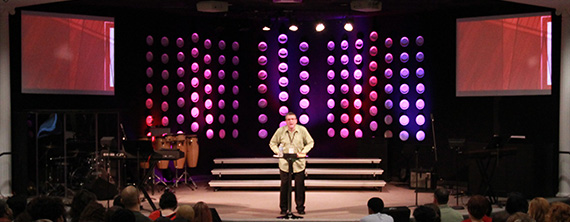
    Dippin-DotsEvery once in a while I get asked about what it takes to create great stage designs to support sermon series or to just spruce up how things look during different seasons of the year. I’ve been meaning to share this AWESOME resource with you for a long time, and am finally getting around to it.

    Years ago, we would sit in our creative team meeting and bang our heads against the table to come up with some fresh, cool looking creative themes for the stage. We did a pretty good job. But half the problem was in trying to figure out how to implement our ideas after we got them, without breaking the bank.

    Things changed drastically when we discovered this website. I remember soon after finding the website we were able to create a cool new look for less than $100 using paper plates (the above image uses paper plates and cost that church $95)! Of course, it helped that we had already invested thousands of dollars in lighting over the years. That said, whether you’ve invested in your stage and lighting designs or not, this website is sure to give you a head start in thinking outside the box. Enjoy.

    Check out ‘Church Stage Design Ideas’ at www.churchstagedesignideas.com!


  • Healthy Church, Healthy Systems

    This article was originally posted on Transforming Leader on April 24, 2011. Enjoy!


    Question: How healthy is your current lifestyle?
    Do you exercise regularly? Eat healthy? Drink lots of water? Spend time outdoors? Don’t answer those questions. At least, not here. You can answer this one instead.

    “How important are systems in creating and maintaining a healthy body?”

    Obvious, right? You want good muscle tone? It’s going to include some system of exercise that includes lifting weights in a repetitive manner (whether it’s lifting boxes out of a truck or weights in a weight room). Less visits to the doctor? That will most likely result from a regular & healthy diet. Lots of energy? All of the above and a whole lot more. Systems are a prerequisite for consistent health in our bodies.

    The same is true of our church’s. Whether we like it or not, the similarities between how we manage our bodies and how we manage our church’s can be just too close for comfort (guilty pause here to contemplate the systems you have not setup for your body). A healthy church is going to have a ton of systems in place. Most of these systems will serve to maintain the ministry activities, environments and events the church regularly hosts. Systems will play a vital role in building new muscles (facilitating church growth), maintaining appropriate weight gain or loss (setting & keeping ministry goals), keeping stress levels to a minimum (maintaining ministry focus), and assuring all bodily vitals are healthy (unity in the church, engaging ministry culture, growing believers, transformed lives, etc.).

    A healthy church must have healthy systems. Please don’t confuse “systems” with “healthy systems”. Big difference. It seems to me that there are four kinds of systems in which we may choose to engage in:

    • No Systems
      OK. That’s not actually a system. But it counts simply because sometimes we just don’t setup systems. As a result, those particular areas of ministry may be effective for a time, but eventually the lack of systems will catch up to the leaders and it (that ministry) will either get behind, overwhelmed, or shut down.

    Real example from my church: At one point in time, there were no systems in place to ensure the sanctuary and hallways were actually clean on Sunday morning. They WERE cleaned regularly late in the week, but often they would get dirty between when they were cleaned last and the Sunday morning services.

    • Declining Systems
      These are the systems that used to work, but are irrelevant now. We still do it this way because that’s how we’ve always done it. (check out my sacred cow series) We keep declining systems in place because they DO usually keep things running – to a degree. They have the general appearance of effectiveness, but in the long run they will lead you to ruin.

    Real example from my church: A few years ago we held our worship team rehearsals on Saturday nights. It worked great for a season, especially for our young adults. However, over time it became more and more difficult for those with families and children to make practices at this time. We finally read the writing on the wall when some key worship team members let us know they would have to step down from the worship ministry.

    • Maintaining Systems
      These systems keep things running at the status quo. Many church systems will be maintaining systems, are perfect for their role and shouldn’t be changed. They do what they are designed to do. However, over time maintaining systems may eventually turn into declining systems if not evaluated and updated.

    Real example from my church: A faithful and consistent volunteer comes into the office every Saturday to fold and stuff the bulletins for Sunday morning. The system is working great and the volunteer loves to do it. A regular evaluation, however, will ensure that the job doesn’t turn bigger than she originally planned (perhaps through numerical growth and an increase in demand for bulletins).

    • Producing Systems
      These systems don’t just maintain, they create momentum and encourage growth. It can be very difficult to create a producing system. You might end up spending three, four, perhaps even ten times more time, energy and resources creating one than you did for a maintaining system before it is operational. However, once it’s up and running your ministry will experience a great boost in it’s overall effectiveness without taxing your key leaders and volunteers.  Like all systems, these should regularly be evaluated to ensure they don’t turn into managing or declining systems.

    Real example from my church: At our ‘Discover Class’, a class we encourage guests to attend to learn more about the church, we take about 10 minutes to teach on water baptism. As a result, we will often receive requests by the attendees of that class to become water baptized. This short teaching encourages spiritual growth in the believer, motivates them to make our church their home church and ultimately creates excitement in our Sunday Services as we regularly celebrate water baptisms. Water baptisms can often be a perfect opportunity to share the good news of Christ, which in turn builds momentum as people receive Christ.

    How healthy are the systems at your church?
