
Category: LEADERSHIP

Leadership Articles prior to 2016

  • The Decision Tree

    decision-treeI think delegation can be a big mistake. There’s a mouthful. Did I just say that? This from the guy who just wrote, “9 Reasons Why People Don’t Delegate“? Something’s wrong.

    Here’s the deal. I believe in delegation. Wholeheartedly. But I also believe that IF you’re going to delegate, you better make sure you’re delegating the right tasks to the right people. You need to ensure that you’ve identified just HOW MUCH authority you plan to give to your leaders. Make it obvious and clear to both them and you.

    Give them time to prove themselves. This will honor & serve both them and you. Trust me, they may not know this, but they don’t want more authority than they’re equipped to handle.

    Here’s the key, make sure both you and they know which decisions they can make and how involved you should be in them.
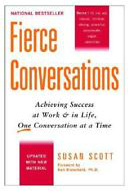
    fierce-conversationsLast year I read a great book called ‘Fierce Conversations‘. It is full of great advice on how to be more self-aware as a leader, how to confront others with care, how to ask the right questions, how to hold performance reviews with staff and a lot more. It’s definitely on my ‘recommended reading‘ list!

    That said, I’d like to highlight one of the most valuable pages in the book. The author calls it . . .

    The Decision Tree
    The decision tree is a tool for delegation and professional development. You know employees {or volunteers} are growing and developing when more and more of their decisions are moved to the leaf level.

    • Leaf Decisions: Make the decision. Act on it. Do not report the action you took.
    • Branch Decisions: Make the decision. Act on it. Report the action you took daily, weekly, or monthly.
    • Trunk Decisions: Make the decision. Report your decision before you act take action.
    • Root Decisions: Make the decision jointly, with input from many people.

    Let’s create an example, to help illustrate how this might work. I’ll pick on the Children’s Ministry Director in a local church. Following might be what you’ve decided about that individual. Note: it could be different for each person you recruit into the role. For instance, maybe a longstanding elder or the pastor’s wife is the director, many of the decisions in Trunk or Branch might move up into Branch & Leaf.

    Children’s Ministry Director:

    • Leaf: Curriculum. Classroom Decor. Check-in Procedures. Parent Communications.
    • Branch: Volunteer Recruitment. Volunteer Scheduling. Volunteer Training. Minor Discipline Issues with Children. Child Injury.
    • Trunk: Special Events. Scope & Sequence for the year. Major Discipline Issues with Children (requiring parent interaction). 
    • Root: Children’s Ministry Policies. Community Focused Large Events. Abuse/Allegations of abuse. 

    How can the Decision Tree help you delegate and communicate with your team better this week?

    photo credit: Steve Webel via photopin cc

    Disclosure of Material Connection: Some of the links in the post above are “affiliate links.” This means if you click on the link and purchase the item, I will receive an affiliate commission. Regardless, I only recommend products or services I use personally and believe will add value to my readers. I am disclosing this in accordance with the Federal Trade Commission’s 16 CFR, Part 255: “Guides Concerning the Use of Endorsements and Testimonials in Advertising.”

  • The Sacred Cow

    This article was originally posted on Transforming Leader in March, 2011. Enjoy!

    medium_2937658955When I was 15 years old my dad bought a newborn calf. He and I drove to the local farm and I sat in the back of the truck holding the calf to my chest to keep him safe until we got home. (Side Note: I was pretty much a city boy – this was my first time being so close to a farm animal.) When we got home I was tasked with the job of feeding and caring for her (bottle feeding a calf is quite the experience). I did so for many months. I fed her, cared for her, cleaned her pen (not fun) and when I was bored or lonely I’d hang out with her. She was my pet (mistake). She was always glad to see me and ran over to me as I entered her pen. She even let me sit on her back once. I suppose there was a decent amount of trust between us.

    Then one day my dad called me outside. He was holding a rifle. He announced, “Today, we are going to butcher the cow.” I was in shock. I was completely unprepared. It never really crossed my mind that this was the intended end in mind all those months ago. We walked over to the cow and dad tried to call her over to the fence. She wasn’t interested. He asked me to call her over. I did so and she immediately obeyed. It felt like I was betraying a friend. The final straw was when he told me to gently lift her head so that he could get a clean shot. Then it was over.

    Suffice it to say, I’ll never forget that day. We killed the cow. I know some of you are chuckling right now, a few of you may feel sorry for me. I’ve survived just fine. If I ever get in that situation again I can guarantee you I won’t be giving my heart to a cow again!

    The Sacred Cow
    Maybe you and your church can relate. You have raised and cared for a cow for many, many years. Many in your congregation (perhaps even you) have grown to love her. You’ve cared for her, cleaned out her pen, and hung out with her so long that nobody really ever questions her existence anymore. She belongs.

    Here’s the problem. There is no room for a sacred cow in your church. At some point in time, what was originally an idea that would help people grow in God became a calf in the back of the truck. Some few people decided it was important to keep around and it has been ever since.

    The mission of your church is to {enter your mission statement here}. I didn’t hear anything about cows there. But if you have a sacred cow then it seems to me that you have two choices:

    • Build your ministry around the cow (easy).
    • Kill the cow (hard).
    FYI: I don’t recommend my dad’s method for killing cows either.
     
    Check out my other two posts in this series: The Smelly Cow & Finding Your Sacred Cow.
     

    photo credit: stevoarnold via photopin cc

  • Nancy Ortberg & the Pastor’s Wife

    Many months ago, now, I had the distinct privilege of interviewing Nancy Ortberg while she was visiting our area. She graciously allowed me to film three separate interviews. You can check out the first two interviews by clicking the respective link below this interview.

    In this interview, we broach the topic of the challenge that pastor’s wives face in being, well, a pastor’s wife. In particular, the huge expectations that people tend to automatically place on wives simply because their husband pastors a church. Enjoy.

  • How do you waste time at work?

    I ran across this great infographic about how we tend to waste our time at work. What do you think? Does the shoe fit?

  • When People Follow a Poor Leader

    large_119912283I can lead worship. Very few people in my circles know this today. I taught myself how to play chords on the piano in my 20’s and for more than a decade I led worship regularly in various venues and events at the church where I served. I did a pretty decent job most of the time.

    But I don’t do it anymore. Why? To be honest, a lot of it has to do with my lid. I often frustrate and hold back the other members of the worship team. I don’t have very good rhythm. I tend to overwhelm the band by overdoing it on the piano. I can’t harmonize and when others do it sometimes throws me off. And since I can’t read music I often don’t have the language needed to properly communicate with the team what I want to do next. 

    John Maxwell introduced ‘The Law of the Lid’ in the first chapter of his book, The 21 Irrefutable Laws of Leadership (by the way, it’s a must read if you haven’t done so yet.) John summarized the law like this, “Leadership ability is the lid that determines a person’s level of effectiveness. The lower an individual’s ability to lead, the lower the lid on his potential. The higher the individual’s ability to lead, the higher the lid on his potential.” In this post I want to talk about what happens when people end up being led by leaders with a low lid.

    What happens when people follow a poor leader. 

    • Frustrated
      When I’m driving down the road and come across a man driving 20 miles slower than everyone else, I’m frustrated. Why? Because I should be capable of driving faster, but someone else’s driving limitations are preventing me. My expectation, based on my own skills & experience, is that I could do more than the one I’m following. Likewise, when great leaders are stuck behind poor leaders, its very easy for them to become frustrated by the limitations imposed on them.
    • Disappointed
      When I’m served food that is cold and overcooked I’m disappointed. Why? Because I was led to believe that I would receive better service. Similarly, when people follow someone who is in a position of leadership, they build expectations that are often unmet because the leader did not have what was necessary to meet them. 
    • Confused
      When I’m told to turn right at the light, when I was really supposed to turn left, I get confused. After a while I realize I’m not seeing the roads and landmarks I think I should be seeing and I have to get more directions to reach my destination. Poor leaders often don’t know how to get where they’re going or they simply don’t know how to communicate and lead others there. Sometimes, they don’t even know the destination themselves. This creates confusion for everyone.
    • Lethargic
      When I walk on the creaky stairs in my house several hundred times I eventually tune them out and forget they are even there. I never think to fix or improve them, because I’ve chosen to integrate them into my life as normal and acceptable. Similarly, when people are led by poor leaders for a long time they get familiar and comfortable with lower standards, less vision and ineffective ministry. It becomes their norm and they become blind to what could or should be instead.
    • Limited
      When I ask an amateur to teach me how to play golf, the best I can hope to attain is amateur golf skills. I will learn some of what I need to know to play the game, but I will also likely adopt habits & tactics that may always limit my chances for success. Likewise, people tend to only rise as high as those who are leading them. 

    Poor leadership is dangerous for everyone. Like rust on metal, it has a tendency to erode foundations. It creates false hopes that will eventually burst. What makes it even more dangerous is that we often become enablers by allowing poor leaders to continue as they are.

    I’m not proposing you hit the eject button on the leaders in your organization who don’t measure up. That could present just a few problems. If you think you might fall into the category of ‘poor leader’ or someone else in your ministry falls into that category I suggest a few things to get you started:

    1. Prayer.
      I am regularly dumbfounded by how God intervenes when we humble ourselves before Him. If what you are doing is from Him, then I believe He is interested in helping you find and build great leaders. 
    2. Cards on the Table.
      Find the right people and expose the elephant in the room. Do this with compassion, humility, submission to your leaders (regardless of their ‘lids’) and faith that God is for you and everyone on that team.
    3. Get Help.
      We live in a day when help is often available to those who are willing to ask for it. Whether it be through hiring a ministry coach, finding a mentor, reading relevant material, etc. Tackling barriers is always better done with others than alone.
    4. Make a Plan.
      Every situation is different, which means there is no cookie cutter solution out there. Through prayer, honesty, help and some great planning I believe you and your team can and will discover what needs to happen next. Your strategy may be to provide mentoring and extra education to the weak leader or it may be to find a replacement. Whatever it is, having a Spirit-led plan will bring clarity and peace while you face the challenge.

    photo credit: Andreas. via photopin cc

  • A Field Guide to Procrastinators

    I love this infographic. The shoe fits, in several places, for all of us.

    Before you give it a gander, let me remind you of the upcoming ‘Getting Things Done’ webinar I will be hosting next month. Don’t procrastinate! Register today!

    field_guide_to_procrastinators_20px

  • Waking the Sleeping Giant

    xJosh.jpg.pagespeed.ic.o9dSnVb45tJosh Jansen is a full-time Campus Minister in Syracuse, NY. Through a dynamic speaking style, he challenges audiences to live out the key Biblical principles that God has promised will change the world.One of his dreams is to eventually pastor a local church that will harness the energy and talents of passionate college students, like those in BASIC College Ministries, to transform the way society views Christianity. Josh is a graduate of Elim Bible Institute in Lima, NY and has a Master’s Degree in Ministry from Southwestern Christian University in Oklahoma.


    511In his book, Courageous Leadership Bill Hybels writes “The local church is the hope of the world.” I read that about seven years ago and since then it has been the driving force behind everything that I do. I want nothing more than to see the local church make the impact on society that it has always been meant to make.

    My focus for the past four years (I am fairly new at this) has been on young adults. There are a few reasons for this: first of all, I am one. Secondly, I understand the potential in my age group. This generation of young people is a sleeping giant. They have barely scratched the surface on all that God has for them and, more often than not, churches have not fully tapped into their potential. If the church is the hope of the world, then young leaders between the ages of 18-29 are the hope of the church.

    Last year it was evident that there was a lack of ministries geared towards young adults in the Syracuse area. I had begun working for BASIC College Ministries at Faith Chapel in Syracuse and I saw a great opportunity to make a big impact on the young adults. We formed a leadership team and we launched a young adults ministry. Over the past 9 months we have seen our ministry grow to 80 young adults (over 20% of our church population), who represent about 10 different churches. Some even drive an hour or more to be with us. We are still very new at this, but here are some good ideas that I’ve discovered as we’ve grown:

    • Develop a leadership team. 
      This is leadership 101 and it is easy to try and do it yourself. There are eight people on our leadership team who meet weekly to discuss future plans and upcoming meetings/events. Each member oversees an area of the ministry (worship, greeting, hospitality, service production, etc). Everything that follows this section happens because we have an awesome team.
    • Have a church service. 
      We have held to this belief from the beginning because we were not interested in having a coffee house. In my church experience, those are awkward 98% of the time. Our church service is usually about an hour and 15 minutes in length. Why do we do it? Well, we win in 3 ways: people get saved, people come back to church, and/or people start serving in their church. We are not a local church substitute; we offer a legit service with the goal to motivate young adults to return to their own local church ready to serve.
    • Preach a sitcom. 
      For our purposes, shorter is usually best. There is the old church adage: “if you can sit through a 2 hour movie you can sit through an hour long sermon.” Well, maybe, but I did not have two years to prepare this week’s sermon (the length of time it takes to prepare a 2 hour movie). Everyone can sit through a 20-25 minute sitcom though. Whoever preaches is authentic, to the point, and biblically sound. We do not neglect Jesus. Our goal is to cut to the heart in 30 minutes and then send them out to impact their churches and their city.
    • Be creative with what you have. 
      We do not have thousands of dollars to put into our ministry so we find ways to be creative. Branding is a great place to start. We spent the summer doing a series called “Summer of Heroes” and designed a graphic to go along with it. The value of professionalism with the graphics is important because they act as first impressions on Facebook (our main form of advertisement). On Friday nights after we worship we do the outrageously cliche ‘meet and greet’ but with a twist: we download clean secular songs from Spotify (it’s free) that have to do with saying “hello” to someone. You will be shocked at how happy people are to talk when Carly Rae Jepsen’s “Call Me Maybe” is blasting in the background. This little idea has gone a long way. Think of creative ways to do the same things differently. 
    • Give them a cause. 
      Young adults are quite generous if you give them a reason to be. They spend money on things that they believe in. Notice how a high percentage of people under 30 use Apple products! We had a missionary from the Middle East come to preach over the summer. After the sermon I went up and explained some of the needs that this modern day ‘Paul the Apostle’ had. They felt the need and they responded with a $2000 spontaneous offering. The missionary left with almost everything he and his family needed (an Apple computer was among the needs). Give them a cause and young adults will back you. Note: please do not gauge their generosity by whether or not they are giving to ‘Sister Mary’s Quilting Class Fund.’ 

      Opportunities are also provided for people to give their time for a cause. This fall we are launching our ‘Salt the City’ initiative (Syracuse is called the Salt City). We have partnered with local charities and have about a dozen different outreaches planned. One of these is a foot clinic that our medical students started on their own.

    • Build Relationships. 
      This is so important. We ALWAYS have food out after every service. Pizza, vegetables, chips, and drink are provided for free. Relationship is valued over spending $80 on food for the night – we welcome this financial hit. Our service ends at 8:30 PM and people generally stay well past 10 PM. My wife and I will be at the mall and see young adults who met at The. 511 hanging out together. There have even been small groups beginning organically through just having food available after the service. The. 511 only meets two times a month. This allows us to have social events on our ‘off weeks.’ We have had a bowling night, a BBQ at the beach, and an open mic night (to name a few). Couple your church services with social events; it is a match made in heaven. Tip: keep social events social. There is nothing wrong with a party that doesn’t end in a sermon or a prayer time. 

    These are 6 practical things that we do at The. 511. We believe that we are awakening a sleeping giant in Syracuse, NY. If you can awaken young adults to the reality of Jesus, you are awakening that sleeping giant. Faith Chapel has young adults serving in every aspect of its church service and in several areas young adults are even leading the service.

    Create an authentic environment where relationships can be built and you can grow a thriving young adult ministry that defies the statistics. 

    Check out The. 511 Facebook page for more information on who we are! Thanks for reading my thoughts and if you have any questions feel free to comment or email me at josh@thebasicsite.org. 

  • Facelift, Overhaul, Funeral.

    painting wall with a roll in greenYears ago I heard a friend of mine coin the phrase, “Facelift, Overhaul, Funeral”. The idea was that sometimes we are forced to admit an area of ministry needs an upgrade.

    Ideally, the upgrade will just require a simple facelift. A few tweaks and all is well. The other day I drove by Joy Community Church in Rochester, NY and they were painting the exterior of the building.

    Facelift.

    Then there are times when something needs an overhaul. Usually, we aren’t looking forward to this because there is going to be a considerable investment in time or money involved. An overhaul is when we make considerable changes, not only to the exterior/appearance of the ministry, but to the internal structures, systems & strategies. Last year I took on the project of overhauling the Elim Fellowship website. We moved the whole site to a different web platform, web host and web programmer. I can say with confidence that it’s definitely an improvement over the old one.

    Overhaul.

    And of course, sometimes a funeral is the order of the day. Really, who enjoys a funeral? But sometimes we have to admit that the season of success for that area of ministry is over. Hopefully, we have the wisdom to end things with grace. Years ago as a youth pastor I started a coffee house for teens. It was very successful for about 4 years. Then the time came for us to admit that we had a good run but it was time to focus on other things.

    Funeral.

    TO DO:
    Meet with your team this week and set aside one hour. In that hour, ask the question, “Which systems, strategies & ministries need a Facelift? Overhaul? Funeral?”

    Image from khorzhevska at istockphoto.com.

  • What’s the real price tag for change?

    bio-pic-joshua-finleyPastor Joshua Finley is the Lead Pastor at Elim Gospel Church in Lima, NY. – a thriving church of about 800 located in the middle of (almost) nowhere.  I had the great privilege of serving with him at the church for several years before making my move to Elim Fellowship in 2011. Josh is an outstanding communicator & leader, and certainly understands a thing or two about change!


    “When you are through changing you are through!” –Bruce Barton

    Preparing for a vision talk on change with my church family I came across some really helpful reminders and insights on change I picked up from Tony Morgan at tonymorganlive.com:
    • changeIt’s a lot easier to embrace change when you’re the one initiating it.
    • Change without vision is chaos.
    • Change is a lot easier to understand when it’s shared through stories.
    • Many times the successful changes also produce the most criticism.
    • It’s almost impossible to change a change that previously worked.
    • Test-driving or experimenting with a change is a lot easier than fully committing to the unknown.
    • Change is more likely to take hold when it’s followed by an immediate win.
    • When you think you’ve communicated enough about change, you need to communicate more
    • Slow change is rarely positive change.
    • Organizations that don’t change die.
    • If everyone recognizes the need for change, you’re obviously not the leader.

    Change is a healthy necessity in every area of our lives. Marriages, friendships, businesses, churches, governments, even TV sitcoms, all require a steady diet of change in order to remain or become healthy.

    Though few people would disagree with that statement, ALL of us resist change on some level. There is a reason for this. Meaningful change comes with a very real price tag.

    How much does change cost?
    • There is no growth without change.
    • There is no change without loss.
    • There is no loss without grief.
    • There is no grief without pain.
    • Change always involves some kind of pain.

    “The place between where you are and where you want to be is a painful decision you are either willing or unwilling to endure.” –Samuel Chand

    “There is no such thing as a great victory at bargain prices.” –Gen. Eisenhower

    “Not all hurt is harmful. Much of it is beneficial and necessary.” –Dr. Henry Cloud

    My prayer is that you and I will make the painful choices necessary to lead wisely and courageously into the future God has planned for each of us.

    Questions to Consider.
    • Where are you currently needing and leading change?
    • What painful decision have you put off in the past 30 days that keeps looping around to face you again
     

    Image from Irochka_T on istockphoto.com.

  • How People Embrace Change

    diffusion-innovationA pastor once told me a long-standing family left his church because of the new colors painted on the walls in the sanctuary. Upon further investigation I discovered a few things about the church. First, change didn’t happen often. Second, when it did happen, it was almost always a surprise. Finally, the pastor was overjoyed by the recent departure of this particular couple. It seems they played a substantial role in the first point above.

    As a ministry coach it’s my job to recommend change. Nobody really asks for my input unless they see change in the mix. However, quite often we just aren’t ready for the repercussions. The fact is, properly rolling out change takes a lot of communication & time – as well as a good measure of wisdom.

    In his book, Cracking Your Church’s Culture Code, Samuel Chand bottled up the ‘Diffusion of Innovations‘ theory into an easy to understand application for the local church. In essence, it summarizes the general distribution of ’embracers’ to change in your congregation. Used wisely, this information can become a valuable asset when rolling out almost any change. Enjoy.

    • Excited Embracers (2% of group)
      They are the dreamers and visionaries who are usually recognized as leaders or policymakers.
    • Early Embracers (18% of group)
      They are respected and influential, and they eagerly get on board when the concept is explained. Leaders treasure these people on their teams.
    • Middlers (60% of group)
      They feel more comfortable with the status quo, and they listen carefully to anyone who resists change. They are willing to get on board only when they are convinced that everybody else will, too.
    • Late Embracers (18% of group)
      They resist change as long as possible, offering objections all along the way. Eventually, they will go along with the majority, but with a large measure of skepticism and without any enthusiasm at all.
    • Never Embracers (2% of group)
      They are steadfastly committed to the past, and they continue to resist change long after the rest of the team is working hard to achieve success.

    What does this model suggest to you regarding HOW to roll out change in the church?