Author: Wayne Hedlund

  • This Week’s Great Links

    The Avengers’ Top 10 Tips for Building Remarkable Teams by Bryce Christiansen and Michelle Agner
    In the early 90’s I was that little boy who thought he was Wolverine. I would hack and slash my way across the playground as I stuck sticks between my clenched fists and fought trees until they were scraped up like a knee hitting pavement.  Being Wolverine, I was the best at what I did, and what I did was get cancer. My arch-nemesis quickly became Leukemia and – just like Wolverine – I planned to overcome it with my intense healing abilities.  Why the other children in the cancer ward hadn’t thought of this puzzled me. Read More.


    Five Online Giving Lessons for Churches by Matt Branaugh
    A report issued in February by a major provider of fundraising technology and consulting services offers some helpful insights for church leaders as it relates to online giving. Read More.


    Feeling Overwhelmed? by Brad Lomenick
    As leaders, many times we take on way more than we can handle. We intuitively know it’s not healthy or the best solution, but we feel like it’s “our duty.” Anyone with me on this? We feel the responsibility, so therefore we are willing to roll up our sleeves and take on more. This ends up affecting our families, our own personal life, our team, and organizations. Read More.


    3 Reasons Pastors Are More Vulnerable to Internet Porn by Eric Dye
    Pornography is a sensitive subject. Not only is it unquestionably wrong, but the statistics tell us that a good deal of men are ensnared. Pastors are not ‘above it’, they are real men with real temptations. I would even go as far to say that pastors have a harder time of things. Not only is there a lot of pressure being a pastor, but there’s a spiritual element that cannot be ignored. Strike the shepherd and scatter the flock. Here are three rectifiable reasons why pastors are more vulnerable to Internet pornography. Read More.


    Porn: The Secret Sin Destroying Your Church by Covenant Eyes
    Pornography is prevalent everywhere today. In fact, one in eight online searches is for pornography. Because pornography thrives in secrecy, many members of your congregation may be trapped in a cycle of sin and shame, thinking that they’re the only ones facing the temptation. Download our free e-book, Porn-Free Church: Raising up gospel communities to destroy secret sins, to find out how you can help your congregation find freedom from porn in the Gospel. Read More.


    Just For Fun: Cell Phones In Church


    Image from pagadesign on istockphoto.com

  • Good Is The Enemy Of Great


    “Good is the enemy of great.” So says Jim Collins, author of the book Good to Great. Checkout the opening lines from that book:

    Good is the enemy of great. And that is one of the key reasons why we have so little that becomes great. We don’t have great schools, principally because we have good schools. We don’t have great government, principally because we have good government. Few people attain great lives, in large part because it is just so easy to settle for a good life. The vast majority of companies never become great, precisely because the vast majority become quite good – and that is their main problem.

    This paragraph inspires me to do things great. I don’t always succeed, but I have learned to regularly ask myself if I’ve gotten into the rut of settling for ‘good’. In fact, I suspect I could rewrite that opening sentence this way too:

    Good is the enemy of excellence.

    If good represents mediocrity, sameness, getting by and ‘good enough’, then it certainly is the enemy of greatness, excellence, high standards and ‘going above and beyond’. In fact, I suspect ‘good’ is worse than ‘bad’. Everyone understands bad, poor, below average and ‘not good enough’. ‘Bad’ practically shouts, “Change!” while ‘Good’ whispers, ‘Stay the same.’

    I wonder what areas you are doing ‘Good Enough’? I’d like to challenge you to honestly ask what areas you need to pray and work towards ‘great’ this year. I’ve already identified mine.

    • Spiritual Disciplines?
    • Marriage Enrichment?
    • Parenting?
    • Health?
    • Mentoring Others?
    • Leading Meetings?
    • Overseeing Staff or Volunteers?
    • Preparing Messages?
    • Managing Your Money/Resources?
    • What else?
     
    Image compliments of Stuart Miles at www.freedigitalphotos.net.

    Disclosure of Material Connection: Some of the links in the post above are “affiliate links.” This means if you click on the link and purchase the item, I will receive an affiliate commission. Regardless, I only recommend products or services I use personally and believe will add value to my readers. I am disclosing this in accordance with the Federal Trade Commission’s 16 CFR, Part 255: “Guides Concerning the Use of Endorsements and Testimonials in Advertising.”

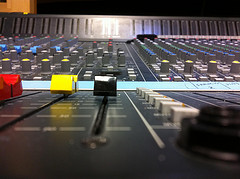
  • Unlocking the Secrets of Church Sound


    This is a guest post by Josh Cummings. For many years Josh served as the Technical Director at Elim Gospel Church in Lima, NY. Josh is passionate about all things audio & visual. His world includes wires, cables, buttons, knobs, computers, software, lights, speakers and a million other odd and weird knick-knacks. He is, by far, the coolest tech-dude I know.

    You might also enjoy reading my other posts in this series entitled ‘Turn the Volume UP!‘ and ‘Turn the Volume DOWN!‘.


    Poor sound can be extremely distracting. We’ve probably all been there: the worship leaders mic gives annoying feedback during the service, the preacher sounds like he’s underwater, or you can’t hear the lead vocals over the band during worship. Though it is often a thankless role, the church sound tech has the power to enhance or detract from the communication of the gospel in our church services. With that much depending upon one person, I thought I would give you a few tips on how to improve in this article on the art of mixing.

    • Preparation will save you time and stress.
      Before I tell you anything else, I want to give you the number one rule of using technology in church: Test everything. Trust people, not equipment. You’ve probably tried to play a video at some point during a church service and experienced the awkward embarrassing silence that follows when the video doesn’t work. With a little preparation, you can make sure that it doesn’t happen again (or nearly as much). Don’t blame the “demons in the sound system” when you could have prevented the problem with proper preparation. Take the service plan and go over every detail and press every button just like you would in a service. Years ago, we made a decision to rehearse our entire Sunday morning service, minus the preaching. We catch problems every single week and I know that it was one of the best things we have ever done to increase the quality of our services.
    • Mic that kick drum!
      Most local churches do not mic the drum set. If I were to only mic one drum, it would be the kick drum. This will add punch and rhythm to your mix and give your worship more overall energy. If your room is large enough, I recommend mic-ing the entire drum set, but mic-ing the kick drum is the place to start.
    • Set gain levels first.
      Gain is the master volume for each channel on your mixer, which affects the monitors, house mix (“house” mix is what comes out of the main speakers in your sanctuary), and more. Set the house volume fader to 0, and turn up the gain until the level is approximately where it should be in the house or slightly above. This gives you a good basic level for each channel. Do not mix with the gain knobs. Set them to the right levels and then adjust the house mix using the house volume faders.
    • Set monitor levels.
      If you’re not using in-ear monitors, I recommend putting as little as possible in the monitors while still supporting the worship team properly so that they can hear themselves. This will keep your stage noise to a minimum and give you a more intelligible house mix. A good method for setting monitor levels is this: do a basic mix for each monitor mix, have the band run a song, then adjust one channel at a time while band members give you a thumbs up or down to let you know how much they need in their monitors.
    • Shape the tone with EQ.Please, please, use the equalization (EQ) controls on your mixer. EQ takes a specific frequency or frequency range and turns it up or down. You are a sculptor of sound and the worship team has given you a lump of clay to mold into a masterpiece. If you don’t use the EQ to improve the tone of your mix, your museum will be showing an ugly lump of clay on Sunday morning. This is a huge subject to delve into, and can immensely improve your mix if used properly. For example, your bass guitar will sound nasty if you don’t turn down 300Hz, the violin doesn’t need any bass in it, and you can reduce feedback by cutting the frequency that is feeding back. Just turn up the EQ gain, sweep the frequency knob, find the nastiest sound you can, and then turn it down accordingly to its nastiness. If you want to learn more, here is a helpful blog post on EQ.
    • Regulate your levels with compression
      Compression will cut down on all of those sudden loud noises from your vocals and instruments. When you cut down those spikes in volume, you can have a more consistent and less dynamic sound from that channel. If you use it on one thing, use it on the lead vocal mic.
    • Enhance your vocals with reverbA tasteful amount of reverb can make a good vocal sound fantastic, but it unfortunately won’t make a terrible vocalist sound like Pavarotti!
    • Highlight the lead vocals!In any context, the lead vocals should be the most prominent sound, but even more so in church, where the congregation needs to know the melody to sing along in worship to God. Don’t let anything overpower the lead vocals in your mix. Spend the most time getting the lead vocals just right compared to other channels in your mix.
    • Mentally listen to one instrument at a time.
      To create your mix, listen to each instrument one at a time. Mentally block out all of the other instruments, listen, then decide if that instrument needs to be louder or softer in the mix.
    • Budget your mix.Just like your values will drive how you spend your money, you need to decide what instruments have the most value in your mix and budget your levels accordingly. For example, I will mix foundational instruments like piano and acoustic guitar a bit softer, and more interesting lead instruments like electric guitar or violin a bit louder. Those interesting lead parts have more value to me, so I make them more prominent in the mix. There are no exact rules for mixing, only guidelines. This is where mixing becomes an art.
    • Mix around the same overall deciBel level every week.It’s amazing how easy it is to upset people with the volume levels of your church sound system. Make a team decision as to how loud it should be, and keep it the same every week. I would recommend purchasing a decibel meter if you can to ensure the consistency of your levels.
    • Refine your ear by listening to high quality music.It is entirely possible that you or the sound techs at your church haven’t experienced high quality sound very much, or at least haven’t listened with an analytical ear. If you want to get better, listen to high quality recordings and concerts, and try to imitate the way they do things.
    • Clear up your house mix by reducing stage noise.Stage noise often causes all sorts of problems with your house mix. I can’t go into all of the details in this post, but anything you can do to reduce your stage volume will create a clearer mix in the house. You could use a shield or an enclosure for your drum set, or you could use in-ear monitors for your worship team.
    • Take yourself to school.Never stop learning. There is always more to learn about live sound. Connect with other church sound techs and learn what you can from them. Use Google to discover helpful websites like www.prosoundweb.com, www.churchsoundguy.com or www.churchtechtoday.com. Attend a How-To Sound Workshop. Keep seeking out more knowledge, and you will keep increasing in your skills as an audio engineer and your ability to serve the local church in this way.
     
  • This Week’s Great Links

    The Power of Really Listening: A Tribute to Stephen Covey by John Hester
    One of my mentors, Stephen Covey, passed away this week. No book, other than the Scriptures, has had a more significant impact on my life than his The 7 Habits of Highly Effective People. The 7 Habits is more than a business book or a self-help book. It is a book about how to be a better human being in all areas of life. And what made it even more impactful for those who knew Stephen is that he modeled what he taught. Of all of the seven habits, none has changed my life more than Habit 5: Seek First to Understand, Then to Be Understood. Read More.


    When Leadership Fails by Jeremy Statton
    Rainy days. Flat tires. The worst case scenario. As the saying goes, it happens. And so does poor leadership. Leadership failures are often the result of: Poor planning, Inexperience, Stubbornness, Lack of vision, Pride. It happens more often than we would like to admit, especially when it is our fault. Read More.


    How A Shift In Your Vocabulary Can Instantly Change Your Attitude by Michael Hyatt
    This past year I have noticed how my vocabulary impacts my attitude. Words have power. They impact others, of course, but they can also have an impact on us. For example, several weeks ago, I was headed out of town to a speaking engagement. A friend called and asked me where I was going. I said, “Oh, I’m headed to San Jose. I have to speak at a convention.” I said it with a little resignation in my voice. When I hung up, it hit me. I don’t have to speak. I get to speak. That instantly changed my attitude. Read More.


    Speaking in Tongues – Using Christianeze by Sloan Inns
    When I first moved to America from my homeland of South Africa, I was struck by something unexpected. No, it wasn’t the variety of accents, “Super Sized” foods, Humvee’s or massive shoe collections; it was something far stranger! The first instance I noticed this phenomenon was in a conversation with a potential employer whom I respected. It was an incredibly awkward moment where I almost died of embarrassment because I truly thought my ‘friend’ was a being a total jerk! Basically, he kept goading me and making fun of me … little did I know on that day I was being introduced to another new “friend”: Sarcasm. Read More.


    This is Church by Wayne Hedlund
    I stumbled across this video clip while reading my blogs last week and couldn’t help but share it with you. What a great video animation about the mission of the local church. The creators, Kelly and Niki Tshibaka own the rights to this video and have given permission for others to use it. Watch Now.


    Two Lists You Should Look At Every Morning by Peter Bregman
    The speed with which information hurtles towards us is unavoidable, and it’s getting worse. But trying to catch up is counterproductive. Strategic advisor Peter Bregman explains how two simple lists can help us organize what’s important. The world is moving fast and it’s only getting faster. So much technology. So much information. So much to understand, to think about, to react to. A friend of mine recently took a new job as the head of learning and development at a mid-sized investment bank. When she came to work her first day on the job she turned on her computer, logged in with the password they had given her, and found 385 messages already waiting for her. Read More.

    Image from pagadesign on istockphoto.com

  • Turn the Volume UP!


    Have you ever had anyone threaten to leave the church because the volume was too LOW during worship? Believe it or not, I have. It only happened a couple of times and certainly did not compare with how many complained it was too loud. To this day, I can tell you who in our church wishes we would turn the volume up . . . and no, they aren’t deaf!

    Last week I wrote the article ‘Turn the Volume DOWN!‘ Today I would like to similarly share some reasons why people may want the volume turned UP in your Sunday services. You might experience slight deja vu.

    • It’s too quiet. (there is no energy in the room)
      Stating the obvious is always a great way to begin. The Master Volume needs to be turned up and the instruments should be remixed to the new level. When worship is too quiet it can make for a boring worship experience. I’ve been to many churches who mix their worship too quiet. I suppose it appeases a few key leaders (or the pastor), but it also puts a major damper on worship – especially for the younger generations.

    As a general rule of thumb, if I can hold a conversation with the person next to me during worship without leaning in and raising my voice to be heard, the sound is probably too soft.

    • Bad mix. (low energy in the room or we can’t hear the worship leader)
      Many times the problem isn’t volume. It’s a bad mix. The instruments are too loud and are drowning out the worship leader; or the keyboard and worship leader is mixed well but everything else is just a low hum in the background; or the drums are drowning everything so all people hear is just enough worship leader and primary instrument to be able to sing. Probably most common is when the kick bass (the deep booming sound from the drums) is turned way down. This can really squash energy in the room and may even make the difference between whether or not people ‘clap’ or not during high energy songs.
    • Hearing loss.
      Another reason why people might want the sound turned up is because they are simply half-deaf and don’t know it. I’m not joking. Unfortunately, it’s quite common for people to have hearing impairment AND to not know it. According to these statistics, people with hearing loss wait on the average of 7 years before seeking help. I better go get my ears checked.
    • Differing opinions.
      Read this same paragraph in my post ‘Turn the Volume Down!‘ That about sums it up! Everyone has different opinions on how loud they like to hear music as well as what the overall mix sounds like. The key is to determine who will be the primary driver for volume/mix (that is, who will represent the values/goals of your church best) and let that individual call the shots. Just a side note – assuming you have a passion to reach the younger generations, I recommend you err on the side of a more aggressive/loud mix than not. I’m not suggesting you drive everyone else out – but that you actively seek to find that balance.
    • Bad equipment or acoustics.
      Your equipment, speaker placement and room acoustics will make a big difference. Often, churches struggle with hot and quiet spots in the room. It’ll be loud in one area and too quiet in others. My church has this issue. I’ve used this fact to my advantage by encouraging those who tend to like it louder or quieter to sit in certain areas. It’s one reason why the young people like to sit near the front. They get both the speakers in the room as well as the stage noise coming off of people’s stage monitors. It’s also usually where the sub-woofers (where all the bass and lows come out making your body vibrate) are located.
    I will continue this short series of posts about volume in an upcoming article giving some general advice on how your church might better ensure your worship service has the best possible mix/volume to encourage maximum participation from your worshipers. Stay tuned!

    photo credit: ckaiserca via photo pin cc

  • This Week’s Great Links

    Johari Window For The Local Church by Wayne Hedlund
    I visited a church a while back that had a BIG blind spot. At least, it seemed like a blind spot to me. I could see the problem, but none of the leaders seemed to realize it was there. The problem was that they really believed they were a friendly church, but in reality they weren’t . . . unless you were an insider. I was greeted at the door, which was nice; but from that point forward I became invisible. People actually seemed to work hard at avoiding eye contact with me! This ‘Blind Spot’ is really hurting them – mostly because they are blind to the problem, while it’s painfully obvious to every guest who darkens their door. Read More.


    How Going To The Hospital Is Like Going To Church by Chris Ruddell
    I’m writing this article from the hospital room where my wife is about to give birth to our first child! Being a pastor, I’m no stranger to hospitals. But whenever you get to experience things from the other end you notice all kinds of things you otherwise wouldn’t have. And so it got me thinking: going to the hospital can be a lot like visiting a church for the first time. Read More.


    Reaching The Unplugged by Jon Rogers
    The rise of the Internet, new media and mobile technology has ushered church communications into a new digital era. As a result, churches have worked hard to create a flawless user experience, engaged social networks and search engine optimized websites. We’ve come far but I fear we’ve left people behind. Meet the “unplugged.” Read More.


    What Poisons A Team Quickly by Brad Lomenick
    I’ve been reminded recently of the constant tension on a team. And…. the Tension is Good. We talked about this and leaned into this phrase before, and actually dealt with it as an event theme back in 2010 at Catalyst Atlanta. The right kind of tension is important for teams, as well as for individuals. It stretches and shapes and allows for growth. But there are other things that can creep into a team and poison it quickly. Things that sneak up fast and before you know it, start to define the team and take everyone off course. In the wrong direction. Headed the wrong way. Read More.


    10 Organizations Creating Great Worship Music by Brad Lomenick
    Here are some organizations (churches primarily), that in my opinion, are writing, creating, singing and releasing great songs for the entire Church around the world to sing. This is not an exhaustive list or a top ten list. Just wanted to provide this so you will be able to check out all of their music and maybe include some of their songs into your rotation and put on your iTunes list. Read More.


    Why Go To A Church Service When You Can Watch Online? by Tim Stevens
    This was a great question posed to me last week by a good friend. He forced me to stop and think about what I believe. See if you agree or not. (Also includes, “Why Provide Online Church Services”) Read More.

  • Turn the Volume DOWN!

    Have you ever had someone threaten to leave the church if you didn’t turn the volume down during worship? I have. During my tenure serving at EGC we had quite a few “ups and downs” in relation to volume levels. At one point, the issue got so hot the elders were called on to deal with it (for a church of nearly 1,000, that’s a big deal). To make matters more complicated, I was the one ultimately in charge of maintaining appropriate volume levels (though I’m not a sound tech). I’ve had lengthy conversations with leaders, members, sound techs, worship team members and irritated attendees about this.

    In the next few posts, I am going to download some of the things I’ve learned about this issue. I hope you find them useful.

    Turn the Volume Down!
    Here are a few of the primary reasons why people want the volume turned down.

    • It’s too loud. (or the sound tech is deaf)
      OK. The fact is, sometimes it’s just too loud. The Master Volume needs to be turned down and the instruments should be remixed to a lower level. Excessively loud worship can be very distracting. There’s a point where the focus isn’t on the Lord, but on the clock – when worship will get over.
    • Bad mix. (or the sound tech is tone deaf)
      Unfortunately, this is often the primary reason people want to turn the sound down, at least in my opinion. Managing the audio for the worship team get’s more and more complex as you add people to the team. Complexity requires increased skill and experience. Many times, churches just don’t have someone of that caliber available. I know firsthand that what sounds like a ‘loud’ mix can sometimes be fixed with an experienced hand at the sound board. In these cases, turning the Master Volume down will take care of the ‘loudness’ in the room, and replace it with the problems I’ve noted in my next post entitled ‘Turn the Volume Up!’
    • Sensitive ears.
      One of my children has very sensitive hearing. What I’ve discovered is when there is going to be loud noises it greatly increases anxiety. It becomes distracting and on certain occasions, overwhelming. It seems to me that as people grow older they are either losing their hearing or becoming more sensitive in their hearing. That doesn’t mean loud worship only affects the older crowd, but an older crowd is certainly more likely to be impacted.
    • Physical challenges.
      When people have physical challenges that include migraines, anxiety, depression and the like, loud music can just be too much to handle. Often, these people won’t even go to church if they know there’s a chance their condition may get worse due to loud noises. I rarely have migraines, but sometimes struggle with bad headaches. When I do, things like the kick bass (the deep booming sound from the drums) seem to sound ten times louder than they really do.
    • Differing opinions.
      Years ago I remember taking my primary sound tech on a drive in my car. I turned on some worship music and asked him to adjust the bass the way he likes it (it was a bass button giving three bass options). He turned the bass to a 3 which blasted the bass as loud as it would go. After a moment of listening, I turned it to 2, which is where I preferred the bass to be while driving. Sometimes, the same is true in worship. Everybody has their own opinion on what worship should sound like – and many times the person running the sound has a different opinion than the pastor.
    • Bad equipment or acoustics.
      There is at least one more primary reason why people want the sound turned down – and it’s not because the sound is mixed wrong or the volume is too high. It’s because of substandard equipment or bad acoustics in the room. Unfortunately, quality sound equipment (speakers, microphones, stage monitors, cables, sound boards, amplifiers, etc.) costs a lot of money – and usually churches cut corners in this area either because they have to or due to wrong priorities. Additionally, there are a myriad of sound problems that may result from bad speaker placement, stage noise (the noise coming off of the monitors/amplifiers on stage rather than from the speakers), and bad acoustics. In these cases, ‘turning it down’ just doesn’t work. It will mean someone onstage can’t hear themselves or someone in the congregation can’t hear the worship leader. (see my next post entitled ‘Turn the Volume UP!’)
  • Letting Young Eagles Fly

    Hypothetical Question. If you HAD to pick between the following two candidates to serve as the primary leader for all adult ministries in your church (Sunday services, small groups, care, special events, etc.) who would you be most likely to choose: The Young Inexperienced Eagle or The Old Seasoned Eagle?

    Your answer to that question may one day (or presently) dictate whether your church survives this decade! Last week I posted a Thursday Quote entitled, “Sticky Teams & Guarding the Gates“. Larry Osborne reminds us that finding and releasing young eagles into meaningful positions of authority and responsibility is critical to our church’s ongoing growth and success.

    Unfortunately, most of us who’ve been around for a while would prefer the safety of the known, the experienced, the tried and true. Earlier this month I was talking to a church leader who told me he wanted young people to serve in his church, but that he didn’t think they should be in charge. I reminded him that HE WAS YOUNG when he was given positions of authority. I’ve seen and heard of this happening over and over.

    So for today’s post I would like to direct my readers to another blog. I have recently become a fan of the leader of the Catalyst Conferences, Brad Lomenick. Among other things, he firmly believes that young people can and do make a difference.

    Following is a link to his massive list of what he calls, Young Influencers. These men and women are doing great things. They are young eagles that are soaring to new and greater heights. They are attempting things that us older folk never considered when we were their age . . . and they are succeeding. For me, I’m going for the Young Eagles. How about you?

    Image compliments of Tina Phillips on freedigitalphotos.net

  • Thursday Quote: Axiom – Vision Leaks


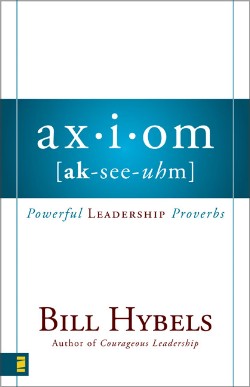
    axiom-hybelsLast winter I got a frantic phone call from my wife that the heater wasn’t working in our minivan. Not good when you live in Upstate New York! When we took the van to the shop, the mechanic told us that we had a radiator leak. Evidently, not having enough radiator fluid greatly impacts our heater. Who woulda thunk it! We got the leak fixed and thankfully got our heater back.

    If you’ve been in leadership for any length of time, you understand that, similarly, vision leaks make a big difference in the overall environment of the church. Today I want to share a quote from Bill Hybels from his book, Axiom: Powerful Leadership Proverbs, entitled ‘Vision Leaks’. What a great reminder to keep the vision fresh!

    Some leaders believe that if they fill people’s vision buckets all the way to the top one time, those buckets will stay full forever. But the truth is, people’s buckets have holes of varying sizes in their bottoms. As a result, vision leaks out. You or I could deliver a mind-blowing, God-honoring, pulse-quickening vision talk on Sunday that leaves everyone revved up to go change the world, but by Tuesday, many people have forgotten they were even in church the previous weekend. Unbelievable, huh?

    Something I have to remind myself of constantly is that people in our churches have real lives. You heard it here—engagements other than church. They have challenging jobs, children to raise, lawns to mow, and bills to pay. Because of all these daily responsibilities, the vision we poured into them on Sunday begins to drain out of them sooner than we think.

    When you can tell it’s time for a vision refill, use every communication means available to you to repaint the picture of the future that fills everybody with passion. And then take it a step further by reporting progress on the vision’s achievement. Trust me, when you wrap a little real-life proof around the accomplishment of your church’s vision and show that the dream really is coming true, the fog will start to clear and people’s heads will start to nod. “Oh yeah!” they’ll suddenly remember. “I get it! I get it! This is what we’re about! This is why we exist as a church.”

     
    Disclosure 0f Material Connection: Some of the links in the post above are “affiliate links.” This means if you click on the link and purchase the item, I will receive an affiliate commission. Regardless, I only recommend products or services I use personally and believe will add value to my readers. I am disclosing this in accordance with the Federal Trade Commission’s 16 CFR, Part 255: “Guides Concerning the Use of Endorsements and Testimonials in Advertising.”
     
     
  • This Week’s Great Links

    Why Christian Accountability Groups Are Awkward, Unhelpful, and Often Fail by Traylor Lovvorn
    I remember it well. My first “accountability group.” The church I attended during the mid-90s had just held a men’s conference and all of the men were strongly encouraged to sign up for a group where we could be gut-level honest with its other members. I was selected as a leader and remember wondering to myself how I was going to pull off leading a group of guys toward honesty and transparency without being honest and transparent myself. Read More. 


    Values, More Than Vision, Shape A Culture by Joshua Finley
    Having a lack of vision is bad, really bad.  Without vision people are stuck, literally immobilized and eventually perish. Having skill and competency is so important.  Without a skillset matching your role you and those around you will be frustrated and ineffective. Having the wrong values is deadly to a culture. Read More.


    Don’t Make This Leadership Mistake.
    Why Leaders Need to be Always in Style.
     
    by David Witt
    We’ve all been there. Do to some mix-up or poor communication we end up being either over or under dressed for an occasion. You’re wearing something too casual for a formal event (think shorts at a client meeting) or you find yourself wearing formal to a casual event (think a business suit to an after-work event.) The same thing can happen when it comes to matching your leadership style to the needs of the people you’re leading. Read More.


    Necessary Endings – Dr. Henry Cloud by elevationchurchvideo


    Choose Stories Over Moments by Jenni Wright
    As anyone who has ever visited YouTube can tell, there are a lot of funny videos online. You could easily choose one of your favorite viral videos and show it at your church this Sunday — people will laugh and you will have created a funny moment. But what if you aimed for something deeper? What if you tried to cultivate a story? You could choose a funny (and on-topic) video by the Skit Guys or our own Johnny & Chachi that breaks the ice before you introduce a tough conversation topic. You could choose a funny (and on-topic) video that cuts the tension a little bit before you ask your audience to make a serious commitment. In each of these examples, you’re using a funny video, but you’re doing so in a way that helps you cultivate a story. The funny video is (hopefully) the start of something grander, rather than a self-contained moment of jocularity. But a funny video is just one example. What we’re really talking about is much bigger. Read More.


    5 Rules For More Effective Presentations by Michael Hyatt
    Presentation software can be a wonderful tool if used correctly. It can also be a dangerous distraction that interferes with communication rather than facilitating it. The line between the two is thin. Over the course of my career, I have sat through hundreds of presentations. Most of them were done with PowerPoint. Most of them are done poorly. I often think the presenter would be more compelling if he would ditch the presentation software and just speak. Because of this, I even thought of outlawing presentation software when I was the CEO of Thomas Nelson. Read More.