Author: Wayne Hedlund

  • Famous Failures

    The people talked about in this video are famous. You probably know every one of them. They were also failures at one time or another. Like you and I, they failed, but their failures didn’t define them, they just refined them. I hope I can one day be added to this list of famous failures! How about you?

    If you can’t see this video, try clicking this link.
     
     
  • Thursday Quote: Sticky Teams & Guarding the Gates

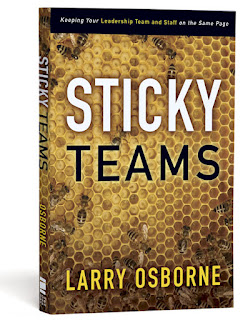
    Every once in a while a book will come along that ends up becoming a major game-changer for the local church. I think Larry Osborne’s book, Sticky Teams, is one such book. It is full of very practical advice that every ministry leader, and especially pastor, can and will find valuable. I’ve already read through the book twice and reference principles from it regularly in my church consultations.

    I hope you already have your copy of Sticky Teams. If you don’t, get one. You won’t regret it. If you own it, but haven’t read it. Suggestion . . . read it this month.

    I already referenced this book in the Thursday Quote: Sticky Teams and Young Eagles. Today, I’d like to point out another important principle from the book for you to mull over.

    Guarding the Gate No Guts, No Unity

    It’s hard to have a winning team with losing players, which is why guarding the gate is one of the most important tasks of leadership.

    Think what happens when just one contentious or negative person joins the team. People start to walk on eggshells. Meetings become an exercise in conflict avoidance, and important initiatives are sidetracked or tabled in the hope that later discussion will somehow miraculously forge an agreement. Laughter and joy all but disappear. Off-the-record discussions and after-the-meeting meetings conspire to sabotage or change everything you thought you’d decided the night before. In short, it’s a real drag.

    The same thing happens when an unproductive or toxic staff member comes aboard. Those who can’t cut it doom their area of ministry (and eventually the entire ministry) to mediocrity, while those who don’t fit in or refuse to play well with others (even if their area of ministry is a smashing success) quickly kill morale. 

    But worst of all, once a toxic board member or a troublesome staff member has a seat on the bus, it can take an act of God to get them off. Removal can be an incredibly difficult process.


    Disclosure of Material Connection: Some of the links in the post above are “affiliate links.” This means if you click on the link and purchase the item, I will receive an affiliate commission. Regardless, I only recommend products or services I use personally and believe will add value to my readers. I am disclosing this in accordance with the Federal Trade Commission’s 16 CFR, Part 255: “Guides Concerning the Use of Endorsements and Testimonials in Advertising.”
  • This Week’s Great Links

    Every week I send a bunch of ‘Great Links’ to some awesome pastors & leaders credentialed with Elim Fellowship. As an avid blog-reader, I’m always finding something new, interesting and helpful to share with them. I’d like you to have access to them too, so enjoy!


    Blessings for South Sudan by Rick Tunis
    God’s assignments are sometimes more exciting than a thrill ride at Disney! Last year money was raised through churches in eastern Pennsylvania allowing me to work with Helimission to bring food relief to the Borono Tribe in Southern Ethiopia. We flew 400 pounds of food to one small village that was inaccessible by roads. I discovered, through an interpreter, that they had never heard the name of Jesus before. About 15 made a decision to give their lives to Christ. Read More.


    The Power of Incremental Change Over Time by Michael Hyatt
    I have always been fascinated by the power of incremental change over time. Most people underestimate this. They think they have to take massive action to achieve anything significant. I am not opposed to massive action. I have used it myself to achieve certain results. But it causes most people give up before they ever start. They just don’t think they can make the investment. Read More.


    Leave Room for People in Your Schedule by Tim Stevens
    This 5 minute video was recorded for The NINES conference last year. It’s Tim’s thoughts on Time Management.

    If you can’t see this video, try clicking this link.

    Heart-Shattered Lives Don’t For A Moment Escape God’s Notice by Barry Pearman
    Jacob was a cheater, Peter had a temper, David had an affair, Noah got drunk, Jonah ran from God, Paul was a murderer, Gideon was insecure, Miriam was a gossiper, Martha was a worrier, Thomas was a doubter, Sara was impatient, Elijah was moody, Moses stuttered, Zaccheus was short, Abraham was old, and Lazarus was dead…. God doesn’t call the qualified, He qualifies the CALLED! Read More.


    The Manager’s Cheat Sheet: 101 Common-Sense Rules for Leaders by Inside CRM Editors
    Management is all about connecting with the people on your team. So how do you effectively manage a team? With common knowledge, of course. These are a few back-to-basics rules that will help you develop management skills that really matter. Read More.


    Michael Jordan & Craig Groeschel on Failure by Wayne Hedlund
    Isn’t it interesting that so many of us have an intense fear of failure, and shy away from situations where we might fail, while others embrace failure, learn, and end up doing something great! Watch these two great clips on failure and be inspired to try, fail, learn, adjust and try again! Read More.

  • Feedback, The Breakfast of Champions


    I definitely don’t have the stomach to be a boxing champion. I’m not talking about my amazing abs of steel (stop laughing and keep reading). I’m talking about the diet some athletes insist on for breakfast. RAW EGGS. Evidently, eggs lose a lot of their nutritional value when cooked. Setting aside the obvious health risks, I just don’t think I could do it. Putting a cold, slimy, egg down my throat would probably make me gag, perhaps throw up.

    Unfortunately, many church leaders feel the same about a critical ingredient for a thriving church and growing leaders. Ken Blanchard once said, “Feedback is the breakfast of champions.” And like raw eggs, feedback can be tough to swallow. I would like to suggest that getting great feedback can be a big key. 

    Why Feedback is Tough to Swallow
    This isn’t an exhaustive list, but here are a few reasons why we prefer our eggs cooked rather than raw.

    • People Can Be Rude.
      You know what I mean. Sometimes people will give you feedback and by the time they are done you feel like a squashed bug. Who wants that?
    • People Don’t Get It.
      Many times, when people share feedback they don’t have the bigger picture in mind. This can sometimes make their input seem irrelevant. What’s the point?
    • People Won’t Tell The Truth
      We know there are things we are doing that could use some adjusting, but we don’t know what they are (they aren’t called ‘blind spots’ for nothing). The problem is, nobody wants to tell us either. They know that raw eggs are yucky and really don’t want to be the ones feeding them to you!
    • We Don’t Want People To Think About It.
      We don’t want to ask people to focus on the negatives. It seems like we will just get them into the habit of criticizing things – in fact, we might sort of be ‘authorizing’ them to do so. Who wants yet another self-proclaimed critic?
    • It’s Emotional.
      It can be very draining to receive feedback. Even when the feedback is helpful, it usually requires some self-evaluation, internal arguments, and eventually a commitment to do things different – which also means more work. Ugh. 
    • The Truth Can Hurt.
      Just because the Bible says, ‘The truth will set you free’, doesn’t mean it’s easy. Often it’s painful and difficult walking through the valley between ‘truth’ and ‘free’. 
    • We Are Too Overwhelmed.
      Feedback usually results in more work. Since we already have several stacks of ‘things to do’ on our desks, there doesn’t seem much of a point to add to the stack.
    • We Think We Are Doing Great.
      Sometimes we don’t look for feedback because we are ‘blind’ to our need for it. Again, just read the post mentioned above. So we fail to seriously look for feedback. Why do I need people to tell me what I already know?
    • We Know We Are Doing Good.
      Jim Collins, in his book, Good to Great reminds us that the reason we have ‘good’ hospitals, governments, businesses and churches is simply because we’re comfortable with ‘good enough’ and won’t pursue ‘great’. Because we are doing a ‘good’ job, there’s really no reason to rock the boat and try to do something great.

    Why We Need Feedback
    After reading the above list, no wonder we don’t pursue feedback very often! Again, referring to Jim Collin’s book, gaining and properly responding to good feedback will pave the road for us to (chapter 4) “Confront the Brutal Facts – Yet Never Lose Faith”.

    As church leaders, you understand more than most how important it is for Christians to understand the Truth of the Gospel. Paul talks quite a bit about making sure people aren’t hearing lies and distortions of the Truth. You are passionate about communicating the Truth to your congregations! You know that long-lasting change is very difficult to find without Truth being revealed first. When you equip them with what they need to know, you empower them to become who God has called them to be.

    The same holds true for your church. Until you are ‘in the know’ about every aspect of your ministry, you can’t effectively plan to improve and become all God intends for you. Example: If I were your tennis coach and I noticed that you swing the tennis racket wrong, you will probably never play in the big leagues until I share that feedback (truth) – which then empowers you to make a change.

    So why do we need feedback? Answer – to EMPOWER us to pursue meaningful, long lasting change.

    In an upcoming post I will summarize my ideas on how to ask for, receive, and utilize feedback. Stay tuned!

    Image from jsmith on istockphoto.com


    Disclosure of Material Connection: Some of the links in the post above are “affiliate links.” This means if you click on the link and purchase the item, I will receive an affiliate commission. Regardless, I only recommend products or services I use personally and believe will add value to my readers. I am disclosing this in accordance with the Federal Trade Commission’s 16 CFR, Part 255: “Guides Concerning the Use of Endorsements and Testimonials in Advertising.”

  • David Garibaldi Painting – WOW

    My sister shared this 2 minute video with me this morning, and I just had to spread the wealth. It’s from the Thrive Conference in 2011. Wow. Cool. Powerful!


  • Pixar and Creative Thinking


    I love to hear stories of people who know how to engage in creative thinking. Creative thinking is a very important ingredient in a thriving, growing and culturally relevant organization. One of the important questions creative thinkers will eventually ask is, “Why?”. (Note: check out my eBook, ‘Thinking for a Change‘ to learn more about the critical thinking process.)

    This 2 minute clip by Pixar Studio’s vividly captures what the creative process can look like, and how it can lead to simple solutions and great ideas (even if the finding the solutions weren’t that simple).


    If you can’t see this video, try clicking this link.
  • Thursday Quote: Sticking Teams and Young Eagles

    “Ironically, most churches are started by young eagles. But soon after getting their nest built, nicely appointed, and fully furnished, they start to marginalize the next batch of young eagles, asking them to sit at the kids’ table and wait for their turn at middle-aged leadership.”

    I don’t think Larry Osborne could have presented a major problem in the local church better . . . and it’s becoming a major roadblock in the ongoing growth and development of the church at large. Leaders just have a real hard time releasing young leaders into meaningful and influential leadership. In his book, Sticky Teams, Larry Osborne talks about this difficulty in the chapter entitled, “Making Room at the Top”. Here’s a little more from that chapter.

    When a church grows old, gray, and culturally out of touch – far more interested in protecting the past than in creating the future – it starts to wonder, ‘What happened to all the young people that used to hang around here?’ That’s a sure sign that the young eagles have been shut out for a long time.

    I’d be a liar if I said that protecting and promoting young eagles is a pain-free venture. It’s far easier in theory than in practice. I don’t like giving up my personal power, prestige, or preferences any more than the next guy does. It’s kind of a drag.

    But young eagles are born to fly. It’s their nature. It’s how God made them. If they can’t fly high in our church, they’ll bolt and fly elsewhere. And sadly, if and when they do, they’ll take most of the life, vitality, and the future of the church with them.

    So, honestly now, how are you and your church responding to young eagles? Are they written off, tolerated, or celebrated? Are they encourage to fly or asked to clip their wings?

    I guarantee you, your answer will determine your church’s future.

    When working with leadership teams to determine their ability and openness to fully utilize and keep young eagles, I ask three questions.

    1. Are young eagles empowered and platformed?
    2. Are young eagles in the loop or in the meeting?
    3. Who gets to ride shotgun? 
     
    Disclosure of Material Connection: Some of the links in the post above are “affiliate links.” This means if you click on the link and purchase the item, I will receive an affiliate commission. Regardless, I only recommend products or services I use personally and believe will add value to my readers. I am disclosing this in accordance with the Federal Trade Commission’s 16 CFR, Part 255: “Guides Concerning the Use of Endorsements and Testimonials in Advertising.”
  • Top Ten Posts for June, 2012

    The top ten posts for the month of June, 2012 include the following:

    1. Cell Phones in Church – just for fun
      A humorous video clip one church made to discourage cell phones and electronic devices during the Sunday service.


    • Mystery Guest – Free Resource for Your Church
      Information on how you can properly find and hire an anonymous mystery guest, including a sample survey for them to complete after their visit to your church. 
    • Johari Window for the Christian Leader
      A powerful matrix describing the four quadrants that express our individual knowledge or lack of knowledge about ourselves. 
    • Ten Church Systems: The Assimilation System
      My most popular post from the Ten Church Strategies series. This post describes the key areas every church should be developing in order to encourage guests to return over and over until they have properly been integrated into the life of the church. 
    • The Four C’s
      Inspired by Bill Hybel’s 3 C’s, this post describes the four characteristics I look for in a new hire or when recruiting someone into specific leadership roles. 
    • Tactfully Speaking: 5 Steps To A Meaningful Conversation
      This post is the first of a three part series called Tactfully Speaking. In this article I share the five things a wise person will keep in mind every time he/she is talking with others. 
    • Leaders are Readers
      This post is by far my most popular of all time. I share my thoughts and ideas on how to be an effective reader, even if reading just ‘isn’t your thing’. 
    • Michael Jordan & Craig Groeschel on Failure
      Two great videos by very different people, saying the same thing. Failure can be a good, even great thing… 
    • Sunday Morning Announcements
      In this post I lay out some ideas and guidelines for effective Sunday Morning Announcements. It also includes several sample video announcements we’ve hosted at EGC in the past. 
    • Time Management 101: Eat the Frog
      A simple video clip describing a basic time management principle – eat the frog.


    If you have been a regular subscriber to my blog, Transforming Leader, for a while now and continue to find my content helpful, please consider letting other pastors, elders, and/or christian leaders know!  Subscribing is super easy and available for anyone with an email address! Thanks!
    mage from seruvenci on istockphoto.com
  • Thursday Quote: Leading On Empty


    Pastoral ministry should be considered a High Risk occupation. Check out some of these startling statistics about pastors from H. B. London Jr.’s work, Pastors at Greater Risk (also quoted in the book mentioned below.)

    • 80% believe pastoral ministry affects their family negatively. 33% of those say it’s an outright hazard to their family.
    • 75% report they’ve had a significant stress-related crisis at least once while pastoring.
    • 50% feel unable to meet the needs of the job.
    • 90% feel inadequately trained to cope with the demands of the job.
    • 80% of pastors say they have insufficient time with their spouse.
    • 56% of pastors’ wives say they have no close friends.
    • 70% of pastors say they do not have someone they consider a close friend.

    Perhaps the most disturbing statistic of all is that clergy have the second highest divorce rate among all professionals.
     
    Having served in pastoral ministry myself for nearly two decades, I understand some of these pressures and dangers. Today, I hear about or talk with pastors on a weekly basis who are walking through difficult situations, struggling spiritually or are just tired and feel like quitting. Despite it all, they plow through and continue to fulfill the mighty purposes and calling to which God has called them. I am often very proud and inspired to know their individual stories.
     
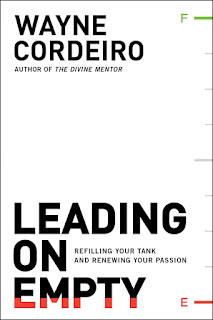
    This is why I strongly recommend every pastor purchase and read Wayne Cordeiro’s book, Leading On Empty. In this powerful book, Wayne shares his own battle through ministry burnout and how ministers can guard themselves to let their candle burn for the long haul. In this excerpt from the book, Wayne shares why it is so difficult for pastors to find the necessary balance between ministry and daily living.

    “There will always be a tension between what I do and who I am because they run so closely together. A minister isn’t like a salesman who stops talking business after five o’clock or a dockworker who refuses to pick up a fallen box because he’s off the clock. He doesn’t live in the world of retiring politician, who contents himself with leaving unfinished items for his successor.

    A shepherd-leader is more like a country doctor. Regardless of the time of day, when people are experiencing symptoms of appendicitis or when a baby needs birthing, he can’t say, “I’m off duty. I punched out at five.” In a sense, a pastor never punches out. Of course some may, but for those who see their profession as a calling, they simply cannot.

    What I do is who I am, and who I am is inextricably connected to what I do. I am a shepherd. It wasn’t something I chose as a business profession. It was something I couldn’t escape!” Page 96


    Disclosure of Material Connection: Some of the links in the post above are “affiliate links.” This means if you click on the link and purchase the item, I will receive an affiliate commission. Regardless, I only recommend products or services I use personally and believe will add value to my readers. I am disclosing this in accordance with the Federal Trade Commission’s 16 CFR, Part 255: “Guides Concerning the Use of Endorsements and Testimonials in Advertising.”
  • Michael Jordan & Craig Groeschel on Failure

     
    Isn’t it interesting that so many of us have an intense fear of failure, and shy away from situations where we might fail, while others embrace failure, learn, and end up doing something great!

    Watch these two great clips on failure and be inspired to try, fail, learn, adjust and try again!

    If you can’t see this video, try clicking this link.
    If you can’t see this video, try clicking this link.