Category: Great Sunday Services

  • Honoring Guest Speakers (part 1)

    This excellent three part series (originally titled “An Etiquette That Honors“) was written by my friend, Pastor Chris Ball. Pastor Chris is a leader of leaders both at his local church as well as Elim Fellowship, where he serves as General Secretary. It is a great honor to know him and share this resource with you!


    Pastor Chris BallOver the past 20 years I have had some wonderful experiences, both as a guest speaker and as a host to guest speakers. I’ve had the pleasure of these experiences in the local church and the broader arena, when hosting large conferences.

    There is nothing like the joy of celebrating the work of the Lord when the guest speaker flows in the Spirit, leaving a deposit from God and then returns home, having felt that he or she was cared for and had received a blessing, both spiritually and financially, for the time spent in ministry. Stories like this do not happen automatically. In fact, too often, I have heard about negative experiences from either the host or the guest speaker, primarily due to poor planning and/or an attitude which exhibits dishonor rather than honor.

    The Bible speaks a lot about honor: honoring the Lord with all your possessions (Proverbs 3:9), honoring your mother and father (Exodus 20:12), honoring those who seem to lack honor (1 Corinthians 12:24), giving double honor for those who labor in the Word or doctrine (1 Timothy 5:17), etc.

    I take a risk of being misunderstood by writing an article about an etiquette that brings honor when co-laboring with guest speakers. As one who is invited out to speak, this may seem self-serving. It is my heart, as you read the following material that it will serve to bring glory to God and His Church as we strive to operate with excellence.

    Honor is reflected when the following three essentials are functioning:

    • Communication
      The key to an atmosphere of honor is communication. Long before the ministry takes place, both the guest speaker and the host should discuss all details so that every possible area is addressed. This builds an environment where great ministry can take place, because both the host and guest are made aware of their individual responsibilities. The more questions asked and the more details discussed, the more it will serve to eliminate misunderstandings.
    • Cooperation
      Both the host and the guest should look for ways to bring honor to the ministry. Guests should always look to minister under the authority of the host leader. They should be considerate of time and dress code, come with a spirit to serve and bless, and always remember that they are only a guest. The host should look for ways to be a blessing, making life as comfortable as possible for the guest who, most often, is away from home and family. If the spirit of honor is in the minds and actions of both parties, they will be well on their way to a powerful time of ministry that glorifies God.
    • Compensation
      While every minister should be willing to serve with honor regardless of financial compensation, we cannot dismiss the fact that Paul challenged us to show double honor to those who labor in Word and doctrine. Paul is clearly speaking of compensation. Too many times to mention I have heard stories of men and women who have traveled far and wide, left family, and given their utmost to ministry, only to discover that their compensation was far from honorable; in fact, it was dishonoring.

    Every host must consider blessing their guest by paying their expenses (including housing, miles, and meals) and compensating them for their labor. Discussion should take place before the event is finalized regarding all the details involving compensation. It is much better to know the details on the front end than being surprised after the event is completed. In short, if a host is unable to compensate a guest, let them know early so they have the opportunity to say yes or no to the opportunity to minister.

    You may be saying, “I have a small church or ministry. When I look at these guidelines, I can’t begin to see how I will ever have enough compensation to invite a guest.” Remember, everything begins with ‘communication’. However, be careful not to be passive with these guidelines. There are several ways to work towards having a guest ministry.

    If you are leading a small work, consider the following…

    1. Focus on fewer events throughout the year. Work hard to make one event successful, rather than falling short on hosting multiple events.
    2. Consider partnering with a couple of other area ministries to host an event.
    3. Consider fundraising ahead of time so you will be able to store up enough income to provide for the event/ministry.
    4. Don’t be afraid to charge a registration fee for some events in addition to receiving a free-will offering.
    5. In your communications you may be able to arrange a package that will work out with your guest ministry, but remember – this should be agreed upon before the commitment is final.

    Someone once said to me, “Whatever happened to serving and trusting God for His provision? Shouldn’t that be the attitude of the guest?” Most guest ministries I know approach ministry with this attitude, and it should be the attitude of all who minister. However, I often caution that this should not give place to poor planning or be an excuse to disregard God’s call for host ministries to show honor to their guests. This article is intended to serve both the host ministry and the guest ministry. Following these etiquette guidelines will bring honor to all parties involved, and ultimately honor God. Let’s remember the essentials: Communication, Cooperation, and Compensation.

    Following are some guidelines that will serve to help you in your journey to honor. You may want to consider setting up an event coordinator to handle the details. No matter the size of our ministries, we can all function with excellence.

    Like what you’re reading? Click here to read ‘Part 2’ of this article!

  • Honoring Guest Speakers (part 2)

    This excellent three part series (originally titled “An Etiquette That Honors“) was written by my friend, Pastor Chris Ball. Pastor Chris is a leader of leaders both at his local church as well as Elim Fellowship, where he serves as General Secretary. It is a great honor to know him and share this resource with you!


    (If you haven’t read Part 1 yet, click here to do that first!)

    Pastor Chris BallGuidelines to Honor Guest Speakers

    Thoughtful, considerate hospitality extended to a guest speaker can greatly enhance your ministry event. Inasmuch as he/she will bless your audience with their message, you can bless them by facilitating an environment conducive to ministry.

    Demonstrate Hospitality

    Find out what your guest likes, such as snacks (candy bars, crackers, cheese, etc.), drinks, mints, etc. Have a welcome basket made for them and placed in the hotel room prior to their arrival. If your guest speaker’s spouse is traveling with him/her, be sure to include a special gift for their spouse. If the guest is staying in someone’s home, arrange with the host to assist with meals.

    Simple acts of hospitality can refresh a guest speaker and contribute to the success of your event. Here are a few more suggestions to consider as he or she arrives at your services/event:

    • Meet the speaker at the door of your facility or assign someone to meet him/her.
    • Be available or designate someone to help carry ministry materials from the speaker’s vehicle.
    • Place a table in a prominent place for ministry materials or displays.
    • Show your guest where the restroom is located.
    • Go over details of the service and provide a copy of the program agenda, schedule of activities, registration packet, etc.
    • Show your guest where he/she will sit, the path to the podium, where the sound system is located, where audiovisual screens are located, where electrical outlets are located, where light switches are located and where you will be sitting.
    • Designate which microphones the speaker will use. Introduce your guest to the sound and lighting technicians.
    • Be prepared to introduce your guest properly and to promote his/her ministry materials.
    • Discuss timing of a special offering (usually at the close of the service) and who will receive it (normally the pastor).
    • Provide bottled water and mints at the speaker’s podium and at the table/seat where he/she will be sitting.
    • Obtain permission from your guest before recording (audio or video) your guest’s messages/performances.
    • Provide complimentary audio and/or videotapes of the entire event to your guest.

    The honorarium is intended to bless the guest speaker above and beyond the expenses he/she has incurred to come and minister.

    Consider the following as you determine the speaker’s compensation:

    • Is this ministry my guest’s livelihood?
    • How far will my guest travel for this event?
    • How much time away from family will this event require of my guest?
    • What type of ministry (speaking, music, teaching, etc.) will my guest present?
    • Experts claim that the best presentations require 1 hour of preparation per minute of presentation.
    • How many times will my guest be expected to minister?
    • Cover your guest’s expenses (meals, travel, and lodging).
    • Reimburse the guest’s mileage (use the current Internal Revenue Service’s allowance for mileage when an automobile is used).
    • Inform your guest in advance of financial arrangements (fee, offering, both).
    • Pay your guest speaker before they leave your event. “Check is in the mail” is not serving with excellence.

    Like what you’re reading? Click here to read ‘Part 3’ of this article!

  • Honoring Guest Speakers (part 3)

    This excellent three part series (originally titled “An Etiquette That Honors“) was written by my friend, Pastor Chris Ball. Pastor Chris is a leader of leaders both at his local church as well as Elim Fellowship, where he serves as General Secretary. It is a great honor to know him and share this resource with you!


    (If you haven’t read Part 2 yet, click here to do that first!)

    Pastor Chris Ball

    Treat a Guest Speaker Well by Asking Ten Questions

    Those with little experience hosting guest speakers may be unaware of some of the courtesies their guests will appreciate:

    1. If your guest is flying, have you asked whether he’d prefer for you to book the tickets or to make his own flight reservations?
      If your guest makes his own travel arrangements, offer to reimburse him as soon as he can send a copy of his receipt/itinerary to you.
    2. Have you reimbursed your speaker for all travel expenses, including incidental ones?
      In addition to airfare or car rental costs, your guest will likely incur out-of-pocket expenses for airport parking, tolls, food, tips, etc. It is appropriate to ask for receipts for these in order to provide reimbursement. If the speaker drives his own vehicle, reimburse him according to the current IRS per mile expense rate.
    3. If you intend to give your guest an honorarium, have you arranged to do so before he leaves?
      When determining the amount of the honorarium, consider not only the preparation and delivery of the messages, but also the amount and value of the time you’ve asked your speaker to be away from home.
    4. Are you prepared to offer several restaurant options?
      Just about everyone has likes and dislikes. If meals will be served in homes, have you asked about preferences, food allergies, etc.?
    5. Have you asked about when your guest would prefer to eat?
    6. Have you given your guest the option of staying in a hotel instead of a home?
      Although some opt for the fellowship of the home environment, nearly all prefer the privacy of a hotel room. The hotel provides the seclusion to study, write, pray, prepare, send email, and more easily rise or retire according to his/her personal schedule. If your guest stays in a home, the most important consideration is a private bathroom. Be sure to show him/her where extra towels and washcloths are kept.
    7. Have you asked if your guest would like to have a car made available while with you?
      Rarely is this needed, and nearly always your guest will prefer for someone else to drive, but to ask is a courteous gesture.
    8. Have you asked what your guest would like to do during the times when he/she is not speaking?
      Your guest may prefer to rest or work, but might enjoy alternatives you suggest. Ask if there are any local sights he/she would like to see, whether bookstores are of interest, or something else.
    9. Have you remembered those left behind?
      Arrange to have a “Thank you for sharing your husband/wife” (perhaps just a card). Sometimes a simple, tangible remembrance can be given to your guest to take to their spouse. Just make sure they have room in their luggage.
    10. Finally, because everyone is different, it’s always a wise policy to ask all of your guests in advance, “Do you have any special requests?”


    What can a church expect from a guest speaker?

    1. A guest speaker must come to the host church with the mindset to leave a deposit. It’s better to give than receive.
    2. A guest speaker must always submit to the leadership of the host church.
    3. All times of ministry should be flowing in the same spirit as that of the host church.
    4. A guest speaker should be sensitive to time and schedule. Be on time and ask when ministry should begin and conclude.
    5. A guest should dress appropriately. Ask, never presume or assume.
    6. Inform the host church of audio/visual needs, if applicable.
    7. Seek to connect to the leadership, not just blow in and blow out.
    8. Inform the host church of your needs ahead of time so they can be aware and prepared for your visit.
    9. Send a thank you note after returning home.
    10. Be willing to go the extra mile.
  • Check out Dan Stevers Mini-Movies and Free Stuff!

    I stumbled across another great video resource for the local church today. Hopefully, you’re already aware of the growing list of great video resource sites like www.sermonspice.com and www.worshiphousemedia.com. This new site includes some great clips which would be particularly relevant this Easter. Additionally, the owner is offering a page full of some free video’s as well! Finally, if you have any ‘up and coming’ video experts in your church (like some of those teens/young adults), you will find several well made tutorials meant to help the aspiring video experts excel in what they do.
    Where could you use these short 2-4 minute clips?
    These clips are worth watching more than once. You might consider showing them pre-service, post-service, during the offering, or just prior to the Sunday message.

    Check out Dan Stevers at www.danstevers.com!  
    (and look over his free ‘Sermon Graphics Bundle’ right here)

  • Church Stage Designs Made Simple

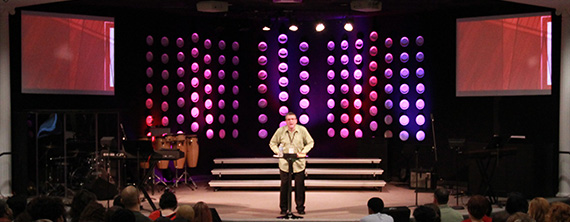
    Dippin-DotsEvery once in a while I get asked about what it takes to create great stage designs to support sermon series or to just spruce up how things look during different seasons of the year. I’ve been meaning to share this AWESOME resource with you for a long time, and am finally getting around to it.


    Years ago, we would sit in our creative team meeting and bang our heads against the table to come up with some fresh, cool looking creative themes for the stage. We did a pretty good job. But half the problem was in trying to figure out how to implement our ideas after we got them, without breaking the bank.

    Things changed drastically when we discovered this website. I remember soon after finding the website we were able to create a cool new look for less than $100 using paper plates (the above image uses paper plates and cost that church $95)! Of course, it helped that we had already invested thousands of dollars in lighting over the years. That said, whether you’ve invested in your stage and lighting designs or not, this website is sure to give you a head start in thinking outside the box. Enjoy.

    Check out ‘Church Stage Design Ideas’ at www.churchstagedesignideas.com!


  • Prophetic Planning

    This article was originally posted on Transforming Leader on December 6, 2010. Enjoy!

    John Wesley Preaching

    It’s Saturday afternoon and the pastor arrives home from the office, sermon in hand. He just spent the last two days poring over the Scriptures, praying, and writing a message he really believes in. His wife sees him walk through the door and asks, “So are you ready for tomorrow’s message?” He looks down at the manila envelope in his hand, lifting it up as he says, “Ready as I can ever be. I think this will be really good stuff. This series is perfect for what our people are going through right now.”

    Fast forward 24 hours. The service is over and the pastor and his wife are driving home from church. “So what did you think of the service?” she asks.  After a very brief moment to gather a deep breath, allowing greater sustenance in his passionate reply, the pastor says, “Amazing! God really showed up! Did you see the people at the alter? Did you notice how powerful the ministry time was? What is overwhelming to me is that I changed the whole order of the service AND my message during worship. It was all very spontaneous and Spirit led. I would love it if that happened every week!”

    I’m going to open a can of worms, just for fun.

    What happened here? When did the Lord show up? On Sunday morning only? Was He not present on Friday and Saturday? Was this pastor meant to spend hours seeking God for a Spirit-led message only to throw it out so God can do what He really had planned the next day? Is it possible the pastor just wasn’t in tune with God until Sunday morning?  Was he just wasting his time in preservice planning and God decided to bail him out?

    Let me stop for just a brief moment and ease your mind (in case I just read your mail from this weekend’s service); been there and done that. There have been several occasions over the years when I set my message aside to follow through with something that I felt led to do during the service. Often the service ended powerfully. Sometimes the message was so anointed I had to backtrack and just marvel in the wisdom and discernment it represented – which obviously did not originate from me.

    Actually, I don’t think we can answer the question. The Bible is full of all sorts of events where man was surprised by a spontaneous move of God. Of course, we know none of it really was spontaneous on God’s part – at least not humanly speaking. He knew what was going on long before we ever found out.

    It leads me to another question though.

    When do we really believe God shows up?
    I think as pastors and leaders we often fall into the trap of thinking that the Sunday service is where God shows up and our weekly planning and preparation is our measly attempt to throw a dart at a moving target and hope we at least get close to the bullseye. Of course, we won’t know where we “hit” until Sunday morning.

    We get excited when we experience God’s sovereign Presence and power on a Sunday morning. It’s so obvious that God was there with us. Rarely do we experience that same excitement mid-week when we’re in the middle of our preparations. We almost never stop and marvel at God’s sovereign Presence while we make phone call after phone call recruiting volunteers to usher or be on the worship team. It’s like those moments don’t really count. God’s off in the back room getting ready for His Sunday appearance and we’re just pulling everything together in hopes that we get everything right.

    What If?
    What if God was actually just as present, perhaps more if that’s possible, all week long with you? What if He was the one that led you to the people you talked to on the phone, the random Scripture passage that ended up being your key verse, and that song you decided to close the service with? What if God places a spiritual mantle on every pastor and leader throughout the week that is prophetic in nature? What if He speaks to you in advance of the Sunday service about what He is planning later in the week or even month?

    We always think of the prophetic as being a person standing up and making a timely, relevant, and powerful message for a group of people or singular person. It’s often spontaneous. The prophet hears from God “right there”. She speaks it out. Everyone lets out a holy ‘gasp’ of appreciation (hopefully). Wow. That was God!

    May I submit that many pastors and leaders function in the same role, but perhaps on an even higher level of influence and relevance? Is it not true that the message you speak on Sunday is also meant to be timely, relevant and powerful? It’s not spontaneous. It’s planned. It’s not ‘heard’ and ‘delivered’ on the spot. It’s discussed, contemplated, prayed through, and developed; then it’s delivered.

    You may not receive the holy ‘gasp’ of appreciation. But you know what? Wow. That was God!

  • 19 Tips on Preaching

    I received this email from the team over at preachingrocket.com yesterday and thought it was so helpful I should share it with you. These people know what they’re talking about. You may recognize them from the webinar they hosted and I wrote about entitled,Preach Better Sermons Online Conference. I recommend their webinars and services to pastors at large! Enjoy.

    logo_preaching

    We wanted to share some tips with you that you could apply to your message this week. Don’t try to use all nineteen this weekend just chose one or two to incorporate into your message this Sunday.

    • Get feedback on your message BEFORE you preach it.
      Feedback after the fact is great, but if you seek input before you preach, you can make your message better. This could be as simple as sending it to another pastor, another staff member, or a volunteer or two in your church. Chances are, there are people in your congregation who would review your message seriously and be a great help to you. Ernest Hemingway said the first draft of anything is #$&*@, so make sure you never preach your first draft.
    • Finish on time.
      Whether you use a countdown clock or a watch, it’s a good idea to stick to the allotted time. The Gettysburg Address has 300 words. Nobody remembers the other guy who spoke that day (who spoke for a couple of hours). Besides, nobody ever got mad at the preacher for finishing a few minutes early.
    • Don’t hide in the greenroom.
      Connecting with real people before your message is one of the most powerful things you can do. Last minute study is a sign of poor preparation and while some last minute prayers are always appropriate, that doesn’t mean you can’t speak a few words to people in the congregation. Leave the green room mentality and shake hands with people.
    • Pick a point.
      Most sermons try to cover too much information, so pick a point and stick to it. One 30-minute message isn’t going to be the final word on any topic. If you want to learn how to make that point memorable and sticky, here’s a free webinar that might help.
    • Be interesting.
      Helpful content that doesn’t engage the audience won’t have the desired effect. In other words, be interesting. Boring presentations, lifeless information, and passionless points will sail right over the head of the congregation. And over the head misses the heart every time. It’s absolutely imperative that you have accurate, Biblical content. But it’s equally important to present it in a way that connects.
    • Stories say it best.
      You’ve listened to speakers too, and, chances are, when the speaker told a personal story, your interest level increased. There’s something about stories that cause people to lean in. So make sure you tell a story every ten minutes or so. “Stories are the most powerful delivery tool for information, more powerful and enduring than any other art form,” writes Nancy Duarte.
    • Know your material.
      Before you preach your message to anyone else, you should preach it to yourself. Be familiar with your content so you can preach from your heart. A reliance on notes could be a sign that you don’t know your material. That’s why we teach members how to finish early in the week so the message can sit in a crockpot.
    • Get better as a preacher, don’t just work on your next message.
      Watching yourself on video is a great way to improve. Joining a community of people committed to improvement might also be right for you. For most churches, the sermon is the most visible thing you do and a key component in the discipleship process. So don’t get stuck in a rut, get better.
    • Speak to everyone.
      Those football stories you tell are awesome, and about 30% of the audience really relates to them. Referencing 2 Peter commandment on the fly is cool, but unchurched people think you’re talking about a race. You’ve got a diverse audience – that calls for diverse application and varied illustrations. Make sure your message is sensitive to your audiences (yep, you have more than one).
    • You’re not preaching in the first century.
      From time to time, I meet people who say, “Jesus didn’t need PowerPoint.” That’s true. (He would have used Keynote or ProPresenter anyway.) But Jesus was preaching in a first century context that didn’t have electricity. You didn’t ride on a donkey to church or ask the congregation to bring grain to the alter. It’s okay to use modern methods to communicate a timeless message.
    • Preach to who is NOT there.
      If you want guests, address guests. If you want to reach men, talk to men. If you want to reach the educated, add a little more intellect. Preach to who is NOT in the room, not just who IS in the room.
    • Summarize your sermon for twitter.
      Your sermon needs a central theme or a big idea. J.H. Howett was right when he wrote, “I have a conviction that no sermon is ready for preaching not ready for writing out, until we can express its theme in a short, pregnant sentence as clear as crystal.” We’ve got a
      free webinar that will help you craft these simple statements.
    • Find common ground.
      People don’t think preachers have real lives, real marriages or real struggles, so the fact that you’re a preacher is NOT instant credibility. Make sure you find common ground with your audience to let them know that you share some of their struggles, doubts and feelings.
    • Talk about your failures, not just your successes.
      John Maxwell said if you want to impress people, talk about your success, but if you want to impact them, talk about your failures. When you appropriately share your struggles, mistakes and failures, and communicate from a place of humble brokenness, you’ll make a far greater impact on your congregation.
    • Make people laugh.
      Everybody wants to laugh, and you don’t need to disrespect God’s Word or be a comedian to make people smile in church. Proverbs 17:22 says a joyful heart is good medicine. So let’s not talk about a boring God with lifeless sermons and give people the impression that God has no personality. God created laughter…it’s okay for it to happen in church.
    • Present Jesus as the hero.
      Not the audience, not you, not even the church. No matter your topic, you can find a way to point to Jesus. By the way, that’s exactly what Jesus did when he opened up the Old Testament scriptures and connected the dots for people.
    • Preach to inspire action, not just to inform.
      What do you want people to DO as the result of hearing this message? When Peter finished preaching in Acts 2, he told the people exactly what they should do (repent and be baptized). Make sure you’re not just presenting information but calling people to action.
    • Add some visuals.
      Whether it’s a graphic, or a slide, a prop or an object lesson, look for ways to make your words visual. Study after study shows this is the key to rememberability. If this doesn’t come natural to you, fight through the hard work…it’s worth it.

    One of the most significant things you can do as a communicator is work ON your skill and develop your calling. This is very different from working on your next message. It’s why we created the Core Coaching Program.

    Thanks for letting us serve you today!

    Michael

    CEO of The Rocket Company

    P.S. Here is a summary of the FREE stuff in this email:

    • Preaching With A Point Webinar: How to craft a memorable bottom line statement each week that your church attenders will be repeating on Wednesday at Starbucks.
  • Free Stuff For Churches: NewSpring Church


    The great people over at NewSpring Church, with Pastor Perry Noble, recently released their new Church Resources website. Pastors and church leaders are invited to sign up and download any of the many resources they have developed, free of charge!

    Available For Download:

    • Sermon Series Images and Video Files.
      You’ll have to make sure you have the right programs to update these files for your church. If you do, there are more than 50 series available. To the left is an example of one of a series graphics.
    • Student Resources.
      These student resources may work great in Sunday services too.
    • And More!
      Check out their website to see what else NewSpring Church has available to help your church reach your community!


  • Unlocking the Secrets of Church Sound


    This is a guest post by Josh Cummings. For many years Josh served as the Technical Director at Elim Gospel Church in Lima, NY. Josh is passionate about all things audio & visual. His world includes wires, cables, buttons, knobs, computers, software, lights, speakers and a million other odd and weird knick-knacks. He is, by far, the coolest tech-dude I know.

    You might also enjoy reading my other posts in this series entitled ‘Turn the Volume UP!‘ and ‘Turn the Volume DOWN!‘.


    Poor sound can be extremely distracting. We’ve probably all been there: the worship leaders mic gives annoying feedback during the service, the preacher sounds like he’s underwater, or you can’t hear the lead vocals over the band during worship. Though it is often a thankless role, the church sound tech has the power to enhance or detract from the communication of the gospel in our church services. With that much depending upon one person, I thought I would give you a few tips on how to improve in this article on the art of mixing.

    • Preparation will save you time and stress.
      Before I tell you anything else, I want to give you the number one rule of using technology in church: Test everything. Trust people, not equipment. You’ve probably tried to play a video at some point during a church service and experienced the awkward embarrassing silence that follows when the video doesn’t work. With a little preparation, you can make sure that it doesn’t happen again (or nearly as much). Don’t blame the “demons in the sound system” when you could have prevented the problem with proper preparation. Take the service plan and go over every detail and press every button just like you would in a service. Years ago, we made a decision to rehearse our entire Sunday morning service, minus the preaching. We catch problems every single week and I know that it was one of the best things we have ever done to increase the quality of our services.
    • Mic that kick drum!
      Most local churches do not mic the drum set. If I were to only mic one drum, it would be the kick drum. This will add punch and rhythm to your mix and give your worship more overall energy. If your room is large enough, I recommend mic-ing the entire drum set, but mic-ing the kick drum is the place to start.
    • Set gain levels first.
      Gain is the master volume for each channel on your mixer, which affects the monitors, house mix (“house” mix is what comes out of the main speakers in your sanctuary), and more. Set the house volume fader to 0, and turn up the gain until the level is approximately where it should be in the house or slightly above. This gives you a good basic level for each channel. Do not mix with the gain knobs. Set them to the right levels and then adjust the house mix using the house volume faders.
    • Set monitor levels.
      If you’re not using in-ear monitors, I recommend putting as little as possible in the monitors while still supporting the worship team properly so that they can hear themselves. This will keep your stage noise to a minimum and give you a more intelligible house mix. A good method for setting monitor levels is this: do a basic mix for each monitor mix, have the band run a song, then adjust one channel at a time while band members give you a thumbs up or down to let you know how much they need in their monitors.
    • Shape the tone with EQ.Please, please, use the equalization (EQ) controls on your mixer. EQ takes a specific frequency or frequency range and turns it up or down. You are a sculptor of sound and the worship team has given you a lump of clay to mold into a masterpiece. If you don’t use the EQ to improve the tone of your mix, your museum will be showing an ugly lump of clay on Sunday morning. This is a huge subject to delve into, and can immensely improve your mix if used properly. For example, your bass guitar will sound nasty if you don’t turn down 300Hz, the violin doesn’t need any bass in it, and you can reduce feedback by cutting the frequency that is feeding back. Just turn up the EQ gain, sweep the frequency knob, find the nastiest sound you can, and then turn it down accordingly to its nastiness. If you want to learn more, here is a helpful blog post on EQ.
    • Regulate your levels with compression
      Compression will cut down on all of those sudden loud noises from your vocals and instruments. When you cut down those spikes in volume, you can have a more consistent and less dynamic sound from that channel. If you use it on one thing, use it on the lead vocal mic.
    • Enhance your vocals with reverbA tasteful amount of reverb can make a good vocal sound fantastic, but it unfortunately won’t make a terrible vocalist sound like Pavarotti!
    • Highlight the lead vocals!In any context, the lead vocals should be the most prominent sound, but even more so in church, where the congregation needs to know the melody to sing along in worship to God. Don’t let anything overpower the lead vocals in your mix. Spend the most time getting the lead vocals just right compared to other channels in your mix.
    • Mentally listen to one instrument at a time.
      To create your mix, listen to each instrument one at a time. Mentally block out all of the other instruments, listen, then decide if that instrument needs to be louder or softer in the mix.
    • Budget your mix.Just like your values will drive how you spend your money, you need to decide what instruments have the most value in your mix and budget your levels accordingly. For example, I will mix foundational instruments like piano and acoustic guitar a bit softer, and more interesting lead instruments like electric guitar or violin a bit louder. Those interesting lead parts have more value to me, so I make them more prominent in the mix. There are no exact rules for mixing, only guidelines. This is where mixing becomes an art.
    • Mix around the same overall deciBel level every week.It’s amazing how easy it is to upset people with the volume levels of your church sound system. Make a team decision as to how loud it should be, and keep it the same every week. I would recommend purchasing a decibel meter if you can to ensure the consistency of your levels.
    • Refine your ear by listening to high quality music.It is entirely possible that you or the sound techs at your church haven’t experienced high quality sound very much, or at least haven’t listened with an analytical ear. If you want to get better, listen to high quality recordings and concerts, and try to imitate the way they do things.
    • Clear up your house mix by reducing stage noise.Stage noise often causes all sorts of problems with your house mix. I can’t go into all of the details in this post, but anything you can do to reduce your stage volume will create a clearer mix in the house. You could use a shield or an enclosure for your drum set, or you could use in-ear monitors for your worship team.
    • Take yourself to school.Never stop learning. There is always more to learn about live sound. Connect with other church sound techs and learn what you can from them. Use Google to discover helpful websites like www.prosoundweb.com, www.churchsoundguy.com or www.churchtechtoday.com. Attend a How-To Sound Workshop. Keep seeking out more knowledge, and you will keep increasing in your skills as an audio engineer and your ability to serve the local church in this way.
     
  • Turn the Volume UP!


    Have you ever had anyone threaten to leave the church because the volume was too LOW during worship? Believe it or not, I have. It only happened a couple of times and certainly did not compare with how many complained it was too loud. To this day, I can tell you who in our church wishes we would turn the volume up . . . and no, they aren’t deaf!

    Last week I wrote the article ‘Turn the Volume DOWN!‘ Today I would like to similarly share some reasons why people may want the volume turned UP in your Sunday services. You might experience slight deja vu.

    • It’s too quiet. (there is no energy in the room)
      Stating the obvious is always a great way to begin. The Master Volume needs to be turned up and the instruments should be remixed to the new level. When worship is too quiet it can make for a boring worship experience. I’ve been to many churches who mix their worship too quiet. I suppose it appeases a few key leaders (or the pastor), but it also puts a major damper on worship – especially for the younger generations.

    As a general rule of thumb, if I can hold a conversation with the person next to me during worship without leaning in and raising my voice to be heard, the sound is probably too soft.

    • Bad mix. (low energy in the room or we can’t hear the worship leader)
      Many times the problem isn’t volume. It’s a bad mix. The instruments are too loud and are drowning out the worship leader; or the keyboard and worship leader is mixed well but everything else is just a low hum in the background; or the drums are drowning everything so all people hear is just enough worship leader and primary instrument to be able to sing. Probably most common is when the kick bass (the deep booming sound from the drums) is turned way down. This can really squash energy in the room and may even make the difference between whether or not people ‘clap’ or not during high energy songs.
    • Hearing loss.
      Another reason why people might want the sound turned up is because they are simply half-deaf and don’t know it. I’m not joking. Unfortunately, it’s quite common for people to have hearing impairment AND to not know it. According to these statistics, people with hearing loss wait on the average of 7 years before seeking help. I better go get my ears checked.
    • Differing opinions.
      Read this same paragraph in my post ‘Turn the Volume Down!‘ That about sums it up! Everyone has different opinions on how loud they like to hear music as well as what the overall mix sounds like. The key is to determine who will be the primary driver for volume/mix (that is, who will represent the values/goals of your church best) and let that individual call the shots. Just a side note – assuming you have a passion to reach the younger generations, I recommend you err on the side of a more aggressive/loud mix than not. I’m not suggesting you drive everyone else out – but that you actively seek to find that balance.
    • Bad equipment or acoustics.
      Your equipment, speaker placement and room acoustics will make a big difference. Often, churches struggle with hot and quiet spots in the room. It’ll be loud in one area and too quiet in others. My church has this issue. I’ve used this fact to my advantage by encouraging those who tend to like it louder or quieter to sit in certain areas. It’s one reason why the young people like to sit near the front. They get both the speakers in the room as well as the stage noise coming off of people’s stage monitors. It’s also usually where the sub-woofers (where all the bass and lows come out making your body vibrate) are located.
    I will continue this short series of posts about volume in an upcoming article giving some general advice on how your church might better ensure your worship service has the best possible mix/volume to encourage maximum participation from your worshipers. Stay tuned!

    photo credit: ckaiserca via photo pin cc