Category: Great Sunday Services

  • How To Deal With Volume Complaints

    How To Deal With Volume Complaints

    In the same Sunday morning service I’ve had two people approach me with differing complaints – one asked if the worship could be turned up while the other asked if the worship could be turned down. In most churches it seems like the sound is never quite right. The fact is, it’s one of those, “you can’t please everyone” areas. Many years ago I had to navigate a different problem though. The volume was driving people away.

    It’s one of the reasons why I wrote the following two posts: Turn the Volume Down! & Turn the Volume Up! as well as why I asked my friend, Josh Cummings, to write this follow-up post: Unlocking the Secrets of Church Sound.

    I’d like to offer some advice on dealing with volume complaints. These ideas will help leverage what you believe the volume levels should be each week with the myriad of volume adjusting requests you may have to entertain.

    Acknowledge Mistakes.

    If the shoe fits, wear it with grace. You should know if the sound was off on a particular Sunday. If it was, simply acknowledge to your listener that he or she is right and that you will be looking into what happened. If you are unsure about whether the sound was grossly off from the standard, still let them know you will be looking into it (and do).

    Respect Others’ Opinions.

    Intellectually, we know everyone is entitled to their opinions and ideas. Practically, it can be a lot more difficult to respect and honor them. Make sure any person who has a concern or frustration in this area gets your undivided attention. Listen closely to their perspective. Seek to understand it fully. Honor them by recognizing their thoughts are important and matter. Do not try to ‘defend’ or ‘answer back’; let them have their say. Once that is done, kindly seek to help them understand where things stand with the sound.

    Know Your Target Audience.

    It was a lot easier for me to respond to people’s complaints simply because I knew who our target audience was. Because Elim Gospel Church has a strong desire to reach the younger generations, they are willing to push the envelope a little on volume issues in order to reach them. That’s not to say I would blow people’s complaints off, but I would be armed with the “Why?” behind our reasoning – which often resulted in my listener respecting and sometimes embracing our decision when we were done talking. 

    Understand The Challenges.

    As I just suggested, volume challenges are often beyond our control because of a lack of training, poor equipment, or bad acoustics. Although none of those difficulties should be given as the ultimate excuse, they should also play a role in helping others understand that resolving volume problems aren’t as simple as they might think. It is extremely important, however, that you ALSO give your listener the confidence that your team is working on solutions to those challenges.

    Create and Hold To Your Standards.

    It’s a lot harder to argue with well defined, tried and tested, standards. This is why I recommend your church purchase a dB meter and spend some time determining the best sound levels for your room, and sticking with them. This removes some of the ‘personal opinion of the sound person’ challenge. If they are aware of the standard and held responsible to hold to it, then you are much less likely to get complaints, and when you do, you are more likely to be able to respond with confidence. Even better, if you have a digital sound board, learn how to program it for individual bands or band members so that your sound tech is less likely to make mistakes when mixing.

    I also recommend reading Willowcreek Church’s Audio Volume Policies. Understand, they are a huge church, but the fact that they have taken the time and energy to figure these things out should be a testimony of the value they find in getting it right. 

    Write A Position Paper.

    If volume ends up being an ongoing issue for your congregation, consider writing a position paper underlining your values, standards, and limitations. Again, this simplifies communication. You can be sure people are hearing it said the way you want it said, and you can always follow up with people after they’ve read it over. The link mentioned above also points to Willowcreek Church’s Audio Volume Open Letter. It’s a great example of what your position paper might look/sound like.

    Ask Your Sound Team To Subscribe To www.behindthemixer.com.

    You can address concerns with your congregation a lot easier when you know your team is well trained and not just doing a ‘hack job’ of it. Ask each sound tech to subscribe to www.behindthemixer.com to keep them focused, sharp and on the cutting edge of all things church sound!

  • Why Young Adults Don’t Attend Your Church

    Why Young Adults Don’t Attend Your Church

    I used to visit a restaurant that had two separate dining areas, one slightly larger than the other. The larger dining area was always where I sat to eat, even though I had to walk right by the smaller dining area to get there. To be honest, it never occurred to me that I could sit in there if I wanted to. The reason was quite simple. It was where all the ‘regulars’ sat, who were also all much older than me. There was sort of an ‘exclusive club’ feel to the place. Everything about that space screamed, “Private Party” even though it wasn’t.

    Sadly, our churches often send this same message to the younger generations, without even realizing it.

    Let’s split up the ‘younger generation’ demographic into two categories, those (1) not interested in God and those (2) interested in or pursuing God, and focus on the latter group. It’s not hard to miss these people in our churches today, especially in the small to mid-sized churches. 

    Why aren’t they attending more of our churches? 

    I suspect the following 5 reasons might answer that question.

    1. It feels like an insiders club.

    Young people aren’t interested in learning the secret handshake so they can be part of the church. If they visit the church a few times and feel like an ‘outsider’ for very long, they’re not going to stick around. It is super important church leaders ask the question, “What (formal & informal) hoops have we created that people have to go through before they are accepted and integrated into the life of our church?”

    In other words, how long will it take & what needs to happen before they are treated like family? More than any other age group, we need to be intentional about making this process simple, both practically and emotionally. 

    2. It reminds them of their ‘mom & dads’ church.

    I’ve heard young adults echo this phrase many times over the years. They leave the church they grew up in and find themselves at college or on their own. Eventually, they check out some churches in the area. From the moment they walk through the doors until they leave, their experience reminds them of church growing up. Only, for many of them, the Sunday morning experience growing up wasn’t for them, it was for the adults, for mom and dad. 

    Although technically “adults,” many young people aren’t interested in acting like the ‘older’ adults they’ve been around their whole life. They want to express themselves as the younger generation. Churches who are actively reaching this group of people are also finding ways to enhance the Sunday morning environment to better appeal to them.

    3. There is nothing interesting for them to do.

    Despite the fact that young adults have a history of sitting in front of their devices, TV’s and xbox’s growing up, they don’t want to just sit around at church. They’ve grown up having a lot more freedom and control over what they get to see and do than those before them. And they are going to get bored real quick if they are forced to just do and go where everyone tells them to. They want to have a say in what’s going on and they want to do something important and interesting.

    Churches who are thinking of this generation will quickly get them involved in ministry. They will encourage them to reach out to felt needs in the community. And they will provide lots of fun activities that are designed to keep young adults engaged with one another and the church family.

    4. There is no one interesting to hang out with.

    Many young adults who visit your church are looking for new connections. Surprisingly, not just with peers, but with people who can act as mentors and leaders in their life. That said, peers are important. Many a young person will walk in a church, scan the crowd, and determine to never return simply because there is no one else around their age. Churches that can reach a small ‘quorum’ of young adults have the beginnings of a foundation to build on, relationally.

    It shouldn’t stop there. One of the best ways to truly connect to this auspicious group of people, is by inviting them into the homes and lives of your church families. I’ve never heard of a young person who turned down an invitation to dinner and who doesn’t secretly enjoy experiencing ‘family’ away from their own family.

    5. Their questions are not getting answered.

    Young adults hate watered down and pat answers. They have questions and they are genuinely interested in the answers. They want to know the Truth. But they have little patience for flowery speeches, big words, and long explanations. They want it simple. They want to get it. They want it fast.

    Communicators need to brush up on their skills and not assume what worked ten years ago will work today. They need to know how to tell great stories and they need to be consistently asking themselves how they can connect with young adults. More than ever before, church leaders must, “be prepared in season and out of season.”


    What other reasons are young people staying away from our churches?

  • Four Terrible Assumptions Church Leaders Make

    Four Terrible Assumptions Church Leaders Make

    I was standing in the lobby of a local church talking to an unchurched first time guest. It was one of the first times he had ever visited a church and he knew nothing about God or christianity. The service had just completed and people were filtering out of the sanctuary and collecting in small groups, visiting with one another. It was a warm, friendly atmosphere. I was so glad when the pastor noticed me and came over to talk to us.

    Alas, my joy was short-lived. The pastor introduced himself to my new friend and then proceeded to talk about his sermon and how important it was for “us Christians.” It was sort of an “insiders” conversation. I wanted to step on his toe or something. I wished he could read the urgency in my eyes. In desperation, I finally interrupted him and blurted out, “Pastor, I didn’t know if I mentioned this or not, but this is our friend’s first time here this morning. Did you get to meet his wife and kids yet?” I’m still unsure if the pastor got the message, but I was at least able to distract him from the unhelpful conversation and redirect it to a more safe topic. Ugh.

    I happen to know this pastor has a heart of gold. He’s a great guy, a seasoned minister, and truly loves both his congregation and the people in the community. I know he has a heart for the lost.

    But he has fallen into a trap. One that, unfortunately, is very easy for pastors and church leaders to stumble into. He’s forgotten that the people who sit in his congregation are not like him. He’s making several bad assumptions about the people in his church, and I’m afraid it’s potentially turning them away.

    Four Terrible Assumptions Church Leaders Make:

    Since I visit a lot of churches as a ‘Mystery Guest,’ I have the chance to experience their church from a very unique perspective. Following are four terrible assumptions I have seen church leaders make way too often. 

    Assumption #1: Guests Know What To Do

    It saddens me greatly when church leaders assume guests have experience attending churches and know what’s going on, what they are supposed to do, where they are supposed to go, etc. They forget that the church environment, one they are intimately familiar with, is a brand new environment for many guests. Even those who have, perhaps, attended church before may still be in the dark, especially if their ‘church experience’ was from a different denomination or style of church.

    Imagine visiting a place that you have never visited before, where everyone but you feels at home and nobody thinks to help you get acclimated. Even better, go find that place and check it out. Perhaps your local health club or golf club, I don’t know, try the New York Stock Exchange. Visit that place and be reminded that your guests are experiencing something similar.

    They don’t know what to do with their kids. They don’t know the words to the songs, and probably feel a little uncomfortable singing them. They don’t know if they are supposed to give money or take communion. And they don’t know when to stand, when to sit or what to say. At one church I visited, everybody quotes, from memory, the Lord’s Prayer and sings the Doxology every week. Your guests know neither of those things.

    Assumption #2: Guests Know the Bible.

    Walk up to just about any adult in America and you will discover that they know how to drive a car. It’s a given – and it’s pretty much assumed. After all, everyone we know eventually ends up behind the wheel. Sometimes we ride with them while they drive. That sense of familiarity has seeped into many churches regarding the Bible. Church leaders spend a ton of time with other people who read the Bible, understand what it’s about, and know all the stories. So it’s not that great a leap for them to assume that anyone who is in the church has Bible knowledge.

    Imagine walking into an advanced physics class at your local university. Even better, go visit it sometime. Don’t tell anyone who you are or why you are there. Just let the instructor & students talk to you as if you’ve already been through the other physics courses, like everyone else. You get the picture.

    You’re guests probably don’t know where to turn in the Bible, if they even own one. And it’s likely they don’t know the story of Jonah, David & Goliath, the parting of the Red Sea, the Last Supper, Pentecost and quite possibly even the story of Jesus’ death & resurrection. You learned all that as a kid in Sunday School; they didn’t. For many of your guests, the most they know about the Bible and it’s stories is from what they’ve seen at the movies. Do you really want to briefly mention Noah after they just watched Hollywood’s rendition of the story? 

    Assumption #3: Guests are Christians

    Perhaps one of the worst assumptions church leaders can make is that guests are already Christians. The tragedy behind this assumption is that, by making it, there is little to no room to actually open up the most important conversation that individual may ever have. When we assume someone has already discovered Christ’s love and forgiveness, we no longer think to share the Good News with them. Even worse, when we talk to unbelievers like they are already believers and part of the family, we may even give them the false impression that they are, in fact, Christ followers. They may end up attending and serving in the church for months or even years, and have never truly grasped the simple, yet profound message of the Gospel.

    Imagine being invited to a football party with a bunch of people you don’t really know. What if, without being asked, everyone assumes you’re rooting for the same team as everyone else in the room? When a touchdown is made, everyone cheers and slaps five and nobody even stops to think that you aren’t rooting for that team, and maybe don’t even like football! Is it possible that our Sunday morning environment and the way we talk to and treat guests aren’t too far off from that hypothetical situation?

    There is no guarantee your guests know God, or understand God. Jesus Christ may simply be a religious and historical name. Salvation? Forgiveness? A loving God? Atonement? All may be totally foreign words or concepts. The next time you shake the hand of that guest, assume nothing about their faith in God. Realize that they could be completely unchurched, or an atheist or agnostic; or to complicate matters, even possibly a Mormon, Buddhist, Muslim . . . you get the idea.

    Assumption #4: Guests have it all together.

    I’m convinced most Christian leaders would make terrible police officers. We have no idea how to truly profile another person. I’m pretty sure if we were sitting in the police car with an officer, watching the same people, we’d point out the nicest people as being potential criminals and totally miss those truly guilty. Sad to say, but I think a lot of church leaders look at our guests and falsely assume that, if they’re smiling, dressed well and friendly, then they are happy, well off and emotionally healthy; and if they’re scowling, dressed poorly and want to make a quick exit, then they are grumpy, in loads of debt and emotionally unstable.

    Think about what you’ve gone through, personally, this year. I know you’ve faced a few challenges of your own – we all pretty much do. If this has been a good year, then go back a couple years until you hit that particularly difficult situation. Now, how many of the employees knew about your challenge at the local supermarket when you were buying milk? No. They thought you were fine. 

    Philo of Alexandria once said, “Be kind, for everyone you meet is fighting a great battle.” That includes your guests. We don’t know if the battle is a recent loss, an addiction, a broken relationship, a serious illness, major debt or a lost job. Whatever it is, you aren’t going to see it when you introduce yourself and welcome them to the church. Don’t be fooled. They need the hope, love, healing, peace and forgiveness of Jesus Christ.

    How about you. Which assumption are you most guilty of making?

  • Behind the Mixer

    Behind the Mixer

    I hear a lot of pastors express frustration about the people behind the mixer. Evidently, getting the right mix, sound, volume, etc. is nearly impossible. I know. I was in that place for many, many years. In fact it’s what prompted me to write the following posts:

    And finally, I strongly recommend you ask your sound techs (and worship leaders) to subscribe to behindthemixer.comBesides some great ongoing articles on running a mixer, there is also a section entitled, “Church Audio 101”. Check it out!

    Behind-The-Mixer

    www.behindthemixer.com

     photo credit: fensterbme via photopin cc

  • Worship Slides 101

    worship-slideOne of my jobs as a ministry coach is to visit churches and evaluate the experience. In my travels, I’ve observed that churches often break some basic rules of thumb regarding how words are displayed on the screen. Today, I ran across a website that does a pretty decent job of outlining these basic rules of thumb, so I thought I’d share them with you.

    Note: If you are using presentation software like MediaShout or EasyWorship, you should find some standard templates that will take care of most of this stuff (unless you’re using a real old version).

    Also, if you’re church is strong on creativity + technology, then you might break these rules successfully. This post is primarily for those who struggle with creativity within technology.

    There are three posts from this author on the topic. After you’ve looked each of them over, check out my additional thoughts below.

    I have just a couple more pointers I’d like to add.

    • Stay away from orphan words.
      An orphan word is when you have one word all by itself on a line that is completing a sentence. For example:

    Jesus loves me, this I 
    know.

    • Keep line lengths somewhat even.
      It can be distracting and make reading more choppy when the lines in your text are grossly different in length. For example:

    Jesus loves me, this I know.
    For the
    Bible tells me so. Little
    ones to
    Him belong, they are weak…

    This is going to be a lot easier to read:

    Jesus loves me,
    this I know.
    For the Bible
    tells me so.

    Or even:

    Jesus loves me, this I know.
    For the Bible tells me so.

    • Don’t squeeze tons of words on one slide.
      Your congregation will get lost and be forced to focus on reading if you try to squeeze tons of lines onto one slide. Spread them out.
    • Transition before the last line ends.
      There’s nothing more frustrating than not having the next group of words up on the screen in time, especially if you don’t know the song. Make sure your projectionist knows to transition to the next slide a few words prior to the end of the slides grouping of words. Or, about 2 seconds before the words are done being sung on that slide.


  • Free Ministry Video Resources

    lift-increaseI’ve recently come across two websites that are successfully making a difference in the world through video. They each boast several great video interviews with both ‘regular’ and ‘famous’ people and they capture great stories of people who have faced difficulties and sinful pasts and have overcome through Jesus Christ.

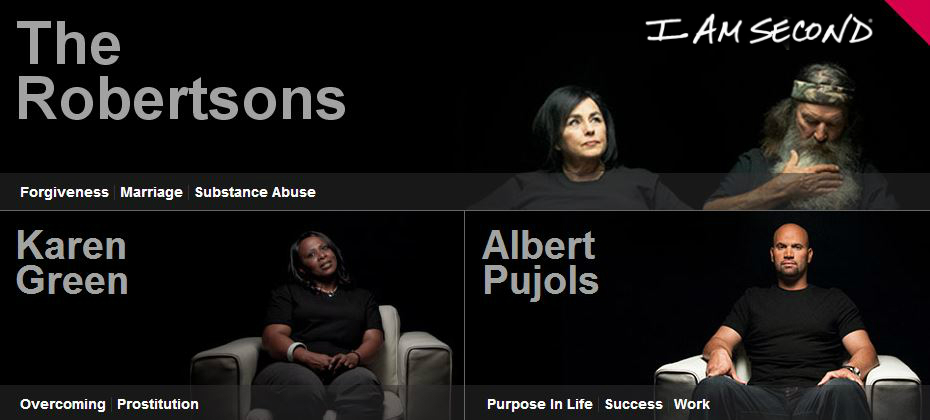
    What’s even better is the owners of these websites are providing them FREE OF CHARGE. You are welcome to access and utilize them as you see fit.

    Let me say the obvious. Most of us couldn’t pull this off ourselves. But we CAN utilize them to strengthen our current ministry. I can easily envision these videos being used at:

    church services.
    school chapels.
    small groups.
    college ministries.
    classes.
    discipleship programs.
    1 on 1 encouragement.

    Check them out today and be sure you earmark them as a resource for your ministry!    

    The Increase (theincrease.org)I Am Second (iamsecond.com)

  • Sunday Announcements: Information Overload

    Dark microphoneSeveral months ago I and my family visited a small church as a ‘mystery guest’. The goal of my visit was to provide some helpful feedback to the Sunday morning experience, especially as viewed through the eyes of a guest.

    I was completely overwhelmed (or maybe the word is underwhelmed) by the morning announcements. They were boring. The person giving them was practically reading them from the bulletin. And perhaps most frustrating, there were way too many. I stopped listening when they got to the special event happening 6 months from now. If it wasn’t my job to listen, I’m not sure I would have ever ‘started’ listening,

    I was recently reading a book summary of a book I read a few years ago entitled, “Less Clutter, Less Noise” and ran across this very poignant paragraph.

    “A Sunday edition of the New York Times carries more information than the average nineteenth century citizen accessed his entire life. Information used to be a rare and precious as gold; now it is so inexpensive and plentiful that most of it ends up being overlooked, ignored, or tossed like garbage. The barrage of data to which we are constantly exposed carries a cost – physically, mentally, and financially – regardless of the generation. People who live in today’s world respond in one of three ways: they become overwhelmed and shut down; they labor over whether they are making the right decisions; or they just ignore you and move on. More isn’t what people are looking for; relief from the pressure of more is what they’re looking for.”

    Well said. My advice is simply this.

    • Keep your announcements to a maximum of 3, preferably 2.
    • Sell what you have to say. Convince people why it’s important to them.
    • Communicate everything else through other means (like a weekly eblast, the Sunday bulletin, the church website & calendar, facebook, word of mouth, etc.)

    photo credit: istockphoto

  • Leveraging Technology for Ministry

    chris-zieglar

    This is a guest post by Chris Zeigler. Chris is the Assistant Director of BASIC College Ministries. He was a student leader with BASIC at the SUNY Oswego Campus and has never lost his heart for college students. He has started BASIC groups at SUNY Geneseo, Monroe Community College, and the University of Rochester and also advises new groups while travelling, speaking, and writing a blog for campus ministers along with many other things.


    For as long as I can remember I’ve been interested in computers and technology
    . In high school I got involved in the student-run TV station. When I went to college I chose to get a degree in broadcasting and worked as a campus representative for Apple. Since that time I’ve learned Photoshop, built websites, and started a love/hate relationship with social media. But I recognize that for many, living with technology is just a necessary evil.

    Now that I’m working in ministry, I’ve realized that my love for technology can be used for good and for more than just posting pictures of the delicious dinner my wife made (but really she’s a great cook and I love to brag on her). My job gives me the great opportunity to reach out to college students who are considered by many to be the minority in the church.

    Here’s what I’ve seen over the last 4 years working in college ministry: students (and many adults now) are extremely connected to technology. Their iPhone has become an appendage and they are constantly connecting with the rest of the world. While we could easily choose to bemoan this fact, the truth is that the world is only going to become more centered around technology 

    It is becoming more common to see young people their phones during church services. This will continue happening whether you want it to or not. The past response has been to get frustrated and demand that they put their phones away. Instead of pushing them further away though, it’s important to recognize this as an opportunity to connect with them in new ways. In addition to connecting with the younger generation, there are many ways technology can benefit you as a leader too.

    Here are two ways to leverage technology for your ministry’s benefit:

    Encouraging Interaction

    Twitter is a great way to encourage community interaction in your church using short messages. The church I attend just recently did a series walking through the books of Peter and humorously called it ‘Tweets from Pete’. Using social media in this way encouraged people to share what they were learning on social networks with unsaved friends and also kept discussion going throughout the week.

    A fun way to incorporate this into your services is by using the service twitterfall. With this you can display posts associated with your church on the screens before and after the service to promote discussion. As a side note, Twitter is also a great way to network, find resources, and learn from other ministries. If you’re not sold yet check out the article ‘3 Reasons You Should Tweet In Church’.

    This all sounds great, but it was while I was traveling a little while back that I fully realized the benefits of combining technology and ministry. My wife and I were speaking on the topic of relationships at a college ministry. After preaching we had decided to hold an anonymous Q&A time. Since no question was off limits, the topic was relationships, and the questions were anonymous you can imagine some of the things we were asked 

    People texted in their questions and they showed up on the screen behind us as we worked through each one. This was a moving time as people asked questions they wouldn’t normally ask. God’s presence showed up and allowed us to speak to people right where they were at.

    We’ve done this a couple times since then and had great success. There are a couple of services out there you can use. We used one called Poll Everywhere; but there are others available as well.  

    Leadership Training

    It seems these days that great leadership and ministry training is happening all the time. But paying for your staff to attend a conference can be costly once you add in hotels, airfare, meals, etc 

    While going to a conference can still be very beneficial, the good news is that many conferences now stream the entire event online. The admission for this varies from free to still fairly expensive, but it will definitely be cheaper than attending the event in person. Here’s a list of some of the best that I’ve come across:

    • Leadercast – a leadership conference hosted by the popular fast food chain that requires viewing at a local host site
    • Willow Creek – a leadership conference hosted by Bill Hybels’ church that requires viewing at a local host site
    • Exponential – a conference focused on church planting and other various topics
    • Verge – a conference focused on building missional communities

    The last resource I have to mention is the Andy Stanley Leadership Podcast. This free monthly podcast consistently offers some of the best leadership training I’ve been exposed to.

    Now that I’ve sufficiently overwhelmed you with links, my hope is that these ideas and the subsequent ideas you gain from them will benefit you, your leaders, and your congregation.

    What are some other ways your church or ministry has found to leverage technology? Feel free to comment with any questions or ideas. 

    photo credit: mjdave via photopin cc

  • Preparing/Delivering Great Messages

    The church where I attend has been known for it’s outstanding preaching right from it’s birth in 1988. For more than 20 years the founding pastor, Mike Cavanaugh, fed the body of Christ through a steady diet of timely, relevant, God-inspired messages. A few years ago, he handed the reins over to his successor and the current pastor, Joshua Finley. Pastor Josh has done a fabulous job of picking up where he left off. He is one of the best communicators I’ve ever heard.

    In the following workshop, Pastor Josh shares some keys to preparing and delivering great messages. I trust it will help you strengthen your communication skills. Enjoy!
     
    [vimeo 42830604]Can’t see this video? Try clicking this link.
     
  • ‘Preach Better Sermons’ Cliff Notes

    Looking to get some advice on how to improve your sermons? Chris Zeigler from BASIC College Ministries has graciously agreed to share his notes from the recent Preach Better Sermons” online conference. Thanks Chris! For more information on Chris, BASIC, or college ministry check out the links & information at the end of this post.

    You might also want to check out my cliff notes from last year’s ‘Preach Better Sermons’ online conference right here!

    STEVEN FURTICK

    • Plan your sermon series about 4 months out.
    • Build a team around you who will brief you on each series you do. Let them ask tough questions! And allow them to meet on their own to brainstorm ideas on how to integrate popular culture, what scriptures are being used, memorable illustrations, etc.
    • Remember – “The game is won or lost in transition” (Urban Meyer). Don’t focus so much on the message that you ignore other important elements in the service.
    • Develop a routine before each service that helps you focus your mind and center your heart on God.
    • Don’t worry about how people will react to your message or what they will Tweet about it – focus on the fact that God has anointed you to speak His Word.


    LOUIE GIGLIO – 6 Rules of Preaching

    1. Have something to say – be honest about what God is putting on your heart
    2. Above all things – be faithful to the text
    3. Lead people to Jesus
    4. Don’t be boring!
    5. Prepare
    6. Be led by the Holy Spirit
    • Find and refine ‘you’ – your own voice and style. Don’t waste your God-given talent trying to be a Steven Furtick or Andy Stanley.
    • Remember the menu is just a suggestion – be flexible and let the Holy Spirit lead you.
    • Stay humble – don’t fall into the trap of using your messages to trumpet yourself.


    DONALD MILLER

    • Don’t rely solely on inspiration – build on a foundation of discipline in sermon preparation.
    • If you want people to receive what God gave you, walk them through the same process God took you through.
    • Remember that Paul said not to use impressive words – doing this can be manipulative.


    DAVE RAMSEY

    • Don’t forget about humor – if people don’t laugh every 7 minutes, you’ve lost them.
    • Public speakers say that for every hour presenting you should prepare for three. The preparation should take even longer for preaching.
    • Keep culture in mind. If their attention spans have dropped, make your messages and series more focused and shorter.


    MARK BATTERSON

    • Write out your sermons as you would a manuscript. Many of his sermons become book chapters. *Key – have your manuscript done in time to pray over it.* 
    • Remember to use metaphors. They are important and biblical metaphors are the most powerful.
    • Keep your dependence on God in perspective (example – fast on the day you are supposed to preach).
    • Great Preacher vs. Great Prayer – you can’t be a great preacher unless you are first a great prayer.


    JOHN ACUFF

    • The best speeches and sermons are when you and the audience go where you are leading them together.
    • Don’t over-practice – it will come off sounding more rehearsed and less genuine.
    • A well used prop can be both simple and powerful.
    • Remember – the greatest way to ruin a sermon is to be the star of your own success story – people want you to be real.


    CRAWFORD LORITTS

    • Your preaching flows out of your relationship with God.
    • Remember, in the Bible God is far more concerned about leadership development that He is about leadership technique.


    PETE WILSON

    • Draw from other pastor’s series and books that impact you.
    • Don’t let the success or failure of your sermons attach themselves to your identity.


    NANCY DUARTE

    • Keep it relevant – take a walk in the audience’s shoes and spend time in their minds.
    • You rarely see a film win any awards without it first having had great editing. It is the same for preaching.
    • You only have one hour with your people – make the most of it.


    ANDY STANLEY

    • The key to keeping an audience’s attention is your approach – approach is what makes content interesting.
    • Let new people know you are happy they are there – don’t call them visitors.
    • Preach with new Christians or unbelievers in mind – acknowledge the odd things in scripture. Then give the unbelievers permission to not believe or obey what they heard. Even Jesus’ disciples didn’t believe until after the resurrection.
    • Stay plugged into a community of unbelievers.
    • Bring energy to your text – not just to your stories.


    ED STETZER

    • Maximize your studying by minimizing your searching.
    • The Bible is always relevant – people just don’t always realize it. Our job is to show them how it applies to them personally.
    • Keep in mind that pastors are prone to exaggeration because they are prone to motivation.


    MARK DRISCOLL

    • Remember that our mission is to make more people God’s people and that it is God’s truth coming out of your mouth.
    • Give yourself some grace to discover who you are – who has God wired you to be?


    Chris Zeigler
    Chris Zeigler
    Assistant Director
     
    serving the church // to reach the colleges // to change the world