Author: Wayne Hedlund

  • Leveraging Technology for Ministry

    chris-zieglar

    This is a guest post by Chris Zeigler. Chris is the Assistant Director of BASIC College Ministries. He was a student leader with BASIC at the SUNY Oswego Campus and has never lost his heart for college students. He has started BASIC groups at SUNY Geneseo, Monroe Community College, and the University of Rochester and also advises new groups while travelling, speaking, and writing a blog for campus ministers along with many other things.


    For as long as I can remember I’ve been interested in computers and technology
    . In high school I got involved in the student-run TV station. When I went to college I chose to get a degree in broadcasting and worked as a campus representative for Apple. Since that time I’ve learned Photoshop, built websites, and started a love/hate relationship with social media. But I recognize that for many, living with technology is just a necessary evil.

    Now that I’m working in ministry, I’ve realized that my love for technology can be used for good and for more than just posting pictures of the delicious dinner my wife made (but really she’s a great cook and I love to brag on her). My job gives me the great opportunity to reach out to college students who are considered by many to be the minority in the church.

    Here’s what I’ve seen over the last 4 years working in college ministry: students (and many adults now) are extremely connected to technology. Their iPhone has become an appendage and they are constantly connecting with the rest of the world. While we could easily choose to bemoan this fact, the truth is that the world is only going to become more centered around technology 

    It is becoming more common to see young people their phones during church services. This will continue happening whether you want it to or not. The past response has been to get frustrated and demand that they put their phones away. Instead of pushing them further away though, it’s important to recognize this as an opportunity to connect with them in new ways. In addition to connecting with the younger generation, there are many ways technology can benefit you as a leader too.

    Here are two ways to leverage technology for your ministry’s benefit:

    Encouraging Interaction

    Twitter is a great way to encourage community interaction in your church using short messages. The church I attend just recently did a series walking through the books of Peter and humorously called it ‘Tweets from Pete’. Using social media in this way encouraged people to share what they were learning on social networks with unsaved friends and also kept discussion going throughout the week.

    A fun way to incorporate this into your services is by using the service twitterfall. With this you can display posts associated with your church on the screens before and after the service to promote discussion. As a side note, Twitter is also a great way to network, find resources, and learn from other ministries. If you’re not sold yet check out the article ‘3 Reasons You Should Tweet In Church’.

    This all sounds great, but it was while I was traveling a little while back that I fully realized the benefits of combining technology and ministry. My wife and I were speaking on the topic of relationships at a college ministry. After preaching we had decided to hold an anonymous Q&A time. Since no question was off limits, the topic was relationships, and the questions were anonymous you can imagine some of the things we were asked 

    People texted in their questions and they showed up on the screen behind us as we worked through each one. This was a moving time as people asked questions they wouldn’t normally ask. God’s presence showed up and allowed us to speak to people right where they were at.

    We’ve done this a couple times since then and had great success. There are a couple of services out there you can use. We used one called Poll Everywhere; but there are others available as well.  

    Leadership Training

    It seems these days that great leadership and ministry training is happening all the time. But paying for your staff to attend a conference can be costly once you add in hotels, airfare, meals, etc 

    While going to a conference can still be very beneficial, the good news is that many conferences now stream the entire event online. The admission for this varies from free to still fairly expensive, but it will definitely be cheaper than attending the event in person. Here’s a list of some of the best that I’ve come across:

    • Leadercast – a leadership conference hosted by the popular fast food chain that requires viewing at a local host site
    • Willow Creek – a leadership conference hosted by Bill Hybels’ church that requires viewing at a local host site
    • Exponential – a conference focused on church planting and other various topics
    • Verge – a conference focused on building missional communities

    The last resource I have to mention is the Andy Stanley Leadership Podcast. This free monthly podcast consistently offers some of the best leadership training I’ve been exposed to.

    Now that I’ve sufficiently overwhelmed you with links, my hope is that these ideas and the subsequent ideas you gain from them will benefit you, your leaders, and your congregation.

    What are some other ways your church or ministry has found to leverage technology? Feel free to comment with any questions or ideas. 

    photo credit: mjdave via photopin cc

  • What to Read

     what-to-read

    Three Key Qualities for a New Pastoral Staff by Rob Hurtgen
    In my church we are looking for a new member of our pastoral staff. The most difficult part of this task hasn’t been reading through the mounds of resumes or trying to get a feel for candidates during interviews. The hardest part of this task was deciding where to start.  Read More.


    10 Commandments for Creating a Culture of Mission In Your Church by Will Mancini
    1. Thou shalt have a clear statement of mission and no agenda above that mission. 2. Thou shalt have a clear definition of what mission success looks like. Read More.


    6 Questions to Ask Yourself Before Comforting a Mourner by Larry Barber
    I thought my days of having to listen to and tolerate the painful words of would-be comforters had ended, but I was wrong. Even as I approach almost 20 years after the deaths of my wife and two-year-old daughter in a multicar accident I still hear and endure upsetting statements from people who do not think before they speak.  Read More.


    Four Ways To Become A Leader People Want to Follow by Michael Hyatt 
    We’ve all had bosses we were proud to follow. People we’d do anything for. Even run through brick walls.  On the other hand, most of us have also had bosses we follow only because, well, they’re the boss. So what separates the leaders we want to follow from the leaders we have to follow?  Read More.


    5 Steps to Discern a Change In Ministry Assignment by Ron Edmondson
    How do you know when God is closing one door in ministry and opening another?  I get this question a lot and have previously addressed that, but recently I have received it more frequently so I decided to update this post. (I always note that this post is written about my experiences for people who may currently need it.)  Read More. 


    Don’t Leave Out These Essential Elements Of A Vision Cast by Mac Lake
    Getting an opportunity to cast a God-given vision is a weighty privilege. Having spent time with God, you’ve heard the heart of God and are called to lead toward a preferred future for your church, organization or community.  Before you even speak your first word your audience’s mind is like a canvas. The words you speak can paint a picture of a new reality, move people to action, enthuse commitment and even drive them to make personal sacrifice for the cause.  Read More.


    10 Things I’ve Learned About Church Drama by Ron Edmondson
    I love the local church. I really do. I believe it is God’s design and His plan to reach the world with the Gospel…with life and hope.  But, I hate church drama.  I really do. I hate destructive drama in any setting, but especially in the church. It shouldn’t exist. It especially shouldn’t exist in the church. We have to violate a lot of principles of God’s plan for the church and for believers for it to exist at all, but, even still, it does.  Read More.


    The Importance of a Leader’s Heart by Michael Hyatt 
    We live in a very externally-focused culture. However, there is an internal issue which is largely ignored: the condition of your heart.  The corporate world is increasingly aware of the fact that you can’t improve productivity without increasing engagement. In other words, people have to show up at work with more than their education, experience, and skills. They have to come with their heart.  Check it Out.

    photo credit: Johan Larsson via photopin cc

  • The Perils of Multitasking

    MultiTaskingToday is a good day at my desk. It is empty of everything except one piece of paper on my left that holds information I need to put into my OneNote, one book on my right I might pick up and browse a little later, my coffee and my computer keyboard, mouse & monitor. My phone is on ‘Do Not Disturb’ and my cell phone is turned off. I have one application open on my computer – my browser, allowing me to type this post.

    This is a veritable miracle. It’s a rare day that I am not overwhelmed with information, interruptions, emails, texts, calls, you name it. I can say with all honesty that, when I’m trying to multitask, I’m not as smart or productive as I could be. Neither are you. Check out this infographic laying out some startling findings.

    perils-of-multitasking-inforgraphic

     
  • Your Youth Ministry Strategy

    youth-ministry-strategyIn my 20+ years of ministry experience I’ve watched a lot of young people cycle through children’s ministries and youth groups. I’ve seen students from a variety of backgrounds, coming from healthy homes and broken homes, having attended public schools, christian schools and home-school. And I’ve watched them grow up and choose whom they will serve. I am always so proud to see young adults who I knew when they were young, now grown, and continuing to serve God in both full time ministry and in the marketplace. 

    My first two children have just entered their teen years. I have to admit I’m scared out of my mind at times. I can’t help but look back on these past experiences with other kids and try to determine what I could do to ensure my kids end up knowing Christ and fulfilling their destinies in Him. A good friend reminded me that I’ll likely have it fully figured out when it’s too late. I certainly hope not!

    All said, there are three factors I have consistently noticed which seem to have a huge impact on the spiritual growth of teens. I submit them to you for consideration as you develop & build your Youth Ministry Strategy.

    Factor #1: A Loving Christian Home
    I’ve noticed that, when a child grows up in a loving, stable & christian environment, they tend to develop into secure, strong individuals who love God and want to help build His kingdom on earth. Please understand, I don’t mean they grow up in a perfect family. I haven’t found one of those yet. What I do mean is a home where the parents have a growing faith in God and who consistently love and accept their children. 

    This is why I recommend youth ministries incorporate family ministry into their strategy for reaching teenagers. The more youth leaders can equip and empower families to succeed in the home,  the better. Unfortunately, most youth leaders don’t know how to parent teens because they are either single or are just starting their family. This is why I believe smart youth pastors will get parents involved, seek their input and advice and do what they can to push resources to families that will help them succeed.

    Factor #2: Involvement In A Passionate Youth Ministry
    I have noticed a very big difference between young people who begin their Young Adult years serving Christ and those who don’t. Although I can’t back this with hard numbers, I can say with confidence that I have rarely seen teens keep their faith after High School who were not also involved in a passionate youth ministry. Let me clarify here that I’m talking about a youth ministry that includes passionate worship, relevant teaching and a lot of service or missions opportunities. 

    This is why I recommend that your youth ministry strategy includes an unapologetic commitment to worship, preaching and missions. Contrary to some trends in youth ministry, I don’t believe a heavy diet of ‘fun’ is what our teens need or want. That’s not to say they shouldn’t have a blast. It just means that ‘fun’ should always be bundled in with relevant ministry. I also believe every youth ministry should find and support participation in Youth Camps. I’ve heard about and seen more salvations in a camp environment than anywhere else among teens.

    That said, young people are still leaving the church in droves. I believe developing a solid young adults ministry which also incorporates the Sunday morning experience is a key to the church’s success in reaching the most unreached age group in our nation. Check out this article from the George Barna group as well as these statistics to learn more.

    teens-leaving-church-stats

    Factor #3: Leadership & Service Opportunities
    If you want to watch young people bloom where they are planted, give them opportunities to make a difference. During my years as a youth pastor I’m glad to say we got this part right more often than not. Ironically, almost 100% of the teens we placed in roles of leadership within the church are now serving in full time ministry or are leaders in the local church as young adults. Meaningful service is what teens are looking for today. They want to make a difference and they want to be given opportunities to step out of their regular world to do so.

    This is why I strongly urge churches (not just youth groups!) to incorporate teens into their leadership and volunteer strategies. Let them host bible studies for other teens & kids, lead and serve on the worship team, be assistant counselors at camp, help run the Sunday service, organize crafts for the preschool VBS, put together a special drama or dance for a creative special, speak for 5 minutes in a Sunday morning service, and more. Put them in charge of something and get them involved.

     What other factors do you think contribute to strong, healthy Christian young adults?

    photo credit: PBoGS via photopin cc

  • Exposing the Elephant in the Room

    We all know about the elephant in the room. We just won’t admit it or talk about it. Ever. It’s taboo. It’s inappropriate. It’s insensitive. It’s just wrong, right? Nobody talks about it.

    • Brenda has bad breath. You can smell it halfway across the table. Don’t say anything.
    • A zipper is down. Don’t mention it to anyone, maybe you’re the only one who noticed (and who’d want to admit to noticing that?)
    • Tom just suggested something in the meeting that was already discussed ten minutes ago. Umm. Let’s just move on.
    • James just showed up 10 minutes late, again. Pretend it’s normal and expected.
    • Lisa has been systematically shooting down every idea we have had for the past ten minutes. Just stop giving new ideas.
    • The team leader just missed the fact that half the room has no idea what he’s talking about. Nobody wants to say anything.
    • John has been texting for the last 30 minutes . . .
    • Larry has been hiding behind his laptop . . .
    • Katie looks like she’s going to either hit someone or start crying hysterically . . . 
    • We already talked about that three weeks ago . . .
    • None of us are really interested in this new project . . .
    • We are all tired and haven’t taken a break for the last two hours . . .
    • Tina is missing. She probably forgot about the meeting again . . .
    • Bill has missed her deadline for that project three times already.


    Elephants overwhelm the room.
     They are big, smelly and noisy. They keep pushing people around. It always seems like the trunk is resting on your shoulder, breathing in your ear. Elephants are extremely effective at creating an unproductive and distracting environment.

    There will always be at least one elephant in the room when trust is broken. A team of people who are afraid to talk, speak their mind, or say what most everyone is thinking has a serious problem. They are dysfunctional teams and accomplish almost nothing. Now imagine a meeting with more than one elephant! Maybe you don’t have to. 

    Does the shoe fit the elephant on your team? I recommend you get a book, read it, and then ask your team to read it. It’s all about elephants (ironically, the author doesn’t talk about them). You’ve probably heard about the book, but unless you’ve read it, you’ll never know if you’re ready for the elephants or not. 

    Check out Patrick Lencioni’s bestselling book: 
    The Five Dysfunctions of a Team: A Leadership Fable.

    Disclosure of Material Connection: Some of the links in the post above are “affiliate links.” This means if you click on the link and purchase the item, I will receive an affiliate commission. Regardless, I only recommend products or services I use personally and believe will add value to my readers. I am disclosing this in accordance with the Federal Trade Commission’s 16 CFR, Part 255: “Guides Concerning the Use of Endorsements and Testimonials in Advertising.”
     
    Source of Elephant in the Room image unknown.
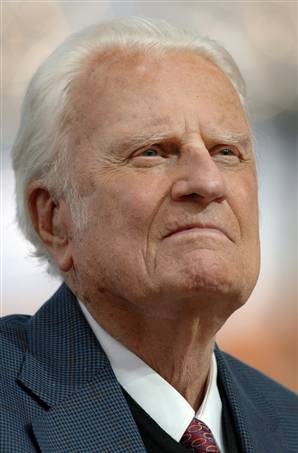
  • Billy Graham’s New Suit

    A friend sent me this story in an email this morning. I see the story is already around a lot, but I really enjoyed reading it and thought I’d share it with my readers this week. Enjoy.


    graham's suit

    Billy Graham is now 92 years-old, and has Parkinson’s disease.

    In January, leaders in Charlotte, North Carolina, invited their favorite son, Billy Graham, to a luncheon in his honor.

    Billy initially hesitated to accept the invitation because he struggles with Parkinson’s disease. But the Charlotte leaders said, ‘We don’t expect a major address. Just come and let us honor you.’ So he agreed.

    After wonderful things were said about him, Dr. Graham stepped to the rostrum, looked at the crowd, and said: “I’m reminded today of Albert Einstein, the great physicist who this month has been honored by Time magazine as the Man of the Century. Einstein was once traveling from Princeton on a train, when the conductor came down the aisle, punching the tickets of every passenger. When he came to Einstein, Einstein reached in his vest pocket. He couldn’t find his ticket, so he reached in his trouser pockets. It wasn’t there. He looked in his briefcase but couldn’t find it. Then he looked in the seat beside him. He still couldn’t find it.

    “The conductor said, ‘Dr. Einstein, I know who you are. We all know who you are. I’m sure you bought a ticket. Don’t worry about it.’

    “Einstein nodded appreciatively. The conductor continued down the aisle punching tickets. As he was ready to move to the next car, he turned around and saw the great physicist down on his hands and knees looking under his seat for his ticket.

    “The conductor rushed back and said, ‘Dr. Einstein, Dr. Einstein, don’t worry, I know who you are; no problem. You don’t need a ticket. I’m sure you bought one.’

    Einstein looked at him and said, “Young man, I too, know who I am. What I don’t know is where I’m going.”

    Having said that Billy Graham continued, “See the suit I’m wearing? It’s a brand new suit. My children, and my grandchildren are telling me I’ve gotten a little slovenly in my old age. I used to be a bit more fastidious. So I went out and bought a new suit for this luncheon and one more occasion. You know what that occasion is? This is the suit in which I’ll be buried. But when you hear I’m dead, I don’t want you to immediately remember the suit I’m wearing. I want you to remember this:

    “I not only know who I am. I also know where I’m going.”

    May your troubles be less, your blessings more, and may nothing but happiness, come through your door.

    “Life without God is like an unsharpened pencil – it has no point.”

    Amen & Peace My Friends

  • Making Vision Stick (Define the Problem)

    Making Vision Stick (Define the Problem)

    It’s important that leaders choose to be students of communication. We should never assume we have ‘arrived’ or ‘know’ how to communicate effectively. Our culture is constantly morphing. History is made every day. Innovation and creativity demand that we stay sharp. To fail to do so means we will only reach a small segment of our community.

    In today’s post I want to share a quick quote and recommend Andy Stanley’s small, yet well written book, ‘Making Vision Stick‘. I urge you to add it to your library. I reference it several times through my year and ask many of the leaders I work with to purchase and read it. What I really like about it is it’s simplicity. Andy lays out five key principles to ensure that vision stays front and center in the hearts of your church attendees.

    The following quote is the first of three steps found under the second main principle in the book, “Cast the Vision Convincingly”.


    Define the Problem

    “To cast a convincing vision, you have to define the problem that your vision addresses…. Every vision is a solution to a problem. If your vision doesn’t get traction, something that needs to happen won’t happen. A problem will continue to go unaddressed. To make vision stick, your audience needs to understand what’s at stake. It’s the ‘what’s at stake’ issue that grabs people’s hearts. Only a clear explanation of the problem will cause people to sit up and say, “Something must be done!” If your target audience doesn’t know what’s at stake, the vision will never stick…. 

    To cast your vision in a convincing manner, you need to be able to answer these two questions: What is the need or problem my vision addresses? and What will happen if those needs or problems continue to go unaddressed?”


    EXAMPLE #1

    This Sunday, pastors are casting a vision, right? Whether it’s giving an announcement about an upcoming church activity or preaching about forgiveness, people need to know why it’s important; what’s at stake.

    EXAMPLE #2

    Someone on your team is likely in need of more committed volunteers (probably in the children’s ministry!). It’s very important that you follow Andy’s advice when recruiting others to get involved. At the end of the day, it’s not about filling an empty spot, it’s about making a difference in the lives of those you serve. That’s the need your’re addressing (not the need of a warm body in a room to babysit.)

    EXAMPLE #3

    You may even need to cast the vision to yourself at times. Perhaps this week you have a funeral that you will need to administrate and speak at. Defining the vision, and consequently, the need, will help clarify what you will say and do to best care for the needs of those attending that event.


    What vision are you casting this week? There’s no doubt in my mind you should be casting the vision about something, it’s just a matter of what. When you do, don’t forget to FIRST define the problem!

    Disclosure of Material Connection: Some of the links in the post above are “affiliate links.” This means if you click on the link and purchase the item, I will receive an affiliate commission. Regardless, I only recommend products or services I use personally and believe will add value to my readers. I am disclosing this in accordance with the Federal Trade Commission’s 16 CFR, Part 255: “Guides Concerning the Use of Endorsements and Testimonials in Advertising.”
  • What to Read

    Following are some more great links and articles I’ve found browsing my blog roll. I hope you find one or two helpful and encouraging. To see a list of all posts in the ‘What to Read’ category, click this link.

    READERS-ARE-LEADERS

    12 Ways Pastors Went from Burn-Out to Vision by Thomas Rainer
    There are few vocations that can engender burnout like the pastorate. The demands on a pastor’s time, emotions, and energy can be overwhelming. When I was a pastor, I often felt at least the symptoms of burnout.  I recently spoke with 17 pastors who had experienced burnout, or who felt they came precariously close to burnout. The good news about these pastors is that they moved out of burnout; and now they are re-engaging in exciting and visionary ministries.  Read More.


    A Pastor’s Calling: Just Beyond His Ability by Dr. Steve Drake 
    Over the years as, serving in various churches and positions, I ran into a mindset that disturbed me. For years, I couldn’t put my finger on the issue that caused me so much concern, but felt certain it was not of God. I associate this mindset with certain events, such as a congregational discussion about the purchase of an expensive item or funding a building project. It normally surfaced at the point when someone would question whether or not the church could afford something.  Read More.


    Church Hopping by Dr. James Emery White 
    A man approached one of our Guest Services volunteers and asked, “Where are the Sno-Cones?”  For the past few summers, we’ve offered Sno-Cones following our weekend services as part of our Guest Services experience. The goal was to give exiting kids a final pleasant memory of their time at Meck (Mecklenburg Community Church), as well as create a “linger” factor for parents to connect with each other and the staff.  This summer, we’ve been offering them as a “surprise” on select weekends, but not every weekend.  “I go to another church,” he continued, “but during the summer I come here for the Sno-Cones. So where are they?”  Read More.


    Creating a Better Volunteer Culture by North Point Community Church, Andy Stanley 
    One of our favorite things at Drive is talking with all of you. We learn so much as we swap stories and ask each other questions. After you leave, we continue these conversations with our teams.  A subject that seems to come up a lot is our volunteer strategy. We’re no different than you. We love our volunteers! We try to create a great volunteer experience. But we’re always looking for ways to get better.  Below are a few common questions we’ve been asked this week that we thought we’d try to answer.  Read More.


    Church Giving Matters by Tony Morgan 
    Over the next two days, I’m going to be wrapping up my current leadership coaching networks. We’ll hit several topics in this final gathering, but one conversation will be about financial stewardship in churches. To prepare for today’s conversation, I had everyone read Church Giving Matters by Ben Stroup and Joel Mikell. Here are the top ten highlights from my reading.  Read More.


    Don’t Allow the Process to Defeat the Purpose by Dan Reiland
    I recently spent a couple thousand dollars cutting down and stump-grinding nine trees that I spent hundreds of dollars planting 10 years ago. Seems dumb, I know. But sometimes, that’s what it takes.  Perhaps you’ve seen these trees—they are called Cryptomeria.  They grow extremely fast and easily reach 35 to 40 feet and more with a 20-foot spread at the bottom. They are similar to the Leyland Cypress but typically seem to grow larger, more lush, and are deeper green in color.  Read More.


    Training For Oversees Workers by Elim Fellowship
    You are driving in a foreign country, minding your own business when you are suddently stopped at a roadblock . . . with a gun pointed at your head. What do you do?  JoJo Copenhaver of Angel Alert Network provides basic training for overseas safety and security. While this training is presented for missionaries, this is essential training for anyone traveling or working in potentially dangerous foreign settings. Read More.


    Mental Illness & Medication vs. Spiritual Struggles & Biblical Counseling by Ed Stetzer
    These past few weeks have been very trying. From deaths of people who inspired us to yet another reminder that we are not completely immune from the horrible acts of others, grief seems to be everywhere we turn.  Read More.


    Teamwork and Vision Go Hand in Hand by John C. Maxwell
    Have you ever been a part of a team that doesn’t seem to get anything accomplished? Where the team may work and work, but nothing actually gets done? If so, you’ve probably been on a team that lacked vision.  Vision works like a rudder on a ship. Without it, the ship may travel a distance, but not necessarily in the right direction. With it, the ship reaches the destination by the shortest route possible. Read More.

  • where there are no oxen . . .

    This article was originally posted on Transforming Leader the winter of 2010. Enjoy!


    there-is-no-oxen

    I remember talking to a pastor once at a conference about the challenges he was facing at his church. He jokingly said, “Church work would be a lot easier if it weren’t for the people.” I understood that he was just dumping on me and that he really did love the ministry and his people; but I remember the remark because I’ve heard it many times over the years (and probably have said it a couple times too).

    We all know that people are often difficult to be with, work with, and lead. They can be self-centered, egotistical, critical, needy, stupid, hurtful and so much more (just like you and me). Sometimes it can be so discouraging watching them stumble through life choices despite godly input and advice.

    It’s no wonder that we pastors and leaders are often reticent or even scared to get others involved in leadership with us. The potential for conflict, discord, and crisis just doesn’t seem worth it. The idea of inviting other people with all of their internal garbage to join in building the kingdom dream God has given us seems really risky.

    Is it possible that it just might BE too risky for you? Jesus cautions us to carefully count the cost before we commit to a cause for Him in Luke 14:28-30.

    “Suppose one of you wants to build a tower. Won’t you first sit down and estimate the cost to see if you have enough money to complete it? For if you lay the foundation and are not able to finish it, everyone who sees it will ridicule you, saying, ‘This person began to build and wasn’t able to finish.’ Or suppose a king is about to go to war against another king. Won’t he first sit down and consider whether he is able with ten thousand men to oppose the one coming against him with twenty thousand? If he is not able, he will send a delegation while the other is still a long way off and will ask for terms of peace. In the same way, those of you who do not give up everything you have cannot be my disciples.”

    People Risk Taking
    Perhaps you don’t really need to hear it, but I am feeling prompted to press the point. If you want to see your ministry grow you must be willing to make some people risks. That means ministry will get more challenging; but it also means your ministry has room for God inspired momentum.

    We’ve all heard the verse in proverbs, “Where there are no oxen, the manger is empty, but from the strength of an ox come abundant harvests.” Proverbs 14:4.

    Clean and empty sounds good, orderly, and predictable; but clean won’t plow the fields. Clean won’t sow the seeds. And clean won’t bring in the harvest. The oxen were critical to the success of the local farmers. Without the oxen and the mess that came with them there would be no farm.

    The same is true for your ministry. Without a team of people and growing leaders around you the work of the Lord will not grow and prosper.

    You know what those farmers spent a lot of time doing? Cleaning up after the oxen. They didn’t go home and complain to their wives, “Those stupid beasts! Why don’t they just quit crapping all over the place? What’s the deal with them anyway? Farming would be a lot easier without them!”

    Hey, if you’ve actually got messes to clean up, thank the Lord, roll up your sleeves, grab a shovel, and dig in. You are pointing in a direction that may well lead towards an abundant harvest.

    photo credit: caese via photopin cc

  • Everything is an Experiment

    experimentI just finished reading Jim Collins’ book entitled, “Built to Last: Successful Habits of Visionary Companies”. My heart and passion is that the local church would truly emulate that title and be visionary organizations that reach the world for Christ with longevity and strength.  I was particularly interested to read this about visionary organizations from the book:

    “Visionary companies make some of their best moves by experimentation, trial and error, opportunism, and – quite literally – accident. What looks in retrospect like brilliant foresight and preplanning was often the result of ‘Let’s just try a lot of stuff and keep what works.’”p.9

    If you attended the Elim Fellowship May Leadership Conference a few weeks ago, you’ll remember our keynote speaker, Mark Batterson, encouraged us to try new things at our churches & ministries, and call them ‘an experiment’.

    Where do you need to break the mold (or kill the cow) and try something new this summer or fall?

    Disclosure of Material Connection: Some of the links in the post above are ‘affiliate links.’ This means if you click on the link and purchase the item, I will receive an affiliate commission. Regardless, I only recommend products or services I use personally and believe will add value to my readers. I am disclosing this in accordance with the Federal Trade Commission’s 16 CFR Part 255: ‘Guides Concerning the Use of Endorsements and Testimonials in Advertising.”