
Author: Wayne Hedlund

  • Preparing/Delivering Great Messages

    The church where I attend has been known for it’s outstanding preaching right from it’s birth in 1988. For more than 20 years the founding pastor, Mike Cavanaugh, fed the body of Christ through a steady diet of timely, relevant, God-inspired messages. A few years ago, he handed the reins over to his successor and the current pastor, Joshua Finley. Pastor Josh has done a fabulous job of picking up where he left off. He is one of the best communicators I’ve ever heard.

    In the following workshop, Pastor Josh shares some keys to preparing and delivering great messages. I trust it will help you strengthen your communication skills. Enjoy!
     
    [vimeo 42830604]Can’t see this video? Try clicking this link.
     
  • Guest Friendly Parking

    This article was originally posted on Transforming Leader the spring of 2011. Enjoy!


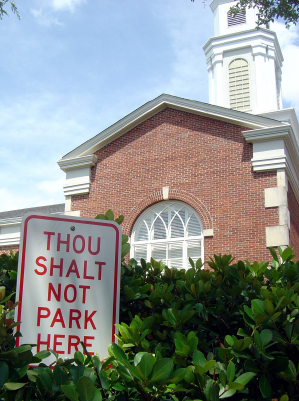
    no-parking-churchI remember one weekend we decided to take a family trip (four kids) to a local kid-friendly museum in Rochester called “The Strong Museum of Play“. It seems that the rest of the Rochester area picked that day to visit as well. I’m pretty sure we drove around for more than 10 minutes trying to find a parking spot. The place was completely full. Getting desperate (as the sounds of anticipation continued to rise in the back seats), I resorted to following the people exiting the building as they walked to their cars. I figured this method would eventually result in a spot to park. It didn’t. It seems the other drivers circling the parking lot had the same idea. I “almost” got one spot, only to be quite rudely cutoff by another driver. Eventually, we cut our losses and, to the sounds of great mourning, drove away. Frustrating.

    What do your Sunday morning guests experience as they pull into your church parking area? Is their experience a positive one? If you’re like most pastors and church leaders, you probably have no idea. You arrive early and leave late, so you have little experience with the parking lot each Sunday.

    The answer to that question can make a huge difference. In fact, it’s possible that the parking experience for guests could have eternal ramifications for them? I understand they probably aren’t going to find God while they pull into an empty space; but your hope is that they experience the love of Christ in your service, right? What if they don’t ever make it in the door? Is there a chance that they simply do a ‘drive-through’ because they either can’t find parking or the parking they do find is just too inconvenient for them? Assuming they do find a spot and make the trek to your front doors (possibly with kids in tow) what is their general posture? Let me paint a picture of what you and I really want those first few minutes to look like and feel like to your guests.

    Joe and Jane are driving down the road towards the church. They see a large sign that confirms this is, in fact, the church they are looking for as well as a clearly marked entrance. As they pull into the parking lot they notice several other cars have already arrived and people are making their way to the ,well marked, front entrance of the church. They also notice a sign (or better yet, a friendly face) directing them to drive straight ahead if they are a guest to the guest parking area. Within 15 seconds of entering the parking lot they have successfully found a parking spot that was specifically set aside for them. They are very thankful to be so close to the front doors – especially with their young kids. The quick getaway from their car also helped them take the plunge too. They have been nervous all morning on whether they should come or not. So far, so good. They are ready to enter through the front doors and face a totally new world. BONUS: Even better, as they exit their vehicles a kind greeter is waiting for them and offers to assist them inside if they need the help, opening the door along the way.

    Guest Friendly Parking Tips:

    • Signage.
      It’s really important that your guests don’t feel confused or nervous as they drive into the parking lot. You can minimize confusion by ensuring the signs to your church are easy to find from the road. Ideally, it will be easy to find BEFORE they actually drive by the church, forcing them to have to turn around up the road. Additionally, if you have more than one entrance or an entrance and an exit, simple signs designating which road is the most appropriate to use will be very helpful. Finally and depending on the size of your parking lot, it would be helpful to post signs directing where guests should go next to arrive at the guest parking areas.
    • Guest Parking.
      Your guests will feel taken care of and will receive a great first impression if you’ve reserved several spaces just for them. Ideally, these spaces will be very close to the front entrance of your church, similar to your handicapped parking areas. I suggest you set aside about 4% of your parking lot for that purpose (if you tend to receive a lot of guests each week, you might want to increase that). If your lot is paved then you might consider painting your sign on the pavement as well as posted signs. 
    • Parking Attendants.
      If you can find some friendly faces who love to be outside, then designating parking attendants will increase the parking experience for both your guests and church attendees. Your parking attendants don’t necessarily need to focus on actually ‘parking’ people. Everyone loves a genuine greeting and a warm smile as they arrive at church! 
    • Clean.
      Sometimes the parking lot is easily forgotten; but it’s the very first thing your guests will notice on Sunday morning. If you have a paved lot, be sure to take care of the pavement. Budget money each year to fill cracks, potholes, and to seal the lot at least every other year. In today’s economy, that’s a chunk of money right there! It would be wise to sweep the lot each Spring as well. If you have a stone lot then consider raking the stones a couple of times a year. You will also want to budget money to add stone every two to three years as needed. Finally, weed your parking lot! Again, this is an expense, but important. There’s little more distasteful to the eye of a guest than a weed-infested parking lot!
    • Clearly Marked Parking Spaces.
      I’m not just talking about spaces for guests. It’s important that all of your attendees understand how to park in the parking lot. If you have a paved lot it’s important to paint lines on the lot. If you have a stone lot then you have a much bigger challenge in guiding your cars to the most efficient parking spaces. You may want to rely on parking attendants or special parking cones. A few winters ago, our church ended up with an embarrassing situation in our parking lot when our church attendees accidentally parked 6 cars in so they couldn’t leave until the cars in front of them did. The reason? It had snowed heavily that morning and we didn’t do a good job clearing the lot enough so that people knew where to park.
    • Snow Removal.
      I hope it’s obvious that you should recruit or invest in snow removal if you live in a location where that is necessary. You will want to shovel and plow just prior to your service start times. If it’s snowing DURING the service, you may also want to consider recruiting someone to shovel during the service so that people can make a clean getaway. Our church has been known to even recruited some teens to brush off car windows before the service let out. People loved it!
    • Valet Service?
      OK. That sounds a little carried away, but why not, especially for the elderly and/or single moms. My point here isn’t necessarily to begin a valet service so much as to remind you to think outside the box and do what you can to show great hospitality to your guests and church attendees.
  • Succession vs Replacement Planning

    Ben at the pond.

    My son loves to fish. Last summer was a fun summer for him. He caught some great fish.  He and his friends even landed a huge snapping turtle! The thing is, Ben has a somewhat unique fishing method. His primary fishing hole is at a pond near our home that has a bridge spanning the middle. He and his friends simply “pick their fish” while looking down over the bridge, and then focus on that catch. They’ve been pretty successful too!

    I was talking with a leader the other day about succession planning for the local church. I told him there’s a big difference between Succession Planning and Replacement Planning. It’s a crude illustration, but I found myself sharing about my son’s fishing methods.

    I likened Succession Planning to what my son does at that bridge on the pond. Pick your fish, then focus on that fish until you’ve successfully hooked and brought it in.

    Replacement Planning is going to be a lot more like the traditional fishing methods most of us amateur fisherman use. Bait, cast, catch a bunch of green stuff. Try again, set the hook, pull in something small and ineffective, try again and again and again, until we catch something close to what we’re looking or hoping for. 

    Every pastor wants to find the right person to replace him when it’s time to pass the baton. The problem is, most don’t think to look for that person until it’s too late. Sometimes I’ll receive a call from a pastor who is ready to resign or move on. They ask me, “Can you help me develop a succession plan?” After a few questions I have occasionally answered with, “No. But I’ll help you work on a replacement plan.” 

    Succession is about finding one or more candidates for pastoral leadership and then mentoring them until one has shown himself ready for leadership. By then, it’s usually obvious to the senior leadership of the church, if not the church itself, that the new lead pastor is in the house. The transition often goes very smoothly for everyone.

    Replacement is about finding one or more candidates who hopefully fit the bill, and putting them in the saddle – with a prayer that they were the right one. Too often, it turns out they aren’t. By the time you find that out, it’s too late and the church is often sidetracked for months or even years dealing with the repercussions.

    Here are a few more differences between succession and replacement.

    Succession Planning Replacement Planning
    Is a process. Is an event.
    Begins 2-3 years before transition. Begins 3-6 months before transition.
    Is proactive. Is reactive.
    Prepares the congregation for change. Surprises the congregation with change.
    Yields expected results. Yields mixed results.
    Values are embedded into the new leader before succession happens. Values are discovered in the new leader after replacement happens.
    The new leader holds a high degree of trust by the congregation. The new leader holds a mixed degree of trust by the congregation.

    You get the idea. It’s wise to begin developing a succession plan for your church sooner than later. You can begin this process at any time and build it into your overall leadership strategy. It doesn’t matter if the Lead Pastor is 35 years old or 65 years old, it’s worth starting now.

    Which plan will your church implement when it’s time to find a new leader?

  • The Secret Ingredient Behind Critical Thinking

    The Secret Ingredient Behind Critical Thinking

    The first time I read 1 Kings 3 I was both awed and inspired. It’s the conversation between Solomon and God about what Solomon desired the most. He didn’t ask for riches or a long life, he asked for wisdom. I vividly remember praying that same prayer as a new believer those many years ago; and I’ve prayed it many times since then.

    Here’s what Solomon prayed:

    “Now, O Lord my God, you have made your servant king in place of my father David. But I am only a little child and do not know how to carry out my duties. Your servant is here among the people you have chosen, a great people, too numerous to count or number. So give your servant a discerning heart to govern your people and to distinguish between right and wrong. For who is able to govern this great people of yours?” 1 Kings 3:7-9

    He confessed, “I am only a little child and do not know how to carry out my duties.” Who hasn’t experienced that feeling of being inadequate and lacking in understanding? I suspect it’s actually an important element in every leader’s life. Some might call it humility.

    When I read that sentence, I can’t help but hear Solomon saying, “I don’t think like an adult yet. I need help!” Here’s the man who is now known primarily for his great wisdom, who seemed to have a natural skill for critical thinking, saying he still thinks like a child. 

    Of course, we know God was very pleased that he asked for this instead of long life and riches. In fact, Solomon later proclaimed the virtues of drawing on God’s wisdom in Proverbs.

    “My son, if you accept my words and store up my commands within you, turning your ear to wisdom and applying your heart to understanding, and if you call out for insight and cry aloud for understanding, and if you look for it as for silver and search for it as for hidden treasure, then you will understand the fear of the Lord and find the knowledge of God. For the Lord gives wisdom, and from his mouth come knowledge and understanding. He holds victory in store for the upright, he is a shield to those whose walk is blameless, for he guards the course of the just and protects the way of his faithful ones. Then you will understand what is right and just and fair—every good path. For wisdom will enter your heart, and knowledge will be pleasant to your soul. Discretion will protect you, and understanding will guard you.” Proverbs 2:1-11

    I wonder if Solomon was thinking about that prayer in 1 Kings 3 when he wrote that first sentence?

    The New Testament also reminds the believer to look to God as the source for wisdom.

    Solutions ARE available when we choose to seek the Lord. This doesn’t mean solutions will fall out of heaven into our laps. It means God will give us the tools and ability to discover solutions as we apply ourselves to find them.

    “If any of you lacks wisdom, he should ask God, who gives generously to all without finding fault.” James 1:5

    In my experience, critical thinking is a skill that must always be mixed with the favor and wisdom that only comes from God. Too often I have been guilty of trying to figure things out on my own; and although that type of thinking can still bring good results, I don’t believe it always leads to God’s very best. 

    “Brothers, stop thinking like children. In regards to evil be infants, but in your thinking be adults.” 1 Corinthians 14:20

    “Where is the wise man? Where is the scholar? Where is the philosopher of this age? Has not God made foolish the wisdom of the world?” | “For the foolishness of God is wiser than man’s wisdom…” 1 Corinthians 1:20, 25

    Critical Thinking – Step 1. What’s the first step in becoming someone who can tackle problems and find great solutions? Two words.

    Seek God.


    photo credit: Davide Restivo via photopin cc

  • Announcing New Coaching Focus

    coachingIn recent years I’ve been so honored to have helped several awesome churches, pastors and ministry leaders through personal and team-oriented coaching. My coaching style is very personal and catered to each and every situation. This is why I will begin every coaching relationship with an interview and recommendations before we dig into content, goals, tasks and ongoing accountability.

    Today, I’m proud to announce a brand new lineup of coaching opportunities. If you would like to learn more about connecting up with me for an evaluation and estimate, don’t hesitate to give me a call at 585-582-2790 or by email at whedlund@transformingleader.org. My rates are specifically priced to accommodate small to mid-sized churches. Additionally, if your church is part of the Elim Fellowship Network of Affiliated Churches you will receive a special discount.

    Coaching Services Summary


    Church Health & Strategic Coaching
    The most popular coaching I provide to churches has to do with church health and strategic planning. Church Health & Strategic Coaching takes place in three phases and starts with a 6 month commitment. Most churches choose to participate for 12-18 months in the end.

    PHASE 1: Information Gathering
    In this phase I will spend time interviewing the key leader(s) of the organization, will review the website and other materials and attend a Sunday service as a “mystery guest”, if applicable.

    PHASE 2: Church Health Analysis
    In 1-2 sessions I will roll out a general church health analysis of your church, including my recommendations on the primary areas of focus for the duration of the coaching experience. You will make the final call on what areas you would like me to provide strength and support to. I will utilize that information to develop a strategic plan for us to follow together.

    PHASE 3: Ongoing Coaching
    The remaining coaching sessions will focus on the areas identified in Phase 2. I will offer ongoing strategies for each area of focus as well as accountability with the monthly goals we identify. When appropriate, I will also meet with key leaders in the church to offer supportive teachings to supplement the strategic plans.


    Guest Friendly Coaching
    When it comes to church strategies and systems, the area of guest friendliness is one of the most important to me, personally. I believe a guest friendly culture and environment will facilitate outreach and evangelism in your community. People need the Lord and I am hopeful they will find them at your church. The problem is that many guests don’t stay long enough to find Him. I have helped many churches strengthen their Guest Friendly strategy and would be very happy to do so for you as well. Guest Friendly Coaching will require a 6 month minimum commitment. After an initial evaluation, I will give some instructions and assign tasks to strengthen this area in your church. Each month we will meet and evaluate your progress and troubleshoot barriers you face together.


    Hosting Exceptional Services Coaching
    For most churches, the Sunday morning experience is the front door for biblical discipleship for the congregation and community. Supplemental discipleship will take place via classes, small groups, and events, but those will not necessary provide a regular spiritual diet to many of your attendees like the morning service does. So it’s critical that every church hosts exceptional Sunday services every single week. The methods and strategies to prepare for the message, worship, announcements, offering and how to pull it all together will decide whether the services are just ‘good’ or ‘great. My primary responsibility as Executive Pastor at Elim Gospel Church was to strengthen the Sunday morning experience. Since then I have been hired to assist in running conferences and provide coaching to churches who struggle in this area. I believe I can help your church excel in this area as well. Hosting Exceptional Services Coaching will require a 6 month minimum commitment. After an initial evaluation, I will give some instructions and assign tasks to strengthen this area in your church. Each month we will meet and evaluate your progress and troubleshoot barriers you face together.


    Leadership Coaching
    Leadership Coaching is designed specifically for the primary pastor/director of the organization, or for key leaders within the organization. The focus of leadership coaching will be on strengthening the overall leadership orientation of the individual. After an initial evaluation & questionnaire, we will choose 2 or 3 specific leadership characteristics or skills that need to be developed and focus on them for the duration of the coaching experience. The duration and frequency of coaching sessions will be unique to each individual.


    Productivity Coaching
    I’ve received a lot of requests, of late, to provide coaching in the area of time-management and productivity. This is certainly an area of strength for me and I know I can help just about any person become more efficient and productive in their work. If you or someone on your team struggles to get things done, has difficulties with priorities and tasks or simply is overwhelmed a lot with the workload, I recommend you consider letting me help. After an initial evaluation, I will give some basic instruction and assign tasks to strengthen time and project management systems. The duration and frequency of coaching sessions will be unique to each individual.

    Website Coaching
    I believe it’s super important that churches who want to reach the younger generations host a welcoming, good looking website. For most young to middle aged adults, the website represents the first visit to and their first impression of the church . Unfortunately, for many churches, their website is either non-existent or very inadequate for attracting the community. I would be very happy to provide feedback and input regarding what to do with your website. Whether it needs a face-lift, an overhaul or a funeral, I believe I can guide your team towards a final product that you will be proud to send both your church attendees and the community to. Note: I am not offering to create or design your website, though I could potentially do that. I will most likely give your team access to the resources or people they need to get your website up and running effectively. After an initial evaluation, I will give my overall evaluation of your website and recommendations on improving it. The duration and frequency of coaching sessions will likely be limited to two or three sessions, unless you would like more ongoing feedback and accountability along the way.


    Pulpit Feedback
    Communication & presentation are very important to me. I am continually reading and studying about how I might improve in those areas. I should be. There isn’t a week that goes by that I am not speaking to individuals and groups of people. One of the most effective ways I have grown in this area is through honest feedback from other leaders I trust. Unfortunately, many pastors don’t have access to people who know what and how to evaluate a Sunday morning sermon. I believe I can help. Pulpit Feedback will begin with an initial evaluation, followed by the delivery of either video or audio of a Sunday message of your choice (video is preferred). I will then listen/watch your presentation and provide a written critical evaluation of the content and delivery of the message. Subsequent coaching or feedback will be available afterwards as needed.
  • Lecrae and the Local Church

    lecraeCheck out this powerful video testimony from hip-hop star, Lecrae. As I watched it today, I couldn’t help but hear him describe his ‘Grandma’s Church’ and wonder . . . what would that young man have said if he visited my church or your church, before he found Christ? Sure, you’re probably not going to do hip-hop during worship. But would he have sensed the Presence of God there? Would he have experienced a group of believers passionately worshiping God and loving one another? What impression do you think you would leave on him?

    If you have a team that you meet with to talk strategy as a church, I challenge you to show this video to them and ask those questions. Let me know how it goes!

    Can’t see this video in your rss or email? Try clicking this link.
     
  • ‘Preach Better Sermons’ Cliff Notes

    Looking to get some advice on how to improve your sermons? Chris Zeigler from BASIC College Ministries has graciously agreed to share his notes from the recent Preach Better Sermons” online conference. Thanks Chris! For more information on Chris, BASIC, or college ministry check out the links & information at the end of this post.

    You might also want to check out my cliff notes from last year’s ‘Preach Better Sermons’ online conference right here!

    STEVEN FURTICK

    • Plan your sermon series about 4 months out.
    • Build a team around you who will brief you on each series you do. Let them ask tough questions! And allow them to meet on their own to brainstorm ideas on how to integrate popular culture, what scriptures are being used, memorable illustrations, etc.
    • Remember – “The game is won or lost in transition” (Urban Meyer). Don’t focus so much on the message that you ignore other important elements in the service.
    • Develop a routine before each service that helps you focus your mind and center your heart on God.
    • Don’t worry about how people will react to your message or what they will Tweet about it – focus on the fact that God has anointed you to speak His Word.


    LOUIE GIGLIO – 6 Rules of Preaching

    1. Have something to say – be honest about what God is putting on your heart
    2. Above all things – be faithful to the text
    3. Lead people to Jesus
    4. Don’t be boring!
    5. Prepare
    6. Be led by the Holy Spirit
    • Find and refine ‘you’ – your own voice and style. Don’t waste your God-given talent trying to be a Steven Furtick or Andy Stanley.
    • Remember the menu is just a suggestion – be flexible and let the Holy Spirit lead you.
    • Stay humble – don’t fall into the trap of using your messages to trumpet yourself.


    DONALD MILLER

    • Don’t rely solely on inspiration – build on a foundation of discipline in sermon preparation.
    • If you want people to receive what God gave you, walk them through the same process God took you through.
    • Remember that Paul said not to use impressive words – doing this can be manipulative.


    DAVE RAMSEY

    • Don’t forget about humor – if people don’t laugh every 7 minutes, you’ve lost them.
    • Public speakers say that for every hour presenting you should prepare for three. The preparation should take even longer for preaching.
    • Keep culture in mind. If their attention spans have dropped, make your messages and series more focused and shorter.


    MARK BATTERSON

    • Write out your sermons as you would a manuscript. Many of his sermons become book chapters. *Key – have your manuscript done in time to pray over it.* 
    • Remember to use metaphors. They are important and biblical metaphors are the most powerful.
    • Keep your dependence on God in perspective (example – fast on the day you are supposed to preach).
    • Great Preacher vs. Great Prayer – you can’t be a great preacher unless you are first a great prayer.


    JOHN ACUFF

    • The best speeches and sermons are when you and the audience go where you are leading them together.
    • Don’t over-practice – it will come off sounding more rehearsed and less genuine.
    • A well used prop can be both simple and powerful.
    • Remember – the greatest way to ruin a sermon is to be the star of your own success story – people want you to be real.


    CRAWFORD LORITTS

    • Your preaching flows out of your relationship with God.
    • Remember, in the Bible God is far more concerned about leadership development that He is about leadership technique.


    PETE WILSON

    • Draw from other pastor’s series and books that impact you.
    • Don’t let the success or failure of your sermons attach themselves to your identity.


    NANCY DUARTE

    • Keep it relevant – take a walk in the audience’s shoes and spend time in their minds.
    • You rarely see a film win any awards without it first having had great editing. It is the same for preaching.
    • You only have one hour with your people – make the most of it.


    ANDY STANLEY

    • The key to keeping an audience’s attention is your approach – approach is what makes content interesting.
    • Let new people know you are happy they are there – don’t call them visitors.
    • Preach with new Christians or unbelievers in mind – acknowledge the odd things in scripture. Then give the unbelievers permission to not believe or obey what they heard. Even Jesus’ disciples didn’t believe until after the resurrection.
    • Stay plugged into a community of unbelievers.
    • Bring energy to your text – not just to your stories.


    ED STETZER

    • Maximize your studying by minimizing your searching.
    • The Bible is always relevant – people just don’t always realize it. Our job is to show them how it applies to them personally.
    • Keep in mind that pastors are prone to exaggeration because they are prone to motivation.


    MARK DRISCOLL

    • Remember that our mission is to make more people God’s people and that it is God’s truth coming out of your mouth.
    • Give yourself some grace to discover who you are – who has God wired you to be?


    Chris Zeigler
    Chris Zeigler
    Assistant Director
     
    serving the church // to reach the colleges // to change the world
  • The Responsibility Summary

    Should you be overwhelmed? That’s an interesting question. Of course, if you aren’t overwhelmed then it’s a no-brainer, probably not. But if you ARE overwhelmed, wouldn’t it be great to know if you should be or not? Years ago I remember a conversation with my boss about my workload. Here’s the simple version of what it sounded like:


    Boss. “Here’s something else I’d like you to do.”

    Me. “I’m overwhelmed with the work I already have.”

    Boss. “What work do you already have?”

    Me. {Insert measly & inadequate attempt at describing my workload here.}

    Boss. “I think you need to work on your time management skills. Here’s something else I’d like you to do.”

    Me. “OK” {Walk away overwhelmed.}

    The problem is, neither he nor I really knew if I had too much on my plate or not. We didn’t know what my capacity was and we didn’t have a clear understanding of what I was doing. I see this happen a lot. People are overwhelmed with work and since they don’t know if the problem is them (time management skills) or the job (they have too much work), they assume it’s the former and try to get by. This doesn’t have to be.

    A couple years ago I found myself in this predicament and developed a one page summary of all my responsibilities. It has been, without doubt, one of the most meaningful and effective documents I’ve ever made. It is NOT a Job Description and it is NOT a Task List. It is a Responsibility Summary. I love it, my boss loves it, and everyone I know who has successfully made one loves it.

    BENEFITS
    First, let me outline some of the benefits of this one page document, once it’s been developed.

    • It brings clarity to you.
      The primary benefit is simply the fact that you have clarity about what you do (or should be doing). You’ll never have to wonder what you have on your plate that your forgetting. 
      The Responsibility Summary is a big picture snapshot of everything you’re working on.
    • It brings clarity to your boss.
      If it’s clear to you, then it should also be clear for your employer. When I first showed this document to my boss they loved it. It allowed us to have a very clear conversation about my job and the projects I was working on. What I really liked was that I didn’t have to convince my boss that I had a lot on my plate, it was right there in front of him. And when he told me to add something to my plate, it was real easy to ask, ‘What needs to change in my responsibilities so I can do that for you?’
    • It clarifies priorities.
      It’s a lot easier to see what’s important and what’s not important when looking at a Responsibility Summary. At one point I saw something that was on my “Future Projects” list and something else on my “Current Projects” list that needed to be switched. I didn’t know it at the time, but I was working on the wrong thing.
    • It reveals dead weight.
      Similar to the priorities benefit, the Responsibility Summary shows you what you shouldn’t be doing. Recently I was working with an Executive Pastor at a local church and when we finished his Responsibility Summary we saw that he spent a lot of time fixing computers. This wasn’t a good use of his time. So we built a strategic plan to train and delegate that to someone else.
    • It highlights problems.
      With the same pastor mentioned above, we also noticed that there were a lot of important projects in the “Future Projects” listing and almost no projects in the “Current Projects” listing. The reason was easy to see, he had so many “Ongoing Responsibilities” that he had no time to work on projects. This needed to change and we used the Responsibility Summary to develop a plan to change that.
    • It confirms suspicions.
      Most of the time, a wise person will be able to look at a Responsibility Summary and be able to determine if that individual simply needs to strengthen his time management skills or if he does, in fact, just have too much on his plate. There’s little room to wonder anymore.
    • and more…
      The more I help people develop their Responsibility Summary, the more I’m finding it useful in different ways. For me, it’s a ‘must do’ for any organization or person.


    HOW TO BUILD IT
    The structure of a Responsibility Summary is simple. The hard part is sitting down and figuring out what needs to go into each section. For most of us, that can be stressful and overwhelming all by itself. I’m going to outline what to do here, but I will also provide a download link to a simplified version for you to use. Don’t download and build it until you’ve read the ‘rules’ below!

    • Determine Your Job
      Someone once asked me if he could make a Responsibliity Summary that showed his whole life. I don’t suggest this. Make one summary for your work. If you want, you can make another one for your ‘other job’, your ‘personal life’, your ‘church leadership’ or whatever else you want. Just don’t try to combine them into one sheet.
    • Determine Your Columns
      You probably don’t want to list your responsibilities in one big list. In the end, it will still seem overwhelming and hard to read. Think of what you do and ask, “Are there 3 or 4 categories that I can use to separate my responsibilities?” As you work on this, you might change this around over time. IMPORTANT: If you find you have one column that’s really full and two others that are really empty, you probably need to re-think your categories. Here are a couple of examples to help get you started:
      • A pastor might use: Executive / Ministry Oversight / Active Ministry
      • A secretary might use: Event Planning / Follow-Up / Office Management
      • A facility staffer might use: Winter / Spring / Summer / Fall OR Grounds / Facility / Staff
      • An associate might use: Youth Dept / Care Dept / Active Ministry
    • List Ongoing Responsibilities
      The first row in each column should list your Ongoing Responsibilities. This should include ANYTHING you do on a regular basis that takes an hour or more of your time. It could be daily, weekly, monthly, quarterly or annual responsibilities. Remember, in general these should not be tasks. They are responsibilities. You might also consider putting a note under or beside them clarifying the frequency and the amount of time you spend on them. Do not include vague things like ’email’ or ‘phone calls’. Those are not responsibilities – they are tasks that help you complete responsibilities. Here are a couple of examples:
      • Lead Staff Meetings (W/3)  – the ‘W’ means weekly & the ‘3’ means 3 hours
      • Create/Propose Budget (A/15)
      • Counseling (W/5)
      • HVAC Maintenance (Q/5)
      • Ongoing Website Maintenance (M/4)
      • Easter Service Planning (A/12)
    • List Current Projects
      The second row in each column should list projects you’re working on right now. A Current Project is NOT an Ongoing Responsibility. It has a definite end in mind and it’s not something you will probably do again – at least within the year. You may not know when the project will get done, but you do know that it will or should eventually be completed at some point. Also, Current Responsibilities MUST be projects you are ACTUALLY working on. Just because it’s on your list of things you SHOULD be working on, doesn’t mean you are working on it. If it’s not in your schedule to work on it in the next few days/weeks, it probably shouldn’t be listed as a Current Project, but as a Future Project. Honesty is important here. You don’t want to lie to yourself by making it look like you’re doing something that you actually aren’t. Another important thing to remember here is that eventually a Current Project may turn into an Ongoing Responsibility. For example, ‘create a blog’ might one day turn into ‘post to the blog’, Here are some examples of what a Current Project might be:
      • Interview/Hire Secretary
      • Research how to do a Capital Campaign
      • Propose new system to track attendance
      • Upgrade all computers to Windows 7
      • Create a blog for Youth Dept
    • List Future Projects
      You don’t want to forget this last row. These are the projects that you either SHOULD be working on, but aren’t, or that you eventually want to work on. Over time, you may see that a particular Future Project just never seems to make it to the ‘Current Project’ category. This begs the question, ‘Is it really that important?’ and if so, should someone else be doing it or should something change so that I can do it. Here are a few more examples, although they can/will potentially look just like those in the Current Projects list, depending on if they’re getting worked on:
      • Develop online store
      • Write new Welcome class content
      • Create policies for advertising events
      • Research new database options


    FINAL THOUGHTS
    Here are a few final thoughts about this that you might want to keep in mind.

    • It’s not easy.
      I’ve already said this, but it’s worth pointing out. Building your first Responsibility Summary might be difficult and painful, especially for certain personalities. In the end, it’s worth it, if it’s done right and used regularly. Hang in there and don’t give up until it’s complete.
    • It may take several drafts.
      Like any new venture, it may take several drafts before it turns into something useful. You’re building something from scratch and it’s OK if you don’t get it right the first time, or even the second time. Keep at it, try new ways of organizing columns and you’ll eventually end up with something you like.
    • Update it monthly or quarterly.
      This is a working document, but it’s not meant to replace your task list. Update it monthly or quarterly, but don’t wait any longer than that. If you have a quarterly review with an employer, then get into the habit of updating it before your meeting and bringing a copy in with you. If not, then put in your task list to update it regularly throughout the year.
    • Look at it.
      The goal isn’t to make a cool document that summarizes your job. The goal is to use the information on that document to help you be more productive and effective in what you do. Analyze your Responsibility Summary every once in a while and ask questions like, “Should I be doing that?”, “How can I move that to a Current Project?”, “Why do I spend so much time on something that’s not my main job?”, etc.
    • Tell me how it goes.
      I’m not kidding. I need some stories of how the Responsibility Summary has helped people in my coaching. In fact, if you’re willing, send me a copy so I can use it in further teaching as I coach people in the area of productivity. Thanks!


    DOWNLOAD THE TEMPLATE
    Don’t just download this and start using it until you’ve read through this page. You won’t fully understand what to do. It’s too easy to put things in the wrong categories/columns otherwise. Note: This download is in Microsoft Word format. Enjoy!

  • zombies, athletes and superheros

    This article was originally posted on Transforming Leader the winter of 2010. Enjoy!


    In a past post I attempted to convince you that you shouldn’t be strategizing, planning, and goal-setting alone. God never intended or planned for you to be the ‘Jack of all Trades’ pastor. Not convinced? Read 1 Corinthians 12 again – you probably preached on that passage or referred to it sometime this year. It applies to you too! I don’t know which part of the body you represent in your local church – but I do know that you need the other parts for the work of God to be a success through you.

    One of my favorite people is my spiritual and ministry mentor, Pastor Mike Cavanaugh. He serves as President of Elim Bible Institute and Vice President of the ministerial association I serve with, Elim Fellowship. He has been a great example of someone who is not afraid to find his niche and then let others serve with and around him in theirs. I’ll never forget one instance many years ago when he was serving as the Lead Pastor of Elim Gospel Church.  He asked me to lead all of our church strategic meetings, with him sitting as one of the team members! He wasn’t afraid to relinquish control in order to see the church grow. He didn’t feel the need to do everything himself. He was open to allowing others to try, fail, and eventually grow to become all or more than he could become himself in various areas.

    There are three kinds of leadership teams:

    • Solo leaders drive a bus-load of zombies. Everyone just goes where they say and nobody thinks to get much involved.
    • Good leaders drive a bus-load of athletes. They carry committed people who will go out of their way to serve, help, and grow under their leaders tutelage and coaching.
    • Great leaders drive a bus-load of superhero’s. These leaders have the self confidence to allow other leaders to serve alongside them; they love to release the team around them to excel beyond them.


    One Question Survey

    Where do you stand when it comes to gathering, equipping, and releasing others to serve with you in the calling God has for the ministry you lead?

    On a scale of 1 – 5…

    1 = “I don’t have a team of people around me. I pretty much do everything myself. I either don’t trust others to get involved or I don’t believe there are others around me capable of doing what needs done in this church/ministry.”

    2 = somewhere between 1 and 3.

    3 = “I have a team of people around me. They are committed to the ministry and to me. They are expanding what I am capable of doing because my time, effort, energy, and ideas are amplified with their presence. However, none of them are offering something to the team that I couldn’t offer myself. Some have leadership gifts, but most don’t have much of an opportunity to be totally released in them.

    4 = somewhere between 3 and 5.

    5 = “I have a team of committed leaders surrounding me. They are my dream team. Many if not all of them provide leadership and strengths to this ministry that I could not provide myself if I were in their shoes. They have surpassed me in many areas or are well on their way to surpassing me.”


  • Plan Your Visit

    How would you like it if your first time guests actually made an appointment to attend your Sunday service? What if you could collect information on your guest BEFORE they actually attend?

    Great idea . . . and easy to do. The Church on the Move in Tulsa, Oklahoma, created a special page on their website entitled, “Plan Your Visit“. The page simply invited guests to complete a short form with a couple of questions like: name, email, service time & # of children. Their promise: “We will e-mail you everything you’ll need to make your first visit to Church on the Move a great one.”

    I love this. 

    I think you should give it a try. All you need is someone who knows how to make a web form, some time to determine how you will respond to guests when they submit their information, and a system in place to ensure it happens promptly – preferably within a couple of hours of when the form is submitted.

    How will you build this idea into your Guest Friendly strategy this week?