Author: Wayne Hedlund

  • The Sunday Service Video Clip


    We all have unique preferences regarding how we like our food. Some like it bland, others spicy. Personally, I like my food to have a lot of flavor and spices whenever possible. Everyone who eats with me is pretty used to hearing, “Pass the salt and pepper please.”

    I would like to introduce a couple of websites that can and will add some ‘spice’ to your Sunday morning experience. These clips usually range in price from $5 – $20. Despite the minor expense, they will often help bridge the gap between a good and great Sunday morning experience.

    I highly recommend you check them out today!

  • How to Keep Missional Momentum

    A couple of weeks ago my son purchased a small dirt bike for $25 at a yard sale. We checked to make sure the engine worked before we made the purchase. What we didn’t check was to see if the clutch worked. Oops. It didn’t. Benjamin would open the throttle all the way and just barely move a few inches at a time. Thankfully, the owner took the bike back and returned our money!

    The same thing can happen in our churches and ministries when it comes to staying focused on our mission. We can get so caught up in everything else that we forget to keep mission, well, front and center. The next thing we know, we go for a ride and discover that we have very little missional momentum.

    Here are a few ideas to gain and keep missional momentum.

    • Create a Relevant Mission Statement
      I have several posts about why your mission statement is important and how to build one. You can check them out here.
    • Preach Your Mission
      You should do this often. You don’t need to title the message in the same way and it doesn’t have to be the same message, but you should preach the concepts of your mission regularly. If you don’t, well then I would suggest that perhaps you don’t really have buy-in to the mission of your church. 
    • Use Missional Language Whenever You Can
      Don’t get tired of hearing your mission statement. Include it in every possible conversation, both public and private. Use pieces of the mission statement as well as the whole thing. For instance, our mission statement at EGC includes the word “transforming”. That word is part of our language. Talk about fulfilling your mission when you give key announcements, receive the offering, during a message, during small group, and while counselling. If you haven’t used ‘missional language’ in the last week, then it’s very possible your starting to slip away from your missional focus.
    • Ensure EVERY Leader Knows the Churches Mission
      Any leader that doesn’t know your church mission is a leader who will not be pushing your mission, focusing on your mission, and building your mission into your church culture. Worse, there’s a much greater chance those leaders may slide in their focus, slowly drawing the ministry they lead away from what’s most important.
    • Connect Your Mission To Every Ministry of the Church
      Every ministry in your church should be clearly connected to the mission of your church. They should not have a separate mission statement. Ideally, the leaders will also preach the mission and use missional language whenever possible.
    • Connect Your Mission to Every Volunteer Position in the Church
      If you can’t explain how a volunteer position ultimately helps to fulfill the mission of your church, then you should re-evaluate that position and ministry. Ideally, your volunteers understand the connection as well. For example, perhaps you have a volunteer to lay and spread mulch outside every Spring. Does that volunteer understand that, by spreading this mulch, our community, guests and congregation will drive into the lot feeling welcomed and knowing this church cares about excellence. This (combined with a lot of other things) will motivate and inspire people to come and hear about Christ’s transforming love.
    • Put Your Mission in Print
      Your mission should be on your letterhead, website, in your bulletin, on the wall and anywhere else you can find a place for it to remind you and everyone else why your church is here (perhaps even a t-shirt).
    I’m sure there are more thing you can do to stay missional as a church. These will certainly help. Take two minutes right now and ask yourself how you are doing in each of these steps.

    Image compliments of hnfg at istockphoto.com

  • Sunday Morning Announcements


    Remember our friend, Charlie Brown from the Peanuts comic strips and cartoons? You probably do, and you probably remember how realistic the sound of the school teacher was during those old fashioned episodes . . . “Wah, wa, wha, wha, wah, waah, wa, wah, whaa, wha, whah, wah.” Wow. Just quoting it reminds me of Jr. High History Class all over again.

    Question. Is that what your congregation hears during the Sunday Morning Announcements? I hope not. The announcements usually get a bum rap. Just for kicks, check off how many of the following are true at your church:

    • You traditionally have more than 3 announcements each week, often 5 or more.
    • You decide what will be announced early Sunday morning.
    • The emcee reads most of the information to the congregation; usually that’s also the first time they’ve personally seen or thought about the announcements themselves.
    • Each announcement is nothing more than a regurgitation of what’s already in the bulletin – a lot of basic information like who, what, when, and where.
    • The emcee sounds like my Jr. High History Teacher.
    • There are no slides or images displayed during each announcement.
    • There ARE slides during each announcement and your 5th grader could have done a better job.
    • The announcements average 5 minutes or more, sometimes up to 10 minutes.
    • The content of each announcement often doesn’t include how to sign up or get more involved.
    • You don’t plan to attend most of what is announced, or you wish you didn’t have to.
    I could go on, as I’m sure you can. I can honestly say that we’ve fallen into every one of these traps at some point or another at Elim Gospel Church. How about you?
     
    Question. What can you do different THIS WEEK to change those patterns? Here are a few random suggestions:
    • Sell Your Announcements.
      If you think it’s important to say, then don’t just say it, SELL IT! The whole point of the announcement is to give people a reason to care. Focus on WHY they should participate, not when and where it’s happening.
       
    • Information is Overrated.
      Seriously. Your people are pretty smart. Most of them know how to read. If it’s in the bulletin or on your website, then point them there to get all the nitty gritty details. When was the last time you saw someone pulling out their pen and writing all the information in their calendar on the edge of their seats during the announcement anyway?
       
    • Find a Good Talker to Do the Talking.
      If you’re going to sell your announcements, then find someone who can and will be passionate about selling them. Monotone is so NOT in.
       
    • Announce Something, Not Everything.
      Ideally, you’ll only highlight 2-3 key activities. I know this means you just might offend your ministry directors – that’s OK. They’re not serving as leaders for themselves, but for the church, right? Right?
       
    • Follow the 4 Minute Rule . . . (wait, I mean 3 minute)
      Make a rule of thumb that you’ll never spend more than 4 minutes on announcements. Offer your emcee a bonus if they can communicate them effectively in 3 minutes. Not possible? Give it a try.
       
    • Create Standards on ‘What’ Will Be Announced
      Not all of your church activities carry the same weight. I recommend you reserve verbal announcements for events that will apply to a large portion of those present in the room OR to people who are still new to your church and may not be sure what their next steps should be.
       
    • Decide on Announcements Ahead of Time
      One of the ways to keep your announcements focused and intentional is to decide ahead of time exactly WHAT will be announced. For instance, is it  possible for you to think through and decide on Sunday announcements for each week a month in advance? You’d be shocked how effective this method can be in clarifying what you will announce, when, and how often.
       
    • Prepare, Prepare, Prepare.
      Your emcee should prepare in advance. Ideally, he or she will know a day or two ahead of time and will PRACTICE communicating the announcements in privacy or in front of a captive audience.
       
    • Creative Announcements
      Mix things up every once in a while with a creative announcement. This doesn’t have to take a lot of time, but will still add value to the service and give people something to talk about. For example, one Sunday we had two men drive into the sanctuary in a golf cart and tee up for a shot to announce our upcoming EGC Open Golf Tournament.
       
    • Video Announcements
      Every once in a while someone will mention to me that video announcements are reserved only for large churches. I have to disagree. You probably already own enough equipment to put together some basic video announcements. (My phone even has High Def Video capabilities.) There are two teens at our church right now who have taught themselves how to edit video’s. One of those teens has created video announcements for the teen program on occasion. Video Announcements can be a simple way to mix things up in your service and ensure your church activities get the attention and focus they need. See below for a few examples of some standard video announcements at EGC. (Note: Our video editor is a professional. You’re VA’s may not look quite as polished as these, at least at first. That said, Dave Bode learned a lot of what he knows about video editing by creating video’s for our church.)

    https://youtu.be/R_n-2o1fa6E

    https://youtu.be/ItcR5f8E0G8

    https://youtu.be/Kt2bxdcn8xs

    https://youtu.be/yWE1_UNYC2w
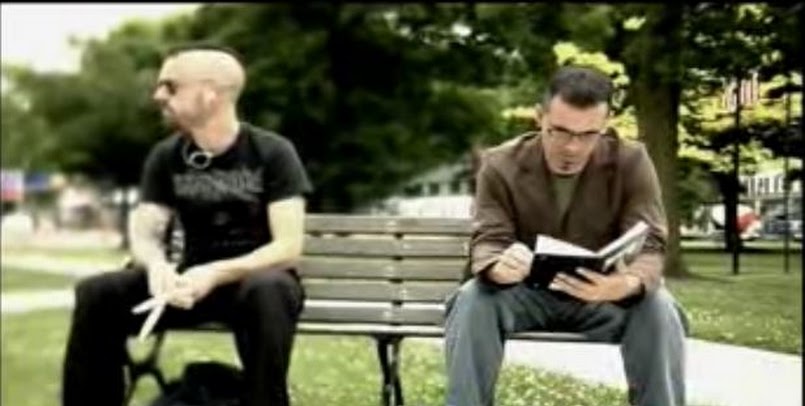
  • ..maybe you should do something scarier..


    I’m a fan of Seth Godin. His life message is about doing something new and different; getting out of the status quo; getting off the couch and making a lasting difference. Powerful and motivating. His message is to the world, not to Christians specifically. He can be blunt and painfully honest at times, but what he has to say is critical to our role as church leaders (not managers).

    In the church world I believe it is extremely important that we ask ourselves what we should be doing differently. What isn’t working? What new ideas should we tackle? How can we better facilitate the message of the Gospel? For instance, a while back I had an informal conversation with Pastor Joshua Finley and Pastor Seth Goodson at Elim Gospel Church about discipleship for the new believer. It was a refreshing conversation for me, simply because we were willing to stretch our thinking beyond what we’ve always seen and heard in the church world.

    Check out this 11 1/2 minute video interview with Seth and be challenged and inspired. Here are two quotes I jotted down while listening: “..maybe you should do something scarier..”, “.. mega-church is a factory..”.

    Exclusive interview with Seth Godin from GiANT Impact on Vimeo.

  • Character Driven or Emotion Driven

    Many years ago our church hosted a five minute radio show on a local radio station with our Senior Pastor at the time, Pastor Mike Cavanaugh, giving a short teaching.

    One day while out driving with my family, Pastor Mike came on the radio and shared the below comparisons between Character Driven People and Emotion Driven People. It impacted and challenged me so much that I wrote it out and for many years kept it posted on the wall in my office as a personal reference.

    I recently read Galatians 5:22-23 and this little teaching came back to my mind. I thought you might find it meaningful as well.


      Character Driven People
      Emotion Driven People
      Do right, then feel good
      Feel good, then do right.
      Are commitment driven.
      Are convenience driven.
      Make principle based decisions.   Make popularity based decisions.
      Action controls attitude.   Attitude controls action.
      Believe it, then see it.   See it, then believe it.
      Ask, “What are my responsibilities?”   Ask, “What are my rights?”
      Are steady.   Are moody.
      Continue when problems arise.   Quit when problems arise.

  • Hosting Great Services


    Perhaps you’ve had the unfortunate experience of attending a church service that was a major flop. Let me describe for you what I would define as a ‘flop’. People are unprepared, there are a myriad of distractions, and there doesn’t seem to be any sense of the Presence of God throughout the meeting. That’s not to say that the Lord isn’t/wasn’t speaking. We all are quite aware that He can and will speak whenever and however He wants. That said, we are also aware that God has entrusted to His people to be facilitators and instruments of His words (more on that later).

    This month I will begin unpacking key ideas and principles regarding the Sunday morning services. As Executive Pastor at Elim Gospel Church it has been one of my primary roles to ensure the Sunday experience shines with excellence and that everyone works in tandem to accomplish the mission God sets for us each week. I look forward to unpacking what I’ve learned in upcoming weeks, so stay tuned!

    Additionally, I invite you to consider purchasing the “Hosting Exceptional Sunday Services” workshop by going to the Transforming Leader store. This workshop summarizes the 6 key elements of a Sunday Service and, more importantly, how to pull them all together to form an Exceptional Sunday Service. The workshop includes several additional resources and is available for purchase on CD or as a download. Click here to purchase the workshop today.

  • Teamwork and Trust

    I’m convinced that great teams are impossible to build and keep without trust. Trust is not something you can purchase, manufacture, or demand. It is a value that is modeled and built over time. You already know this . . . at least in your head, but do you understand what it takes to get there? I can give you a suggestion on where to begin. Patrick Lencioni’s book, “The Five Dysfunctions of a Team” and the associated field guide, “Overcoming the Five Dysfunctions of a Team“. If you lead any team at all, these books should be in your bookcase and on your mind.

    Consider this team of young men and what they have accomplished together. I can’t even begin to imagine the number of hours they spent together. It seems clear that there certainly is a high degree of trust – at least in relationship to this presentation! (Note: I recommend you watch in full screen.) Enjoy!

    Disclosure of Material Connection: Some of the links in the post above are “affiliate links.” This means if you click on the link and purchase the item, I will receive an affiliate commission. Regardless, I only recommend products or services I use personally and believe will add value to my readers. I am disclosing this in accordance with the Federal Trade Commission’s 16 CFR, Part 255: “Guides Concerning the Use of Endorsements and Testimonials in Advertising.”
  • Thursday Quote: Michael Hyatt’s Blog

    Michael Hyatt

    One of my all time favorite blogs is written by Michael Hyatt, Chairman of Thomas Nelson Publishers. His personal blog is chock full of down to earth and practical advise for just about anyone. Key topics include leadership, productivity, social media and a lot more. For today’s Thursday Quote I’ve decided to recommend a few random posts. I hope you enjoy them and add Michael to your reading list.

    Tagged under “Leadership”:

    • What if You Work for a Bad Leader? “About once a week I get an email from someone who wants to know how to work for a bad leader. Maybe their boss is a jerk. Maybe he is just incompetent. Regardless, they are not quite sure how to lead well in this kind of situation….” Click here to read more.
    • The Benefits of Playing Full Out “I attend a lot of conferences and meetings. I have noticed that most people play it safe in these settings. They are reserved—arms crossed and skeptical—or simply distracted, hunched over their smartphone. Precious few take the plunge and play full out….” Click here to read more.
    Tagged under “Productivity”:
    • Email Etiquette 101 “The use of e-mail in corporate culture is pervasive. I rarely get letters any more. Even phone calls are uncommon. But I get scores of e-mail messages every day. Yet, I am continually surprised at how people often misuse this medium….” Click here to read more.
    • How to Take the Hassle Out of Fundraising “Through the years, I have raised money for all kinds of projects: private schools, mission trips, even adoptions. It has always been such a hassle to promote and administrate. Until now….”  Click here to read more.
    • The Beginner’s Guide to Twitter “This post is a 20-minute guide to Twitter for non-techies. (If you don’t know what Twitter is, you can start with my first post on the topic, Twitter-dee, Twitter-dum. If you still aren’t convinced, then read 12 Reasons to Start Twittering.)” Click here to read more.
    Free E-Book:
  • Time Management 101: The Priority Matrix

    The Priority Matrix

    You’ve heard the phrase, “The Tyranny of the Urgent”. Perhaps you live that phrase every day. I hope not. Let me introduce you to ‘The Priority Matrix’. I honestly don’t remember where I learned this, and it’s quite possible you’ve seen it before, but need a gentle reminder of it’s relevance to your ministry and daily life.

    Here’s a brief description of each quadrant:

    • Quadrant #1 – Urgent/Important
      This quadrant demands attention now. These are things that need done now or within the next few hours. They are also things that are a vital part of ministry. For example, a church member was in a terrible car accident. It may be both urgent and important that you initiate whatever care steps you have in place, including possibly setting aside a chunk of your day to care for the family.
    • Quadrant #2 – Not Urgent/Important
      This quadrant is perhaps the most important quadrant of your day, week, and month . . . and the one that is likely least attended to. It represents the important things that you need to do eventually. There is no practical urgency to get them done so we tend to put them off until it’s either too late to do them, or they become a Quadrant 1 activity – in which case it probably won’t get done properly. The ‘Tyranny of the Urgent’ dictates that you never do anything in this quadrant. Quadrant 2 activities might include strategic planning, developing or creating systems to better serve the church, honoring and appreciating your volunteers, and relationship building.
    • Quadrant #3 – Urgent/Not Important
      This quadrant is where most people live, unfortunately. There is little value in the tasks that are completed in this quadrant. They seem very important to accomplish, but usually aren’t. They also tend to have a sense of urgency to them. A good manager of time spends less than 10% of his day in this arena. Examples of common Quadrant #3 activities include unnecessary interruptions from other people and emails.
    • Quadrant #4 – Not Urgent/Not Important
      This quadrant falls into the category of the wasteful use of your time. It basically includes tasks that will add little to your life or ministry. Please note this one important distinction: genuine rest and relaxation that actually fills your physical and emotional tank should not be considered a quadrant 4 activity. Examples may include excessive tv/games, surfing the internet, social media, etc.
  • How Great Leaders Inspire Action

    Every single week at your church someone is trying to inspire and motivate others to action. The most obvious example includes the Sunday morning sermon, but there are a lot of other examples too. For instance, it’s likely that your announcements are meant to inspire people to do something (like go to an event or sign up for a class); I hope your offering time motivates others to give too. Here’s the question of the week (perhaps of your career): How inspired are people to be devoted to God, serve in the church, help the poor, and be the men and women God has called them to be?

     
    OK. Now that I’ve got your attention, I dare you to watch this 18 minute video from Ted.com. It’s more than worth your time and may very well change how you communicate with others. Author and speaker, Simon Sinek unpacks a powerful principle in a fresh way. Enjoy.


    Having problems loading/viewing this video? Click this link to watch it at www.ted.com.