Tag: Church Sound

  • How To Deal With Volume Complaints

    How To Deal With Volume Complaints

    In the same Sunday morning service I’ve had two people approach me with differing complaints – one asked if the worship could be turned up while the other asked if the worship could be turned down. In most churches it seems like the sound is never quite right. The fact is, it’s one of those, “you can’t please everyone” areas. Many years ago I had to navigate a different problem though. The volume was driving people away.

    It’s one of the reasons why I wrote the following two posts: Turn the Volume Down! & Turn the Volume Up! as well as why I asked my friend, Josh Cummings, to write this follow-up post: Unlocking the Secrets of Church Sound.

    I’d like to offer some advice on dealing with volume complaints. These ideas will help leverage what you believe the volume levels should be each week with the myriad of volume adjusting requests you may have to entertain.

    Acknowledge Mistakes.

    If the shoe fits, wear it with grace. You should know if the sound was off on a particular Sunday. If it was, simply acknowledge to your listener that he or she is right and that you will be looking into what happened. If you are unsure about whether the sound was grossly off from the standard, still let them know you will be looking into it (and do).

    Respect Others’ Opinions.

    Intellectually, we know everyone is entitled to their opinions and ideas. Practically, it can be a lot more difficult to respect and honor them. Make sure any person who has a concern or frustration in this area gets your undivided attention. Listen closely to their perspective. Seek to understand it fully. Honor them by recognizing their thoughts are important and matter. Do not try to ‘defend’ or ‘answer back’; let them have their say. Once that is done, kindly seek to help them understand where things stand with the sound.

    Know Your Target Audience.

    It was a lot easier for me to respond to people’s complaints simply because I knew who our target audience was. Because Elim Gospel Church has a strong desire to reach the younger generations, they are willing to push the envelope a little on volume issues in order to reach them. That’s not to say I would blow people’s complaints off, but I would be armed with the “Why?” behind our reasoning – which often resulted in my listener respecting and sometimes embracing our decision when we were done talking. 

    Understand The Challenges.

    As I just suggested, volume challenges are often beyond our control because of a lack of training, poor equipment, or bad acoustics. Although none of those difficulties should be given as the ultimate excuse, they should also play a role in helping others understand that resolving volume problems aren’t as simple as they might think. It is extremely important, however, that you ALSO give your listener the confidence that your team is working on solutions to those challenges.

    Create and Hold To Your Standards.

    It’s a lot harder to argue with well defined, tried and tested, standards. This is why I recommend your church purchase a dB meter and spend some time determining the best sound levels for your room, and sticking with them. This removes some of the ‘personal opinion of the sound person’ challenge. If they are aware of the standard and held responsible to hold to it, then you are much less likely to get complaints, and when you do, you are more likely to be able to respond with confidence. Even better, if you have a digital sound board, learn how to program it for individual bands or band members so that your sound tech is less likely to make mistakes when mixing.

    I also recommend reading Willowcreek Church’s Audio Volume Policies. Understand, they are a huge church, but the fact that they have taken the time and energy to figure these things out should be a testimony of the value they find in getting it right. 

    Write A Position Paper.

    If volume ends up being an ongoing issue for your congregation, consider writing a position paper underlining your values, standards, and limitations. Again, this simplifies communication. You can be sure people are hearing it said the way you want it said, and you can always follow up with people after they’ve read it over. The link mentioned above also points to Willowcreek Church’s Audio Volume Open Letter. It’s a great example of what your position paper might look/sound like.

    Ask Your Sound Team To Subscribe To www.behindthemixer.com.

    You can address concerns with your congregation a lot easier when you know your team is well trained and not just doing a ‘hack job’ of it. Ask each sound tech to subscribe to www.behindthemixer.com to keep them focused, sharp and on the cutting edge of all things church sound!


  • Behind the Mixer

    Behind the Mixer

    I hear a lot of pastors express frustration about the people behind the mixer. Evidently, getting the right mix, sound, volume, etc. is nearly impossible. I know. I was in that place for many, many years. In fact it’s what prompted me to write the following posts:

    And finally, I strongly recommend you ask your sound techs (and worship leaders) to subscribe to behindthemixer.comBesides some great ongoing articles on running a mixer, there is also a section entitled, “Church Audio 101”. Check it out!

    Behind-The-Mixer

    www.behindthemixer.com

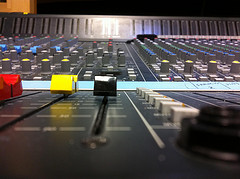
     photo credit: fensterbme via photopin cc

  • Unlocking the Secrets of Church Sound


    This is a guest post by Josh Cummings. For many years Josh served as the Technical Director at Elim Gospel Church in Lima, NY. Josh is passionate about all things audio & visual. His world includes wires, cables, buttons, knobs, computers, software, lights, speakers and a million other odd and weird knick-knacks. He is, by far, the coolest tech-dude I know.

    You might also enjoy reading my other posts in this series entitled ‘Turn the Volume UP!‘ and ‘Turn the Volume DOWN!‘.


    Poor sound can be extremely distracting. We’ve probably all been there: the worship leaders mic gives annoying feedback during the service, the preacher sounds like he’s underwater, or you can’t hear the lead vocals over the band during worship. Though it is often a thankless role, the church sound tech has the power to enhance or detract from the communication of the gospel in our church services. With that much depending upon one person, I thought I would give you a few tips on how to improve in this article on the art of mixing.

    • Preparation will save you time and stress.
      Before I tell you anything else, I want to give you the number one rule of using technology in church: Test everything. Trust people, not equipment. You’ve probably tried to play a video at some point during a church service and experienced the awkward embarrassing silence that follows when the video doesn’t work. With a little preparation, you can make sure that it doesn’t happen again (or nearly as much). Don’t blame the “demons in the sound system” when you could have prevented the problem with proper preparation. Take the service plan and go over every detail and press every button just like you would in a service. Years ago, we made a decision to rehearse our entire Sunday morning service, minus the preaching. We catch problems every single week and I know that it was one of the best things we have ever done to increase the quality of our services.
    • Mic that kick drum!
      Most local churches do not mic the drum set. If I were to only mic one drum, it would be the kick drum. This will add punch and rhythm to your mix and give your worship more overall energy. If your room is large enough, I recommend mic-ing the entire drum set, but mic-ing the kick drum is the place to start.
    • Set gain levels first.
      Gain is the master volume for each channel on your mixer, which affects the monitors, house mix (“house” mix is what comes out of the main speakers in your sanctuary), and more. Set the house volume fader to 0, and turn up the gain until the level is approximately where it should be in the house or slightly above. This gives you a good basic level for each channel. Do not mix with the gain knobs. Set them to the right levels and then adjust the house mix using the house volume faders.
    • Set monitor levels.
      If you’re not using in-ear monitors, I recommend putting as little as possible in the monitors while still supporting the worship team properly so that they can hear themselves. This will keep your stage noise to a minimum and give you a more intelligible house mix. A good method for setting monitor levels is this: do a basic mix for each monitor mix, have the band run a song, then adjust one channel at a time while band members give you a thumbs up or down to let you know how much they need in their monitors.
    • Shape the tone with EQ.Please, please, use the equalization (EQ) controls on your mixer. EQ takes a specific frequency or frequency range and turns it up or down. You are a sculptor of sound and the worship team has given you a lump of clay to mold into a masterpiece. If you don’t use the EQ to improve the tone of your mix, your museum will be showing an ugly lump of clay on Sunday morning. This is a huge subject to delve into, and can immensely improve your mix if used properly. For example, your bass guitar will sound nasty if you don’t turn down 300Hz, the violin doesn’t need any bass in it, and you can reduce feedback by cutting the frequency that is feeding back. Just turn up the EQ gain, sweep the frequency knob, find the nastiest sound you can, and then turn it down accordingly to its nastiness. If you want to learn more, here is a helpful blog post on EQ.
    • Regulate your levels with compression
      Compression will cut down on all of those sudden loud noises from your vocals and instruments. When you cut down those spikes in volume, you can have a more consistent and less dynamic sound from that channel. If you use it on one thing, use it on the lead vocal mic.
    • Enhance your vocals with reverbA tasteful amount of reverb can make a good vocal sound fantastic, but it unfortunately won’t make a terrible vocalist sound like Pavarotti!
    • Highlight the lead vocals!In any context, the lead vocals should be the most prominent sound, but even more so in church, where the congregation needs to know the melody to sing along in worship to God. Don’t let anything overpower the lead vocals in your mix. Spend the most time getting the lead vocals just right compared to other channels in your mix.
    • Mentally listen to one instrument at a time.
      To create your mix, listen to each instrument one at a time. Mentally block out all of the other instruments, listen, then decide if that instrument needs to be louder or softer in the mix.
    • Budget your mix.Just like your values will drive how you spend your money, you need to decide what instruments have the most value in your mix and budget your levels accordingly. For example, I will mix foundational instruments like piano and acoustic guitar a bit softer, and more interesting lead instruments like electric guitar or violin a bit louder. Those interesting lead parts have more value to me, so I make them more prominent in the mix. There are no exact rules for mixing, only guidelines. This is where mixing becomes an art.
    • Mix around the same overall deciBel level every week.It’s amazing how easy it is to upset people with the volume levels of your church sound system. Make a team decision as to how loud it should be, and keep it the same every week. I would recommend purchasing a decibel meter if you can to ensure the consistency of your levels.
    • Refine your ear by listening to high quality music.It is entirely possible that you or the sound techs at your church haven’t experienced high quality sound very much, or at least haven’t listened with an analytical ear. If you want to get better, listen to high quality recordings and concerts, and try to imitate the way they do things.
    • Clear up your house mix by reducing stage noise.Stage noise often causes all sorts of problems with your house mix. I can’t go into all of the details in this post, but anything you can do to reduce your stage volume will create a clearer mix in the house. You could use a shield or an enclosure for your drum set, or you could use in-ear monitors for your worship team.
    • Take yourself to school.Never stop learning. There is always more to learn about live sound. Connect with other church sound techs and learn what you can from them. Use Google to discover helpful websites like www.prosoundweb.com, www.churchsoundguy.com or www.churchtechtoday.com. Attend a How-To Sound Workshop. Keep seeking out more knowledge, and you will keep increasing in your skills as an audio engineer and your ability to serve the local church in this way.
     
  • Turn the Volume UP!


    Have you ever had anyone threaten to leave the church because the volume was too LOW during worship? Believe it or not, I have. It only happened a couple of times and certainly did not compare with how many complained it was too loud. To this day, I can tell you who in our church wishes we would turn the volume up . . . and no, they aren’t deaf!

    Last week I wrote the article ‘Turn the Volume DOWN!‘ Today I would like to similarly share some reasons why people may want the volume turned UP in your Sunday services. You might experience slight deja vu.

    • It’s too quiet. (there is no energy in the room)
      Stating the obvious is always a great way to begin. The Master Volume needs to be turned up and the instruments should be remixed to the new level. When worship is too quiet it can make for a boring worship experience. I’ve been to many churches who mix their worship too quiet. I suppose it appeases a few key leaders (or the pastor), but it also puts a major damper on worship – especially for the younger generations.

    As a general rule of thumb, if I can hold a conversation with the person next to me during worship without leaning in and raising my voice to be heard, the sound is probably too soft.

    • Bad mix. (low energy in the room or we can’t hear the worship leader)
      Many times the problem isn’t volume. It’s a bad mix. The instruments are too loud and are drowning out the worship leader; or the keyboard and worship leader is mixed well but everything else is just a low hum in the background; or the drums are drowning everything so all people hear is just enough worship leader and primary instrument to be able to sing. Probably most common is when the kick bass (the deep booming sound from the drums) is turned way down. This can really squash energy in the room and may even make the difference between whether or not people ‘clap’ or not during high energy songs.
    • Hearing loss.
      Another reason why people might want the sound turned up is because they are simply half-deaf and don’t know it. I’m not joking. Unfortunately, it’s quite common for people to have hearing impairment AND to not know it. According to these statistics, people with hearing loss wait on the average of 7 years before seeking help. I better go get my ears checked.
    • Differing opinions.
      Read this same paragraph in my post ‘Turn the Volume Down!‘ That about sums it up! Everyone has different opinions on how loud they like to hear music as well as what the overall mix sounds like. The key is to determine who will be the primary driver for volume/mix (that is, who will represent the values/goals of your church best) and let that individual call the shots. Just a side note – assuming you have a passion to reach the younger generations, I recommend you err on the side of a more aggressive/loud mix than not. I’m not suggesting you drive everyone else out – but that you actively seek to find that balance.
    • Bad equipment or acoustics.
      Your equipment, speaker placement and room acoustics will make a big difference. Often, churches struggle with hot and quiet spots in the room. It’ll be loud in one area and too quiet in others. My church has this issue. I’ve used this fact to my advantage by encouraging those who tend to like it louder or quieter to sit in certain areas. It’s one reason why the young people like to sit near the front. They get both the speakers in the room as well as the stage noise coming off of people’s stage monitors. It’s also usually where the sub-woofers (where all the bass and lows come out making your body vibrate) are located.
    I will continue this short series of posts about volume in an upcoming article giving some general advice on how your church might better ensure your worship service has the best possible mix/volume to encourage maximum participation from your worshipers. Stay tuned!

    photo credit: ckaiserca via photo pin cc

  • Turn the Volume DOWN!

    Have you ever had someone threaten to leave the church if you didn’t turn the volume down during worship? I have. During my tenure serving at EGC we had quite a few “ups and downs” in relation to volume levels. At one point, the issue got so hot the elders were called on to deal with it (for a church of nearly 1,000, that’s a big deal). To make matters more complicated, I was the one ultimately in charge of maintaining appropriate volume levels (though I’m not a sound tech). I’ve had lengthy conversations with leaders, members, sound techs, worship team members and irritated attendees about this.

    In the next few posts, I am going to download some of the things I’ve learned about this issue. I hope you find them useful.

    Turn the Volume Down!
    Here are a few of the primary reasons why people want the volume turned down.

    • It’s too loud. (or the sound tech is deaf)
      OK. The fact is, sometimes it’s just too loud. The Master Volume needs to be turned down and the instruments should be remixed to a lower level. Excessively loud worship can be very distracting. There’s a point where the focus isn’t on the Lord, but on the clock – when worship will get over.
    • Bad mix. (or the sound tech is tone deaf)
      Unfortunately, this is often the primary reason people want to turn the sound down, at least in my opinion. Managing the audio for the worship team get’s more and more complex as you add people to the team. Complexity requires increased skill and experience. Many times, churches just don’t have someone of that caliber available. I know firsthand that what sounds like a ‘loud’ mix can sometimes be fixed with an experienced hand at the sound board. In these cases, turning the Master Volume down will take care of the ‘loudness’ in the room, and replace it with the problems I’ve noted in my next post entitled ‘Turn the Volume Up!’
    • Sensitive ears.
      One of my children has very sensitive hearing. What I’ve discovered is when there is going to be loud noises it greatly increases anxiety. It becomes distracting and on certain occasions, overwhelming. It seems to me that as people grow older they are either losing their hearing or becoming more sensitive in their hearing. That doesn’t mean loud worship only affects the older crowd, but an older crowd is certainly more likely to be impacted.
    • Physical challenges.
      When people have physical challenges that include migraines, anxiety, depression and the like, loud music can just be too much to handle. Often, these people won’t even go to church if they know there’s a chance their condition may get worse due to loud noises. I rarely have migraines, but sometimes struggle with bad headaches. When I do, things like the kick bass (the deep booming sound from the drums) seem to sound ten times louder than they really do.
    • Differing opinions.
      Years ago I remember taking my primary sound tech on a drive in my car. I turned on some worship music and asked him to adjust the bass the way he likes it (it was a bass button giving three bass options). He turned the bass to a 3 which blasted the bass as loud as it would go. After a moment of listening, I turned it to 2, which is where I preferred the bass to be while driving. Sometimes, the same is true in worship. Everybody has their own opinion on what worship should sound like – and many times the person running the sound has a different opinion than the pastor.
    • Bad equipment or acoustics.
      There is at least one more primary reason why people want the sound turned down – and it’s not because the sound is mixed wrong or the volume is too high. It’s because of substandard equipment or bad acoustics in the room. Unfortunately, quality sound equipment (speakers, microphones, stage monitors, cables, sound boards, amplifiers, etc.) costs a lot of money – and usually churches cut corners in this area either because they have to or due to wrong priorities. Additionally, there are a myriad of sound problems that may result from bad speaker placement, stage noise (the noise coming off of the monitors/amplifiers on stage rather than from the speakers), and bad acoustics. In these cases, ‘turning it down’ just doesn’t work. It will mean someone onstage can’t hear themselves or someone in the congregation can’t hear the worship leader. (see my next post entitled ‘Turn the Volume UP!’)
  • Love Your Sound Tech As Yourself

    There is someone else on the stage. You can’t see him, but he’s not invisible. His presence rolls of the stage in waves – sound-waves. He lives in a world of high’s, mid’s and low’s – and no, he’s probably not manic-depressive. When he’s ‘on’, you sound fabulous. When he’s ‘off’, you sound boomy, hollow, or possibly demented. He is either your hero or a villain.

    I’m talking about your sound man (or woman). Pixar did a superb job of catching the essence and challenge sound tech’s (and pastors) face every Sunday in this short clip. For copyright reasons, I am only showing you the first 2 minutes. Enjoy.

    [su_vimeo url=”https://vimeo.com/33231695″][vimeo 42830604][/su_vimeo]

    Love Your Sound Tech As Yourself
    All kidding aside, your sound tech is a very important part of the Sunday morning experience. He probably knows things about sound that you don’t , and even if that isn’t true . . . well, he’s back there and you’re up here, right?

    It seems that a lot of pastors and church leaders nurse a gnawing frustration when it comes to their sound tech. They never seem to ‘get it right’. It’s too loud, too soft, or just mixed weird. The microphone isn’t working again, the monitors hum distractedly, or you can’t hear the video as it’s playing on the screens. Overall, the relationship tends to be strained.

    I have a suggestion for you. Invest in your sound tech relationally. Ask he and his family over for dinner. Set up occasional meetings with him to just talk shop regarding the Sunday morning experience. Help him understand your values and preferences with sound. Cast your vision for ministry to him. Let him dream with you about the church and it’s future. Help him feel a part and extension of you every single week – after all, he is.